How good are the economic benefits of bamboo rat farming?
It does not compete with people for grain, nor with cattle and sheep for feed
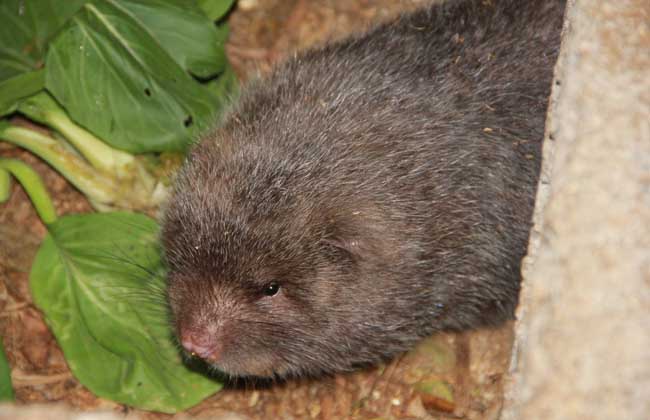
The bamboo rat (Rhizomys) is different from the house rat: it feeds mainly on plant roots and stems and on crop straw, eating very little grain. Its use of concentrated feed is only 1/4 that of broiler chickens, 1/5 that of ducks, 1/15 that of meat dogs and 1/20 that of meat pigs. It can even be raised entirely without commercial grain such as rice and corn. Cattle and sheep eat the tender branches and leaves of plants, while bamboo rats eat the old roots and stems.
Advantages of the farming environment
Bamboo rats like living in burrows, and their growth and reproduction do not require sunlight. They can be raised in burrows built on hillsides and in rock caves in remote rural areas, and can also be bred in indoor and basement burrow pools in towns, allowing factory-style, three-dimensional breeding.
Easy to raise
Feed is given only 1-2 times a day, and can even be given once every 3-5 days. In summer, clean once a day; in winter, clean only once every 3-5 days. The workload of raising 1 pair of bamboo rats is only 1/10 that of raising 1 pig. One laborer can raise 100-150 pairs of breeding bamboo rats, and small-scale raising requires no dedicated caretaker.
Clean and hygienic
Bamboo rats do not need drinking water, produce little urine and dry feces, and lack the gamey odor of ordinary wild animals. They are cleaner and more hygienic to raise than other livestock and poultry, so they can also be raised in towns.
Strong disease resistance, fast reproduction, high returns
Raising 1 pair of bamboo rats yields an annual output value of 500-600 yuan, exceeding the net income from raising 2 meat pigs in rural areas at present.