Things Beginners Must Know About Bamboo Rat Farming
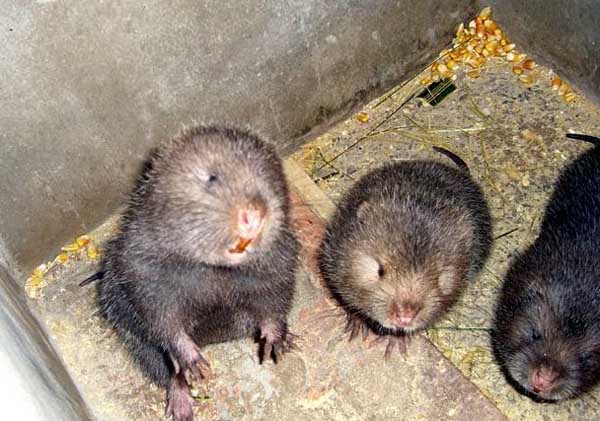
What should beginners pay attention to when raising bamboo rats?
Bamboo rat farming is an emerging specialty breeding industry that originated after 1990, but it did not see a certain degree of development until 2005, and it was not until 2008 that the bamboo rat farming industry reached a small peak. Many people began to know about bamboo rats and wanted to learn about bamboo rat farming, and a small number of people slowly began trial raising of bamboo rats, which led to a shortage of breeding stock. As a result, some people began to hype up the prices of bamboo rat seedlings. The price of seedlings rose again and again.
However, a large portion of bamboo rat trial raisers started farming bamboo rats without knowing much about them, but often, after introducing breeding rats at a high price, in less than 1 to 2 months, the number of bamboo rats they were raising dropped sharply. Why? Because they did not understand farming techniques; they only looked at some information online, and when introducing stock they listened to a few simple words from other farmers about what bamboo rats eat, what to pay attention to, what diseases they are prone to. And then how to treat them... etc. In fact, this is far from enough.
First, I think we should first understand bamboo rats, know their living habits and physiological characteristics, and achieve “knowing yourself and your enemy.” Only then can we know how to build ponds for bamboo rats, how to feed them, how to manage them, and how to prevent diseases.
So what living habits do bamboo rats have? First, bamboo rats are also rats, and being rats they have the common habits of rats: they are afraid of light, afraid of outside disturbances, like living in caves, are active at night, and rest during the day. Knowing this, we know how to build the ponds. Whether large or small, it is best to have a “hole” for them to burrow into. This “hole” can be made in different ways: you can build inner and outer ponds with the door holes of the two ponds connected, or you can put some holes in a large pond for them to burrow into, such as hollow bricks, tile tubes, and the like, as long as they can burrow into them. Also, the light in the pond must not be too strong; just a little light is enough. And it should be built in a relatively quiet place. Although bamboo rats may appear able to survive in a too-noisy place, it is unfavorable for their growth and reproduction.
Let us then look at the physiological characteristics of bamboo rats. The obvious physiological characteristics of bamboo rats are: they are used to eating foods with high fiber content, do not drink water directly, must gnaw to wear down their teeth, and have small, long, and relatively fragile intestinal tracts. Knowing this, we know what to do when feeding them. Every day you must feed foods with high fiber content. For example, bamboo, miscanthus, sugarcane, king grass, and other high-fiber foods. Because bamboo rats do not drink water, but water is the source of life, and life cannot do without water, so every day you must give a certain amount of things with more water, such as sugarcane, king grass, sweet potato, etc., but you cannot give only these watery ones; you must also feed some with less water at the same time, such as bamboo, miscanthus, etc., with the two types of food making up half each. I once tried feeding only watery food, and only low-water food, and the result was only one: the bamboo rats died. If you do not believe it, you can try it. This is what needs attention regarding bamboo rat food. In addition, there is the external environment of the bamboo rat pond. Because bamboo rats are kept enclosed, unlike free wild bamboo rats, wild bamboo rats can go find whatever they want to eat, but domestic bamboo rats can only eat what you give them, with nothing to choose from, and if they do not eat it, that is not an option either. Also, wild bamboo rats can hide from whatever they fear, while domestic ones have nowhere to hide. Therefore, we must make the environment of the bamboo rat pond good. The environment of the bamboo rat pond should be: quiet, dim light, suitable warmth and coolness, and free of bacteria and toxins. The first 3 items are not very difficult and are easy to control, but the latter being free of bacteria and toxins requires some thought. Because bacteria and viruses cannot be seen or touched, beginners only realize it may be bacteria and viruses causing trouble after seeing their bamboo rats die, so we must resolutely eliminate them. The method is: do a good job of pond hygiene, regularly disinfect the bamboo rat pond, and do not wait until bamboo rats die to think of disinfection. This is what is called “prevention.” In fact, farming is about “prevention being greater than treatment.” If you learn prevention well, it is fine not to understand treatment; if you learn treatment well but do not understand prevention, that is absolutely not acceptable.