What is the outlook for bamboo rat farming? Market analysis tells you
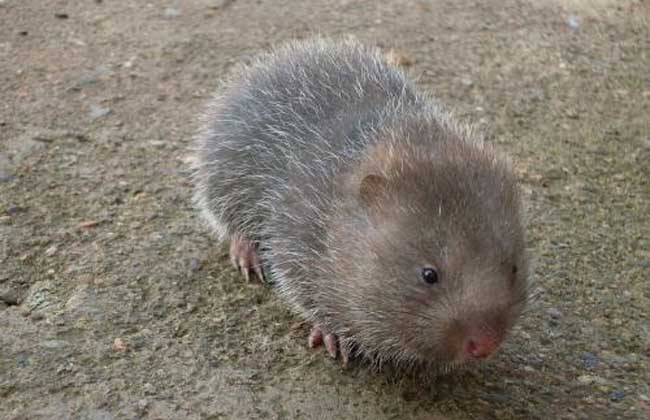
Bamboo rat farming in our country began after the successful artificial domestication of bamboo rats in the early 1990s, and by now it has become a new type of farming with high development value, large market demand, low investment risk and high economic returns. The main reasons driving the rapid development of bamboo rat farming are as follows.
The edibility of bamboo rats
Bamboo rats have clean feeding habits, and their meat is fine, delicate and lean with an extremely delicious flavor, making it a top-grade wild game meat. It is a meat food with high nutritional value, low fat and low cholesterol. According to measurements, it contains 57.78% crude protein, 2.54% crude fat, 17.36% crude ash, 0.84% crude fiber and 0.05% cholesterol. It is also rich in phosphorus, iron, calcium, vitamin E, amino acids and steroids. Among these, the content of lysine, leucine and methionine surpasses that of chickens, ducks and geese, pigs, cattle and sheep, and fish, shrimp and crabs.
The medicinal properties of bamboo rats
Modern medicine has shown that bamboo rat meat can promote the growth of human white blood cells and hair, strengthen liver function and prevent vascular sclerosis, and has good effects against aging and in delaying puberty. It is a natural beauty and health tonic. Traditional Chinese medicine holds that the gallbladder, liver, heart, brain, testicles and kidneys of the bamboo rat can all be used as medicine. The gallbladder can improve eyesight, refresh the mind and strengthen the brain, and can treat eye diseases and deafness; the kidneys can treat scabies and athlete's foot; the liver, heart and brain can treat palpitations, fright and insomnia; the testicles, after being stir-fried dry and mixed with a little borneol, can be taken with boiling water to treat persistent high fever, vomiting and wind syndrome; the bones, soaked in liquor, can treat rheumatism and rheumatoid disease.
The Chinese medical community has always regarded bamboo rat hair as a good medicinal raw material. Because the main component of bamboo rat hair is hard protein, after hydrolysis it can be made into important medicines such as hydrolyzed protein, cystine and cysteine. Among the people it is commonly used to treat infantile malnutrition and smallpox and measles. The internal organs and other offal of the bamboo rat can be used to extract biochemical drugs such as gamma-aminobutyric acid, thymosin and cephalin. The linear white tendon in the tail of the bamboo rat can be used as surgical suture thread.
Raw material for fur making
Bamboo rat fur is fine and soft, glossy and oily, with a thick underwool and a hide of moderate thickness that is easy to tan. The hair base is gray and easy to dye, making it a top-grade raw material for making fur garments.
From the above points, the market demand for bamboo rats is growing larger and larger, making the economic returns of bamboo rat farming higher and higher. It can thus be seen that the farming prospects for bamboo rats are still quite promising.
The farming returns of bamboo rats
Bamboo rat farming has the characteristics of wide adaptability, grain saving, strong reproductive capacity, fast growth, easy rearing and management, and substantial profits. It can not only be vigorously developed in rural areas, but is also suitable for household farming by urban residents and for factory-scale farming.
1. Staple feed of straw: The feed of bamboo rats is mainly crop straw and plant roots, such as corn stalks, sorghum stalks, soybean stalks, sugarcane roots, reeds, silvergrass and so on. They do not compete for grain with people, livestock or poultry. Nor do they compete for feed with cattle and sheep: cattle and sheep eat the tender branches and leaves of plants, while bamboo rats eat only the old roots and stems of plants. To ensure the nutrition needed for the growth and development of bamboo rats, some concentrated feed needs to be provided.
2. No need for sunlight or water: Bamboo rats like to live in dark, cool, dry, clean environments at temperatures of -8 to 35°C, and they have the trait of obtaining water from feed rather than drinking directly. Therefore, they can be farmed in burrows built on hillsides and in rock caves in remote rural areas, and can also be farmed in factory-style three-dimensional systems in burrow pools built indoors or in basements in towns and cities. They are even more suitable for farming in arid and water-scarce mountainous areas rich in bamboo forests, corn and sorghum.
3. Easy to raise and manage: Bamboo rat feeding and management is simple. They need to be fed only once a day, or once every 3 days. Bamboo rats urinate little and their droppings are dry, with no foul odor. In summer, clean once; in winter, clean once every 3 to 4 days. The workload of raising 1 pair of bamboo rats is 1/10 that of raising 1 pig, and one laborer can raise 200 pairs of breeding rats.
4. Strong reproductive capacity: 1 female bamboo rat reproduces 20 to 30 young per year, and under good feeding conditions can reproduce 120 to 160 young in a yearly cycle, far higher than the reproduction multiples of pigs, cattle and sheep. Its production level is unmatched by other livestock species.
5. Considerable returns: Young rats can reach a body weight of more than 1 kg after 3 months of feeding. The current market purchase price for commercial bamboo rats is 0 to 60 yuan per kg of bamboo rat, and generally raising 1 pair of bamboo rats brings an annual income of more than 2000 yuan. A farming household can escape poverty in one year by converting half a mu of pig housing into rat pools and raising 6 to 10 pairs of bamboo rats in pens. Laid-off workers and urban residents can use idle rooms for three-dimensional cage rearing or pen-pool rearing of 4 to 6 pairs of bamboo rats, and their income is also quite considerable.
It can thus be seen that bamboo rat farming is a new type of farming with high development value, large market demand, high yield, high efficiency, low consumption, grain saving and low risk, and it has very broad farming prospects.