What is the difference between kunbu and kelp? Understanding the differences between the two in one article
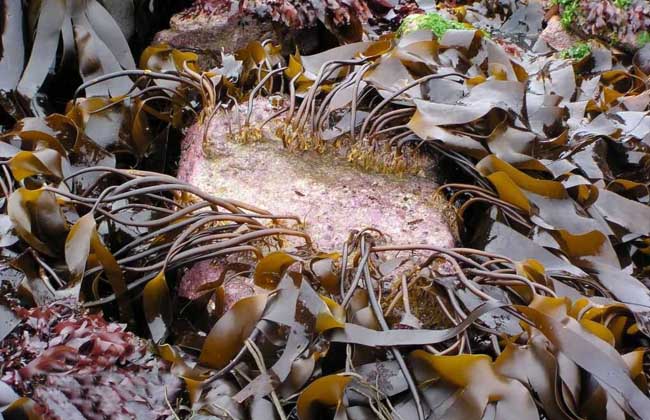
The difference between kunbu and kelp is not very great; they can even be said to be the same substance, except that kunbu is often used as medicine while kelp is used as food. Both contain relatively large amounts of iodine and other trace elements. Regular consumption can prevent diseases such as hypothyroidism, and can also reduce fat and lower blood pressure, and resolve phlegm and relieve cough. Let us take a look below at the differences between kunbu and kelp!
Are kunbu and kelp the same?
Botanically, there is a strict distinction between kelp and kunbu. The thallus of kunbu is yellow-brown. In ancient China there was no kelp; in Japanese, kelp is collectively called kunbu. Some Chinese botanical books and regions also say that another name for kelp is kunbu, so it is not a big mistake to say that kelp and kunbu are the same thing, because both belong to the order Laminariales. It is also correct to say they are not the same thing, because the two differ at the genus level. Because nomenclature in plant taxonomy is somewhat confusing, and their appearances are very similar, and additionally because kelp was introduced from Japan, and in Japanese kunbu is kelp, and in English kelp refers to both kelp and kunbu, this has caused kelp and kunbu to be frequently confused.
The difference between kunbu and kelp
1. Family and genus: Kelp is the more common name. In biology it is classified successively as order Laminariales, family Laminariaceae, genus Laminaria. The order Laminariales includes four families: Chordaceae, Laminariaceae, Alariaceae and Lessoniaceae. What is commonly called kelp refers to the genus Laminaria under the family Laminariaceae. Kunbu, however, is a genus in the family Alariaceae of the order Laminariales in the phylum Phaeophyta. Therefore kunbu and kelp are not "full brothers" but "cousins".
2. Appearance: Kelp is rolled and folded into clumps or tangled into bundles, entirely black-brown or green-brown, with a white frost on the surface. When softened in water it expands into flat, long strips, thicker in the middle, with thinner and wavy edges, somewhat leathery, with the remaining holdfast part flattened and cylindrical, smelling fishy and tasting salty. Kunbu is rolled and shriveled into irregular clumps, entirely black, relatively thin. When softened in water it expands into flat leaf-like shapes, with pinnately deeply lobed sides, the lobes long-tongue-shaped, with small teeth or entire margins, soft and smooth in texture.
What types of kunbu are there?
1. Kunbu: The thallus is olive-brown, turning dark brown after drying, leathery and ribbon-like when mature. In the center of the blade there are two parallel longitudinal shallow grooves; the thicker part between the two grooves is the "midrib region". The edges on both sides gradually become thinner and have wavy wrinkles. The base of the blade is wedge-shaped, becoming flattened-round at the thick stage, with a short cylindrical or flattened-round stipe below. The holdfast is composed of forked branching rhizoids. The spore maturation period is autumn.
2. Hei kunbu (black kunbu): The thallus is dark brown to deep brown, leathery. The thallus is flat and broad, slightly thicker in the middle, with one to two times pinnate deep lobing from both sides. The lobes are long-tongue-shaped or somewhat longer, slightly wrinkled, and the margins generally all have coarse serrations. The stipe is stem-like, cylindrical or slightly flattened, 4-12 cm long and 3-8 mm in diameter. The holdfast is composed of dichotomously branching rhizoids. The sporangia form in early summer, and the spores mature in autumn.
3. Wakame: The thallus is yellow-brown, soft and leathery. The thallus is flat, with an obvious raised midrib in the middle, gradually thinning and softening on both sides, forming many pinnate lobes, or appearing as incisions of uneven size, but without serrations. Many small black spots are scattered on the leaf surface, which are the openings of mucilage cells to the epidermis. When mature, on both sides of the lower stipe there grow sporophylls with ear-like overlapping folds, sticky, slippery and thick-fleshed, densely bearing sporangia on them. The lower end of the stipe is a holdfast composed of forked branching rhizoids.