What are the reproductive methods of yeast?
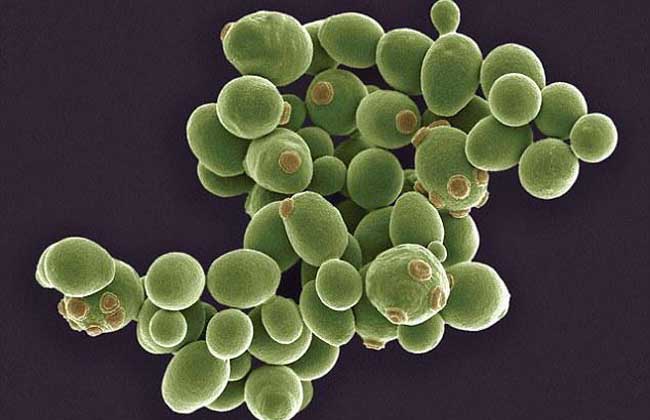
Yeast is a general term for several families of single-celled fungi such as ascomycetes and basidiomycetes, and generally refers to various single-celled fungi capable of fermenting sugars. Its reproductive methods fall into two major categories: asexual reproduction and sexual reproduction. Asexual reproduction includes budding, fission and bud fission, while sexual reproduction involves ascospores. Let's take a look at these reproductive methods of yeast below!
Budding
Budding is the main method of asexual reproduction in yeast. First, the centrosome adjacent to the nucleus produces a small protrusion, and at the same time, because hydrolytic enzymes break down the cell wall polysaccharides, the cell wall becomes thinner, the cell surface bulges outward, and a small bud gradually emerges. Then, part of the enlarged and elongated nucleus, cytoplasm and organelles (such as mitochondria, etc.) enter the bud, and finally the bud cell receives a complete set of nuclear material, mitochondria, ribosomes, vacuoles, etc. from the mother cell. When the bud grows to normal size, it separates from the mother cell and becomes an independent cell.
Fission
Fission is a common method of asexual reproduction, that is, a reproductive method in which the parent divides into 2 (binary fission) or multiple (multiple fission) new individuals of the same size and shape. A small number of yeast species, like bacteria, form two daughter cells identical to the parent through cell division (transverse or longitudinal fission).
Bud fission
The mother cell of yeast always buds at one end and forms a septum at the base of the bud, with the daughter cell appearing bottle-shaped. This method is rare.
Spores
When the nutritional conditions are poor, some yeasts capable of sexual reproduction will form spores (generally four), which germinate again when conditions are suitable. Some yeasts, such as Candida (also called candidiasis yeast), cannot reproduce sexually.