What is the difference between Pteris multifida and Bolbitis heudelotii? How to tell them apart
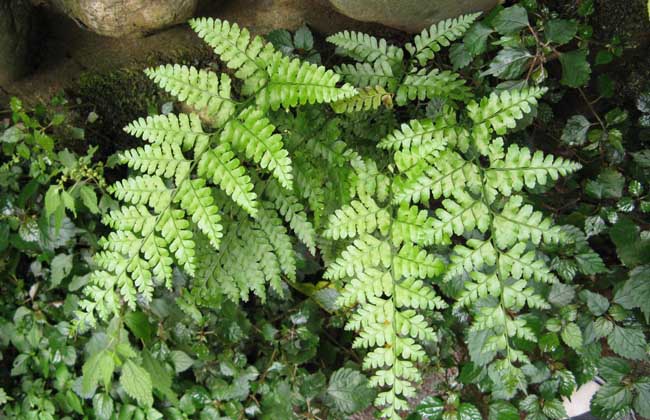
Pteris multifida is also known as Jinglan grass and small-leaf Pteris multifida; as a potted plant it can accent a desk, coffee table, windowsill and balcony, and it is also suitable for hanging or mounted arrangements in the living room, study and bedroom, while the whole plant can be used medicinally. Bolbitis heudelotii is a relatively rare tropical ornamental fern that, in artificial cultivation environments, is generally grown fully submerged for aquarium aquascaping. Let us take a look below at the differences between Pteris multifida and Bolbitis heudelotii!
Differences in family and genus between Pteris multifida and Bolbitis heudelotii
1. Pteris multifida: Pteris multifida is a plant in the kingdom Plantae, phylum Pteridophyta, class Pteropsida, subclass Leptosporangiate ferns, order Polypodiales, family Pteridaceae, genus Pteris.
2. Bolbitis heudelotii: Bolbitis heudelotii is a plant in the kingdom Plantae, phylum Pteridophyta, subphylum Euphyllophytina, class Leptosporangiopsida, order Polypodiales, family Dryopteridaceae, genus Bolbitis.
Differences in morphology between Pteris multifida and Bolbitis heudelotii
1. Pteris multifida: The plant is 50-70 cm tall, with a short, erect or ascending rhizome about 1 cm thick, its tip covered with dark brown scales. The leaf margins bear only small serrations, and the base of the terminal trifurcate pinna often extends down along the rachis, with the pair below it also more or less decurrent. The leaf margins bear only small serrations, and the base of the terminal trifurcate pinna often extends down along the rachis, with the pair below it also more or less decurrent. The leaves are papery when dry, green or grayish green, and hairless. The rachis is straw-colored and smooth on the surface.
2. Bolbitis heudelotii: The roots of Bolbitis heudelotii are about 3 mm, the stem is relatively thin, the leaf teeth are fewer and more rounded, the leaf surface is uneven, with relatively high transparency and rather thin. It has alternately arranged leaf parts, with the blades fully divided and feather-like, and the color is dark green. Whether emersed or submersed leaves, as long as there is enough light, the leaves will grow upright. It is suitable for planting on driftwood and rocks, where it will produce clustered rhizomes or lateral roots.
Differences in habits between Pteris multifida and Bolbitis heudelotii
1. Pteris multifida: Pteris multifida grows in rock crevices in limestone areas or in understory thickets. It likes warm, humid and shady environments, dislikes waterlogging, and requires shade, humid air and well-drained soil. It is relatively cold-tolerant, with an optimum growth temperature of 10-26°C, and the overwintering temperature can go as low as 0-5°C.
2. Bolbitis heudelotii: In artificial cultivation environments, Bolbitis heudelotii is generally grown fully submerged for aquarium aquascaping, and it can also be cultivated terrestrially in high-temperature, high-humidity environments. It is a fern-like aquatic plant with beautiful transparent green leaves. The submersed leaves are generally 20-30 cm long, and it prefers a slightly acidic soft-water environment.
Differences in uses between Pteris multifida and Bolbitis heudelotii
1. Pteris multifida: The tender leaves of Pteris multifida are edible and are called “fiddlehead fern”. As a potted plant it can accent a desk, coffee table, windowsill and balcony, and it is also suitable for hanging or mounted arrangements in the living room, study and bedroom. The whole plant can be used medicinally, having effects such as clearing heat and draining dampness, cooling blood and detoxifying, stopping diarrhea, and strengthening sinews and invigorating collaterals; among the people it is mostly used to treat dysentery and to stop diarrhea.
2. Bolbitis heudelotii: The rhizome of Bolbitis heudelotii bears alternate pinnate leaves that are green, usually fully divided or deeply divided, and the rhizome also produces dark brown roots. After being grown submersed, the plant body becomes smaller, and the newly grown submersed leaves turn semi-transparent yellow-green; the plant's elegant form makes it quite popular with most people.