What to Do When a Typhoon Comes? A Guide to Agricultural Prevention and Response
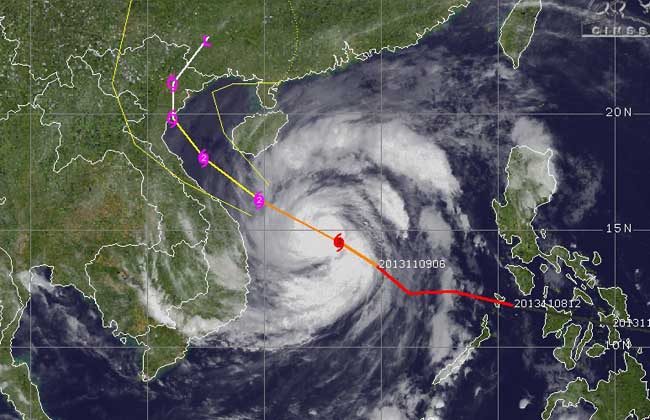
A typhoon is a type of natural disaster, referring to a tropical cyclone that forms over vast expanses of ocean at temperatures above 26°C in the tropics or subtropics. Every summer and autumn, many violent storms known as typhoons form over the northwestern Pacific Ocean adjacent to China. Some dissipate over the sea, while others make landfall, bringing fierce winds and torrential rain. Let's take a look below at what you should do when a typhoon comes!
What benefits do typhoons bring?
1. Typhoons bring people abundant fresh water. Typhoons bring large amounts of rainfall to the coastal areas of China, the coasts of the Sea of Japan, India, Southeast Asia and the southeastern United States.
2. The tropical and subtropical regions near the equator receive the longest hours of sunlight and are unbearably hot and dry. If there were no typhoons to disperse the heat from these regions, they would become even hotter, and the surface deserts would become even more severe. At the same time, the frigid zones would become even colder, and the temperate zones would disappear. China would have no spring city like Kunming, nor Guangzhou with its evergreen four seasons, and the "Great Northern Granary" and the grasslands of Inner Mongolia would cease to exist.
3. A typhoon's maximum speed can reach over 200 kilometers per hour, and wherever it goes, it destroys everything in its path. This enormous energy can directly bring disasters to humanity, but it is also entirely through this enormous flow of energy that the Earth maintains its heat balance, allowing humanity to live and work in peace and continue to thrive.
4. Typhoons can also increase fishing yields. Whenever a typhoon strikes, it churns up the rivers and seas, rolling nutrients up from the bottom of rivers and seas. Fish bait increases, attracting schools of fish to gather near the surface, and the catch naturally increases.
What harm do typhoons cause?
1. The strong winds brought by typhoons are one of the main hazards of a typhoon, especially the fierce winds near the typhoon's center. The following passage will give us a vivid concept for understanding the hazards of strong winds: at level six, it is difficult to walk while holding an umbrella; at level seven, it is inconvenient to walk against the wind; at level eight, the wind breaks tree branches; at level nine, roof tiles fly off; at level ten, trees are uprooted. Falling objects from high altitudes, collapse of dilapidated buildings and so on are all accidents that easily occur on typhoon days.
2. When a typhoon affects an area, it is mostly accompanied by torrential rain, or even heavy torrential rain or extraordinarily heavy torrential rain. Torrential rain easily triggers floods, causing villages, houses, boats, bridges, amusement facilities and so on to be submerged or even washed away, resulting in loss of life and property. Torrential rain may cause water conservancy projects to fail, leading to serious dangers. Torrential rain may also trigger geological disasters such as landslides and mudslides, causing casualties.
3. Storm surges easily wash away seawalls and embankments, culverts and sluice gates, docks, revetments and other facilities. They can cause breaches in sea dikes and seawater intrusion, and may even directly sweep away nearby people, causing casualties.
4. When a typhoon passes through, it often brings fierce winds and torrential rain, causing huge waves on the sea surface and seriously threatening navigation safety. The storm surge brought by a typhoon after landfall may destroy crops and various building facilities, causing enormous losses to people's lives and property.
What should you do when a typhoon comes?
1. When a typhoon comes, the wind is relatively strong. Everyone should reduce going out, and absolutely do not walk on the embankments of rivers, lakes or seas or on bridges, and do not drive or ride a bike in areas affected by strong winds.
2. If you see a power line that has been blown down by the wind and has fallen to the ground, absolutely do not touch it with your hands, and do not go near it.
3. In areas prone to disasters such as landslides and in areas where high-intensity heavy torrential rain has already occurred, increase vigilance and evacuate in a timely manner.
4. If you find dilapidated buildings or water accumulation, contact the relevant departments in a timely manner. When there is danger, obey the command of the relevant departments and move to safety.
5. If you encounter thunderstorms and strong winds, promptly turn off household appliances that are running and pull out the plugs. If water accidentally enters your home, immediately cut off the power supply.
6. If you are driving a car, park the car in a safe place, get out quickly, and rely on buildings to take shelter from the typhoon. Absolutely do not harbor the wishful thinking of hiding in the car to take shelter from the typhoon. When a typhoon comes, the inside of a car is not safe and is not enough to withstand a typhoon.
7. Friends who have cars, please do not park your car in underground garages or low-lying places. Try to park in high places. When parking, pay attention to falling objects from high altitudes. Areas beside billboards and beside trees are also dangerous areas.
8. When driving, pay attention to the depth of water accumulation. If the car stalls in a place with accumulated water, please do not ignite it. Also, please pay attention to manhole covers!
9. Do not take shelter from the wind and rain in dilapidated old houses, factory buildings, work sheds, temporary buildings, projects under construction, municipal public facilities (such as streetlights, etc.), cranes, construction elevators, scaffolding, utility poles, trees, billboards, steel towers and other places, to prevent these things from collapsing under strong winds and falling down and injuring people.