How Are Typhoons Named? A Detailed Explanation of Typhoon Naming Rules
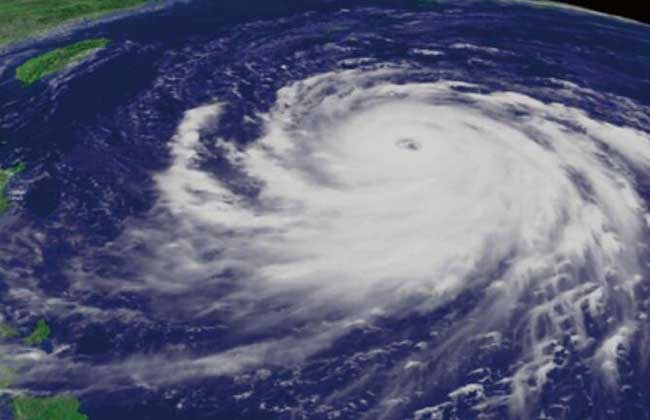
Typhoons are among the most severe natural disasters in the world. The violent storms and torrential rain they bring can cause serious meteorological disasters. To make it easier to forecast, study, and distinguish typhoons occurring at different times, people gave typhoons names. So how exactly are typhoons named? Let us take a look below at how typhoon names are assigned!
How are typhoons named?
Typhoon naming consists of two parts: a number and a name. The number is the tropical cyclone number, made up of four digits, with the first two digits indicating the year and the last two digits being the sequence number of storms at or above storm-level tropical cyclones in that year. The typhoon naming method uses a naming list drawn up in advance, which is then used repeatedly in order, year after year. The naming list contains a total of 140 names, provided respectively by 14 member countries and regions in the Asia-Pacific region under the WMO: Cambodia, China, the Democratic People's Republic of Korea, Hong Kong, Japan, Laos, Macao, Malaysia, Micronesia, the Philippines, the Republic of Korea, Thailand, the United States, and Vietnam. Each country or region provides 10 names. The 140 names are divided into these 10 groups, with 14 names in each group, arranged in alphabetical order according to the English names of each member country, and used cyclically in order.
China's Latest Typhoon Naming List
1. Mainland: Haikui, Wukong, Yutu, Bailu, Fengshen, Haishen, Dujuan, Dianmu, Haima, Haitang.
2. Hong Kong: Kaitak, Shanshan, Man-yi, Lingling, Fung-wong, Dolphin, Choi-wan, Lionrock, Ma-on, Banyan.
3. Macao: Sanba, Bebinca, Wutip, Pipa, Wasp, Lianhua, Yanhua, Malou, Muifa, Shanhu.
How are typhoon names used?
The actual work of naming typhoons is handled by the Tokyo Regional Specialized Meteorological Center of the Japan Meteorological Agency. When the Japan Meteorological Agency determines that a tropical cyclone over the Northwest Pacific or the South China Sea has reached tropical storm intensity, it assigns a name according to the list and at the same time assigns a four-digit number. In the number, the first two digits are the year, and the last two digits are the order in which the tropical storm formed that year. For example, 0704 means the 4th tropical storm of 2007.
Throughout its entire life cycle, a tropical cyclone keeps the same name whether it strengthens or weakens. For example, for Tropical Storm No. 0704, Severe Tropical Storm, and Typhoon, the English name is always “Man-Yi” and the Chinese name is “Wanyi”. To avoid unnecessary confusion caused by multiple translations of one name, the China Central Meteorological Observatory, the Hong Kong Observatory, and the Macao Meteorological and Geophysical Bureau, after consultation, have determined a unified set of Chinese translations.
Have typhoon names always existed?
Typhoon names are often "gentle" names, in the hope that the damage brought by typhoons will be smaller. However, the World Typhoon Committee has a rule: once a typhoon causes particularly great loss of life and property, it will permanently occupy that name, and the name will be deleted from the naming list. The vacant name is then recommended again by the original providing country or region. For example, Typhoon Rananim means "hello", but according to statistics, Typhoon "Rananim" caused 164 deaths, 24 missing, and direct economic losses of 18.128 billion yuan in Zhejiang. It was permanently retired and withdrew from the international typhoon naming sequence.
In 2005, Typhoon No. 19 was given the name "Longwang". It wreaked havoc all the way, bringing huge threats to local areas. According to data provided by the China Meteorological Administration, the arrival of Longwang brought heavy precipitation to the local area. Among them, the one-hour precipitation in the Fuzhou area broke the historical extreme, exceeding 152 mm, making it the most severe typhoon impact in years. Due to its arrival, it caused 7.478 billion yuan in economic losses in Fujian and led to nearly 100 deaths. As a result, the International Typhoon Committee decided to delete the Chinese typhoon name "Longwang" from the naming list. This was the first name among those provided by mainland China to be "retired".