How Are Typhoons Formed? A Detailed Explanation of the Causes and Process
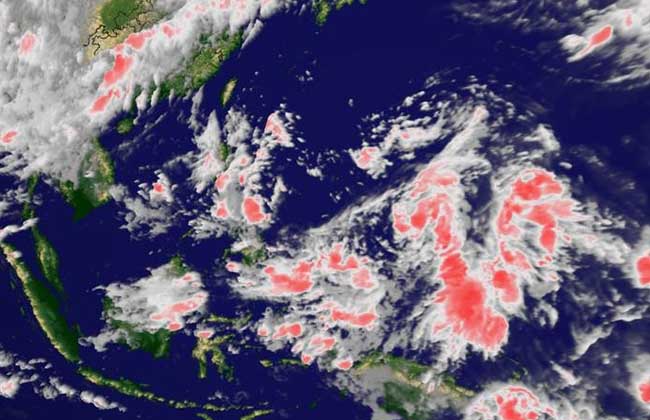
A typhoon refers to a tropical cyclone that forms over vast expanses of ocean in the tropical or subtropical zone where temperatures exceed 26°C. In China, tropical cyclones that form over tropical ocean waters above 26°C have traditionally been called typhoons. According to their intensity, they are divided into six levels: tropical depression, tropical storm, severe tropical storm, typhoon, severe typhoon and super typhoon. Let's take a look below at how typhoons are formed!
How are typhoons formed?
Typhoons originate over the tropical ocean, where temperatures are high and large amounts of seawater evaporate into the air, forming a low-pressure center. As the pressure changes and the Earth itself rotates, the inflowing air also begins to rotate, forming a counterclockwise air vortex - this is a tropical cyclone. As long as the temperature does not drop, this tropical cyclone will grow stronger and stronger, eventually forming a typhoon.
What benefits do typhoons bring?
1. Typhoons bring people abundant fresh water. Typhoons bring large amounts of rainfall to the coast of China, the coast of the Sea of Japan, India, Southeast Asia and the southeastern United States.
2. The tropical and subtropical regions near the equator receive the longest hours of sunlight and are unbearably hot and dry. If there were no typhoons to disperse the heat from these regions, they would become even hotter, and surface desertification would become even more severe. At the same time, the frigid zones would become even colder, and the temperate zones would disappear. China would have no spring city like Kunming, nor would it have Guangzhou with its evergreen four seasons, and the "Great Northern Granary" and the grasslands of Inner Mongolia would also cease to exist.
3. A typhoon's maximum speed can reach over 200 km per hour, and wherever it goes, it sweeps away everything in its path. This enormous energy can directly bring disasters to humanity, but it is also entirely thanks to this enormous flow of energy that the Earth maintains its heat balance, allowing humanity to live and work in peace and to continue reproducing endlessly.
4. Typhoons can also increase fishing yields. Whenever a typhoon strikes, it churns up rivers and seas, rolling nutrients from the bottom of rivers and seas up to the surface. Fish bait increases, attracting schools of fish to gather near the surface, and the catch naturally rises.
What harm do typhoons cause?
1. The strong winds brought by typhoons are one of the main hazards of a typhoon, especially the immensely powerful winds near the typhoon's center. The following passage will give us a vivid idea of the harm caused by strong winds: at level six, it is difficult to walk while holding an umbrella; at level seven, it is inconvenient to walk against the wind; at level eight, the wind breaks tree branches; at level nine, roof tiles fly off; at level ten, trees are uprooted. Falling objects from high altitudes, collapse of dilapidated buildings and so on are all accidents that easily occur on typhoon days.
2. When a typhoon affects an area, it is mostly accompanied by torrential rain, or even heavy torrential rain or extraordinarily heavy torrential rain. Torrential rain easily triggers floods, causing villages, houses, boats, bridges, recreational facilities and so on to be submerged or even washed away, resulting in loss of life and property. Torrential rain may cause water conservancy projects to fail, creating serious dangers. Torrential rain may also trigger geological disasters such as landslides and mudslides, causing casualties.
3. Storm surges easily wash away seawalls and embankments, culverts and sluice gates, wharves, revetments and other facilities. They can cause breaches in sea dikes and seawater intrusion, and may even directly sweep away nearby people, causing casualties.
4. When a typhoon passes through, it often brings violent winds and torrential rain, causing huge waves on the sea surface and seriously threatening navigation safety. The storm surge brought by a typhoon after landfall may destroy crops, various buildings and facilities, and so on, causing enormous losses to people's lives and property.
The life cycle of a typhoon
1. Incubation stage: After a day of solar radiation, strong cumulonimbus clouds form over the sea surface. The hot air in these cumulonimbus clouds rises, and the surrounding cooler air continuously flows in to replenish it, then rises again upon encountering heat. This cycle repeats, making the air above hot and the air below cold. The water vapor in the hot air above evaporates, expanding the range of the cloud band, and the expansion of the cloud band makes this movement even more intense. The continuously expanding cloud mass, affected by the Coriolis force, begins to rotate counterclockwise, forming a tropical cyclone. The centrifugal force generated by the rotating air inside the tropical cyclone flings the air outward, and the air at the center becomes increasingly thin. The air pressure keeps dropping, forming a tropical depression - the initial stage of a typhoon.
2. Development stage: The central pressure of a tropical depression is lower than that of the surrounding environment, so surrounding air rushes toward the tropical depression and rises upon encountering heat, supplying the tropical depression with more energy than it outputs. At this point, the air inside the tropical depression rotates even more fiercely, the maximum wind force at the center rises, and the central pressure drops further. When the maximum wind force near the center reaches a certain standard, it will be upgraded to a higher level: a tropical depression is upgraded to a tropical storm, then further upgraded to a severe tropical storm or typhoon, and sometimes can be upgraded to a severe typhoon or even a super typhoon.
3. Mature stage: The size of a typhoon depends on the ratio of energy input to output. If the input energy is greater than the output energy, the typhoon will strengthen; otherwise, it will weaken. After a long journey of development, a typhoon becomes powerful and gains the ability to cause disasters. If it makes landfall at this time, it will cause major losses.
4. Dissipation stage: There are two paths for a typhoon's dissipation. The first is: after a typhoon makes landfall, affected jointly by ground friction and insufficient energy supply, the typhoon will rapidly weaken and dissipate. The residual cloud system after dissipation can bring prolonged heavy rainfall to a certain area. The second is: a typhoon turns northward in the northern part of the East China Sea, makes landfall in South Korea or passes through the Korea Strait, and then transforms into an extratropical cyclone over the Sea of Japan. After transforming into an extratropical cyclone, it dissipates relatively slowly.