What Is the Difference Between Rubus Chingii and Raspberry? A Quick Guide to Telling Them Apart
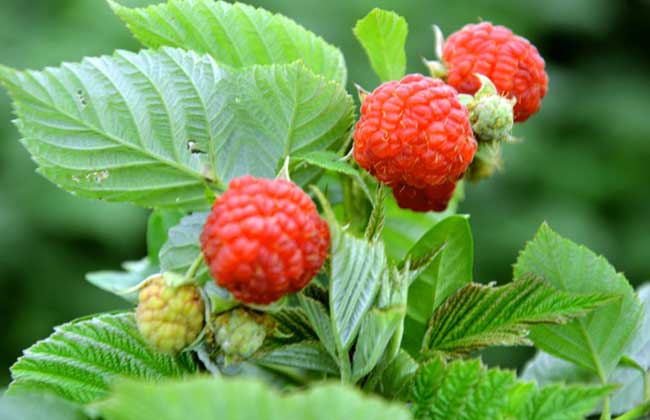
Rubus chingii is also known as Fu Pen Zi, downy bramble, raspberry, Wu Biao Zi, Xiao Tuo Pan, and other names. Its fruit is an aggregate fruit and comes in red, golden, and black. In Europe and America it is eaten as a fruit, while in China it is widely distributed but little known, with only a small amount cultivated in the Northeast region, and it is relatively rare on the market. Let us take a look below at the difference between Rubus chingii and raspberry!
The Difference Between Rubus Chingii and Raspberry
Rubus chingii is raspberry. Rubus chingii is a woody plant in the plant kingdom, Angiosperms, Dicotyledons, Rosales, Rosaceae, Rosoideae, genus Rubus. It is mainly distributed in China's Liaoning, Jilin, Inner Mongolia, Fujian, Hebei, Henan, Shandong, Shanxi, Jiangsu, Anhui, Yunnan, Zhejiang, Jiangxi, Hunan, Hubei, Guangxi, Guangdong, Shaanxi, Guizhou, Sichuan, Chongqing, Gansu, ** and other places, and is also distributed in Japan, Siberia, Central Asia, North America, and Europe.
The Growth Habits of Rubus Chingii
Rubus chingii grows at the edges of mixed mountain woodlands, in shrub thickets, or in the wild, at an altitude of 500-2000 m. It is commonly seen in hillside shrub thickets, roadside shrub thickets in sunny or shady spots. It usually grows in mountain and semi-mountain areas beside streams, in hillside shrub thickets, at forest edges, and among piles of rocks. It grows luxuriantly on barren slopes or, after slash-and-burn, beneath tung oil trees and oil tea Camellia stands. It likes warmth and moisture and requires good, diffused light. It is not strict about soil and is highly adaptable, but it does better in fertile soil with strong water and fertilizer retention and good drainage, from slightly acidic soil to neutral sandy loam, as well as red soil and purple soil.
The Nutritional Value of Rubus Chingii
1. The fruit of Rubus chingii contains fairly rich vitamin A, vitamin C, calcium, potassium, magnesium and other nutrients, as well as a large amount of fiber.
2. Rubus chingii can effectively relieve angina and other cardiovascular diseases, but it sometimes causes mild diarrhea. Its fruit is sweet and sour and tasty, and has the reputation of being the "golden fruit."
3. Rubus chingii is rich in salicylic acid, phenolic acids and other substances. Salicylic acid is called "natural aspirin" and is widely used for pain relief and fever reduction and as an anticoagulant, and can effectively prevent blood clots.
4. Long-term consumption of Rubus chingii can effectively protect the heart and prevent high blood pressure, atherosclerosis of the blood vessel walls, and cardiovascular and cerebrovascular diseases such as brittle rupture of the heart and brain vessels.
5. The various components contained in Rubus chingii are easily absorbed by the human body, and help promote the body's absorption of other nutrients, improve metabolism, and enhance disease resistance.
The Medicinal Value of Rubus Chingii
[Nature and Flavor] Sweet and sour in taste, warm in nature.
[Meridians Entered] Liver, kidney, and bladder meridians.
[Efficacy] Benefits the kidneys, secures essence, reduces urination, nourishes the liver, and brightens the eyes. Used for nocturnal emission, spermatorrhea, enuresis, frequent urination, impotence and premature ejaculation, and dimness of vision.
1. Strengthens the brain and boosts intelligence: Rubus chingii has the effect of strengthening the brain, boosting intelligence, and activating thinking. The antioxidants it contains can effectively prevent free radical damage to the brain and improve blood and oxygen supply to the brain, thereby achieving the effect of strengthening the brain and boosting intelligence.
2. Beauty and skin care: The flavonoids contained in Rubus chingii not only have antibacterial, anti-inflammatory, blood pressure-lowering, and anti-allergic effects, but also perform remarkably well in skin care and beauty. These substances can improve skin blood circulation, enhance the elasticity of skin capillaries, and promote skin cell regeneration, thereby exerting a beauty and skin care function.
3. Preventing and treating cancer: Free radicals run rampant in the body like thugs, damaging tissue cells and altering the structure of DNA molecules, thus leading to the occurrence of cancer. Rubus chingii contains a component that is very beneficial to health -- anthocyanins, which have the function of scavenging free radicals and preventing the occurrence of cancer. Therefore, Rubus chingii is of great significance for cancer prevention and treatment.
4. Invigorating yang and restoring erection: The various active components contained in Rubus chingii can improve blood circulation in the penis, increase the excitability of the sexual nerves, and restore vigorous vitality to a weakened penis. Therefore, Rubus chingii has a significant effect on preventing and treating male erectile dysfunction, low sexual desire, and the like.
5. Resisting aging: In an experiment, a D-galactose aging model in mice was used to observe the effects of Rubus chingii on learning and memory ability and brain monoamine oxidase B (MAO-B). The results showed that Rubus chingii could significantly shorten the swimming latency of aging mice and reduce MAO-B activity, indicating that it has the effect of improving learning ability and delaying aging.