What Do Praying Mantises Eat? An Introduction to Common Food Types
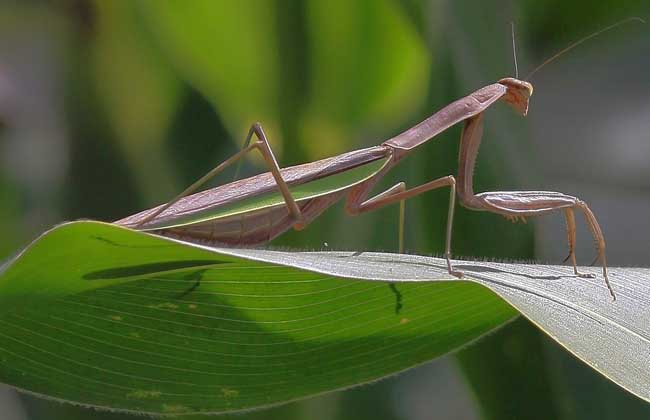
The praying mantis is also known as the mantis, the Chinese mantis, the praying insect, the grass monkey, and so on. In ancient Greece, people regarded the praying mantis as a prophet. Because its forearms are raised in a pose resembling a praying maiden, it is also called the praying insect. It is widely distributed around the world, with the richest variety of species in tropical regions. About 2000 species are known worldwide, and about 147 species are known in China. Let's take a look below at what praying mantises eat!
What do praying mantises eat?
The praying mantis is a carnivorous insect that hunts various insects and small animals. In fields and forest areas, it can eliminate many pests, so it is a beneficial insect. It is fierce and aggressive by nature, and when food is scarce, there are often phenomena of the large eating the small and the female eating the male. A few species distributed in South America and Southeast Asia can also occasionally attack small animals such as small birds, lizards, or frogs.
How do praying mantises hunt?
The praying mantis has protective coloration, and some also have mimicry, resembling the environment in which they live, which helps them prey on various pests. They are also agile, taking only 0.01 seconds to capture prey. They only eat live insects and firmly grasp their prey with their spiny forelegs. When startled, they vibrate their wings with a rustling sound and at the same time reveal vivid warning coloration. They are commonly found among plants rather than on the ground, and their bodies can resemble green leaves or brown dead leaves, twigs, lichen, flowers, or ants. Through mimicry, they can not only avoid natural enemies but also avoid being easily detected when approaching or waiting for prey.
How long do praying mantises live?
The lifespan of a praying mantis is generally one generation per year. A single praying mantis lives about six to eight months or so. Even without a head, a praying mantis can still survive for about ten days. The female praying mantis has a special way of laying eggs: she does not lay them underground, nor in plant stems, but on the surface of branches. Two days after mating, the female usually faces downward, first excretes a foamy substance from her abdomen, and then lays eggs in sequence on top of it. The foamy substance quickly solidifies, forming a hard egg case. The eggs are laid inside the egg case. Each egg case contains 20 to 40 eggs, arranged in 2 to 4 rows, and each female can produce 4 to 5 egg cases. In early summer of the following year, hundreds of nymphs hatch from the egg case. The nymphs molt several times and develop into adults, with incomplete metamorphosis.