Differences Between Rice Field Eels and Loaches
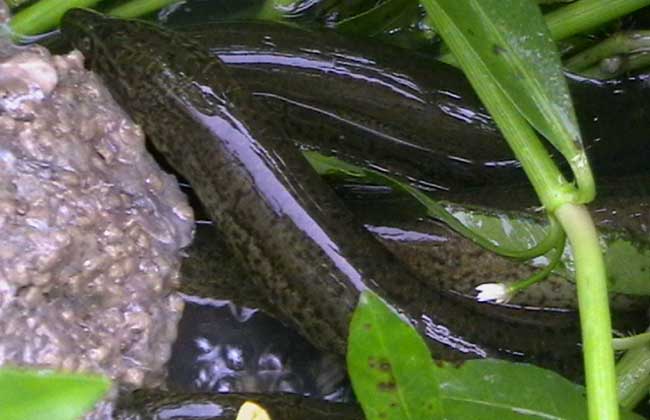
The rice field eel, also known as the eel fish, snake fish, blood eel, changyu and so on, is a collective name for about 15 species of slender eel-shaped fish in the order Synbranchiformes; the loach, also known as yuqiu, loach fish and so on, lives in still or slow-flowing water with a muddy bottom, has strong adaptability, and can live in environments very rich in humus. Let us now take a look at what differences there are between rice field eels and loaches!
Differences in Family and Genus Between Rice Field Eels and Loaches
1. Rice field eel: The rice field eel is a fish of the animal kingdom, phylum Chordata, subphylum Vertebrata, class Osteichthyes, subclass Actinopterygii, order Synbranchiformes, family Synbranchidae, subfamily Synbranchinae, genus Monopterus.
2. Loach: The loach is a fish of the animal kingdom, phylum Chordata, subphylum Vertebrata, class Osteichthyes, subclass Actinopterygii, order Cypriniformes, suborder Cyprinoidei, family Cobitidae, subfamily Cobitinae, genus Misgurnus.
Differences in Appearance Between Rice Field Eels and Loaches
1. Rice field eel: The rice field eel has a body length of about 20.70 cm. It is scaleless or has very small scales; the dorsal and anal fins are very low and continuous around the tail end; the gills usually have only one external gill opening at the throat. The front section is tubular and gradually becomes laterally compressed toward the tail, with the tail end flat and slender. The whole body is bare and scaleless, the head is large and cone-shaped, and the snout is pointed. The mouth is large and terminal, with the upper jaw slightly protruding. In some species the gills themselves are very small, and the fish relies on oxygen absorbed through the mucous membranes of the throat or intestine for respiration. The body is slender and snake-shaped, rounded at the front and laterally compressed at the rear, with a slender pointed tail and a long, rounded head. Both the upper and lower jaws and the palatine bones have fine teeth. The eyes are small; the left and right gill openings merge into one on the ventral surface, and the gill membrane is connected to the isthmus. The body surface generally has a lubricating fluid that makes escape easy, and it is scaleless. The dorsal and anal fins are reduced to mere skin folds, with no soft rays, and are joined with the caudal fin.
2. Loach: The loach has a small, slender body, only three or four cun long, with a rounded body shape and a short body; there are small scales under the skin, and the color is blue-black. The whole body is covered with its own mucus, making it slippery and impossible to grasp. The front section is somewhat cylindrical, the rear is laterally compressed, and the abdomen is rounded. The head is small, the mouth is small, inferior, and horseshoe-shaped, the eyes are small with no suborbital spine, and there are 5 pairs of barbels. The scales are extremely fine, round, and embedded under the skin. The back and both sides of the body are gray-black, and the whole body has many small black spots; the head and each fin also have many black spots. The spots on the membranes of the dorsal and caudal fins are arranged in rows, and there is an obvious black spot at the base of the caudal peduncle.
Differences in Distribution Between Rice Field Eels and Loaches
1. Rice field eel: The rice field eel is widely distributed in lakes, rivers, reservoirs, ponds, ditches and other water bodies across the country. Except for the northwestern plateau region, it has been recorded in all areas, and the Pearl River basin and the Yangtze River basin in particular are areas rich in rice field eels. Abroad, it is mainly distributed in Thailand, Indonesia, the Philippines and other places, and is also produced in India, Japan and Korea.
2. Loach: In China, apart from the Qinghai-Tibet Plateau except for the Nyingchi area of Tibet, the loach is distributed in natural freshwater waters such as rivers, ditches, paddy fields, ponds, lakes and reservoirs all over the country, especially widely in the middle and lower reaches of the Yangtze River and Pearl River basins. In western China (rivers flowing from east to west, of which there are only two such rivers nationwide), the population in the Ili River is also continuously expanding.
Differences in Habits Between Rice Field Eels and Loaches
1. Rice field eel: The rice field eel is a fish of tropical and warm temperate zones and a bottom-dwelling fish with strong adaptability. It can survive in river channels, lakes, ditches and rice fields. During the day it likes to burrow into mud rich in humus or live in holes in water-filled crevices of embankments. It is an omnivorous fish that feeds on various small animals, is greedy by nature, feeds most vigorously in summer, and in cold seasons can go without food for a long time without dying.
2. Loach: The loach likes to inhabit the bottom layer of still water and is often found on the surface layer of mud rich in plant debris at the bottom of lakes, ponds, ditches and paddy fields. It has strong adaptability to the environment. Its living water temperature is 10-30°C, and the most suitable water temperature is 25-27°C. It can not only breathe with its gills and skin, but also has a special intestinal respiration function. It mostly comes out at night to prey on plankton, aquatic insects, crustaceans, debris of aquatic higher plants and algae, and sometimes also ingests bottom humus or mud dregs.
Differences in Nutrition Between Rice Field Eels and Loaches
1. Rice field eel: The flesh of the rice field eel is tender and delicious, with high nutritional value. According to analysis, every 100 grams of rice field eel contains 18.8 grams of protein, 0.9 grams of fat, 38 mg of calcium, 150 mg of phosphorus, 1.6 mg of iron, 0.02 mg of thiamine, 0.95 mg of riboflavin, 3.1 mg of nicotinic acid, and so on. Precisely because of this, the folk saying goes, “Rice field eel at Minor Heat is better than ginseng.”
2. Loach: The loach is delicious and rich in nutrients, containing relatively high protein and relatively low fat, and can lower blood lipids and blood pressure. It is both a delicious dish and a food for the masses, and has long enjoyed the reputation of “turtle dove in the sky, loach on the ground” and “ginseng in the water.” It is delicious and nourishing, and also easy to obtain, cheap and good-quality.