What is the difference between Beiqi and Huangqi? Understand the differences between the two in one article
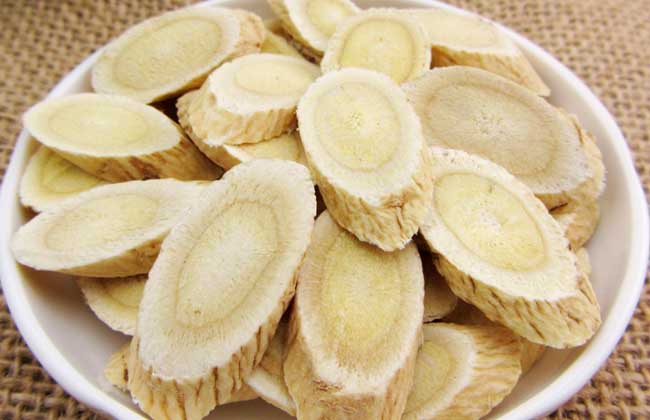
Huangqi (Astragalus membranaceus) and Beiqi are both common Chinese medicinal herbs in daily life, and both have great medicinal value. Many people think that since Huangqi and Beiqi have similar names, their effects and functions must also be similar. However, it is very common in Chinese medicinal herbs for things with similar names to have completely different effects. Let us take a look below at the difference between Beiqi and Huangqi!
The difference between Beiqi and Huangqi
Huangqi is the name of the Chinese medicine, while Bei Huangqi or Beiqi can only be called a prescription name. Because high-quality Huangqi is mainly produced in Heilongjiang, Inner Mongolia and Shanxi, doctors often use names such as Bei Huangqi (Huangqi produced in Inner Mongolia and Heilongjiang) or Xi Huangqi (Huangqi produced mainly in Hunyuan, Shanxi) in prescriptions to emphasize the place of origin of the Huangqi. Because Huangqi is now mainly cultivated and it is generally believed that the Huangqi produced in Shanxi is superior to that produced in Inner Mongolia and Heilongjiang, it can be understood that Xi Huangqi is superior to Bei Huangqi. However, whether Xi Huangqi or Bei Huangqi, both are fine-quality Huangqi, and from the perspective of actual medicinal effect there will not be much difference.
The effects and functions of Huangqi
1. Spontaneous sweating due to exterior deficiency: mostly used for spontaneous sweating caused by physical weakness and weak exterior, such as sweating due to insecurity of exterior qi. Treat with Huangqi combined with Baizhu (Atractylodes macrocephala) and Fangfeng (Saposhnikovia divaricata), and prolonged use will surely be effective, such as in the formula Yupingfeng San. It can also be combined with Fu Xiaomai (light wheat) and Mahuanggen (Ephedra root), etc.
2. Night sweating due to yin deficiency: can be used together with yin-nourishing medicines such as Shengdi (Rehmannia raw) and Maidong (Ophiopogon japonicus).
3. Edema in acute nephritis: used for deficiency-type edema caused by insufficient yang qi, and often used together with Fangji (Stephania tetrandra), Fuling (Poria cocos) and Baizhu (Atractylodes macrocephala), such as in the formula Fangji Huangqi Tang.
4. Edema in chronic nephritis, spleen and kidney deficiency: often used together with Dangshen (Codonopsis pilosula), Baizhu (Atractylodes macrocephala) and Fuling (Poria cocos).
5. Yang qi weakness: used for sores that do not ulcerate for a long time and sink inward, and has the effect of promoting ulceration and localization. For carbuncles and deep-rooted sores that do not come to a head for a long time, it is often used together with Chuanshanjia (pangolin scales), Zaojiaoci (Gleditsia sinensis thorn), Danggui (Angelica sinensis) and Chuanxiong (Ligusticum chuanxiong).
6. Ulcerated sores: for those that do not close for a long time, it has the effect of promoting tissue regeneration and closing the sore, and is often combined with Yinhua (honeysuckle), Zao Ci (Gleditsia sinensis thorn), Dingdi (Viola mandshurica), etc. For clearing pus, it is used together with Dangshen (Codonopsis pilosula), Rougui (cinnamon), etc.
7. Lung qi deficiency pattern: chronic cough and asthma, shortness of breath and fatigue, phlegm congested in the lungs with inability to cough it out. It is often combined with Ziwan (Aster tataricus), Kuandong (Tussilago farfara), etc., and with medicines that warm the lungs and calm asthma and strengthen lung qi. The spleen generates phlegm and the lungs store phlegm, so strengthening the taiyin to remove phlegm; Huangqi tonifies qi, so it is especially good at treating qi deficiency.
8. Qi deficiency and weakness: fatigue and lack of strength, or sinking of middle qi, rectal prolapse, uterine prolapse. To tonify qi and strengthen the spleen, it is often combined with Dangshen (Codonopsis pilosula) and Baizhu (Atractylodes macrocephala), etc. To boost qi and raise yang and lift prolapse, it is often used together with Dangshen (Codonopsis pilosula), Shengma (Cimicifuga foetida), Chaihu (Bupleurum chinense) and Zhi Gancao (honey-fried licorice), etc.
How to consume Huangqi
1. Huangqi red date tea
[Materials] 10-15 grams of raw Huangqi, 7 small red dates (small red dates have higher medicinal value than large red dates).
[Method] Put an appropriate amount of boiling water into a cup, add raw Huangqi and red dates, cover and steep for 20 minutes. After 20 minutes, once the temperature is suitable, it can be drunk. The cup can be refilled with water multiple times; generally 2-3 times is enough.
[Effects] Huangqi not only tonifies qi, but also improves immunity, resists fatigue and delays aging. Red dates nourish blood. Drinking Huangqi and red date infusion can tonify both qi and blood.
2. Huangqi Danggui tea
[Materials] 30 grams of Huangqi, 10 grams each of Danggui (Angelica sinensis) and red dates.
[Method] Wash the Huangqi, Danggui and red dates, add an appropriate amount of water, decoct for 40 minutes, and take the liquid. Add an appropriate amount of water to the dregs again, decoct for 30 minutes, take the liquid, and combine the medicinal liquids.
[Effects] Nourishes and tonifies qi and blood. It can be used as supportive dietary therapy for sallow complexion, dizziness and blurred vision, sores that do not close, joint pain and other conditions caused by insufficient qi and blood.
3. Huangqi ginseng tea
[Materials] 2 grams of Huangqi, 2 grams of ginseng, an appropriate amount of honey.
[Method] Put Huangqi and ginseng into a cup, pour in boiling water and steep for 10 minutes. After the soup has cooled, add honey and mix well before drinking. Huangqi and ginseng can also be put into a pot with an appropriate amount of water, boiled for 20 minutes, and the liquid taken for drinking.
[Effects] Tonifies qi and generates blood, benefits yang and calms the spirit.
4. Huangqi kidney-nourishing tea
[Materials] 15 grams of raw Huangqi, 10 grams each of Danshen (Salvia miltiorrhiza) and hawthorn.
[Method] Wash the medicinal materials, put them together into a teapot, brew with boiling water, and drink as appropriate.
[Effects] Tonifies qi and reduces swelling, activates blood circulation and resolves blood stasis. Suitable for stomach cancer, intestinal cancer, stomach pain and other conditions.