What is the difference between grass carp and common carp? A quick guide to telling them apart
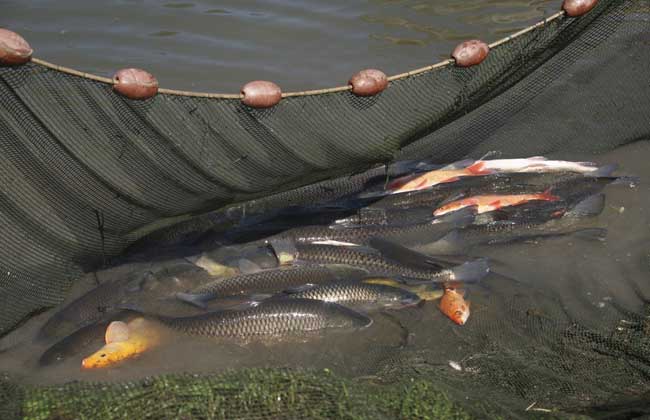
The grass carp is also known as the oil carp, grass carp, white carp, black carp, and so on. It lives in the rivers and lakes of plain regions, generally preferring the middle and lower layers of the water and the near-shore areas rich in aquatic plants. The common carp is also known as the carp guaizi, carp zi, and so on, and often lives alone or in small groups in quiet ponds, lakes, and rivers with muddy bottoms overgrown with aquatic plants. Let us take a look below at the differences between grass carp and common carp!
The difference in family and genus between grass carp and common carp
1. Grass carp: The grass carp is a freshwater fish of the animal kingdom, phylum Chordata, subphylum Vertebrata, class Actinopterygii, subclass Neopterygii, order Cypriniformes, suborder Cyprinoidei, family Cyprinidae, subfamily Leuciscinae, genus Ctenopharyngodon.
2. Common carp: The common carp is a freshwater fish of the animal kingdom, phylum Chordata, subphylum Vertebrata, class Osteichthyes, subclass Actinopterygii, order Cypriniformes, suborder Cyprinoidei, family Cyprinidae, subfamily Cyprininae, genus Cyprinus.
The difference in appearance between grass carp and common carp
1. Grass carp: The body of the grass carp is slightly cylindrical, with the head somewhat flat and the tail laterally compressed. The mouth is arc-shaped, with no barbels, and the upper jaw is slightly longer than the lower jaw. The body is light tea-yellow, the back is grayish-blue, the belly is grayish-white, the pectoral and pelvic fins are slightly grayish-yellow, and the other fins are light gray. Its body is relatively long, and the belly has no ridge. The head is flat, and the tail is laterally compressed. The pharyngeal teeth are in two rows, laterally compressed, comb-shaped, with transverse grooves on the sides of the teeth. Neither the dorsal fin nor the anal fin has hard spines, and the dorsal fin and pelvic fins are opposite each other. The snout is very short, with a length less than or equal to the diameter of the eye. The length behind the orbit exceeds half the head length.
2. Common carp: The body of the common carp is laterally compressed with a round belly, the mouth is horseshoe-shaped, and there are 2 pairs of barbels. The scales have a cross-shaped texture, and the scales do not turn white after death. There is a row of flank scales from head to tail; regardless of the size of the fish, there are always thirty-six scales, and each scale has a small black dot. The base of the dorsal fin is relatively long, and both the dorsal fin and the anal fin have a thick, serrated hard spine. The sides of the body are golden yellow, and the lower lobe of the caudal fin is orange-red.
The difference in feeding habits between grass carp and common carp
1. Grass carp: The grass carp is lively in temperament, swims swiftly, often forages in groups, and is greedy in feeding. It is a typical herbivorous fish. At the fry stage it feeds on zooplankton, and at the juvenile stage it also eats insects, earthworms, algae, duckweed, and so on. When the body length reaches about 10 cm or more, it feeds entirely on higher aquatic plants, among which plants of the grass family are especially numerous. The species of plants it eats vary somewhat according to the state of the food base in its living environment.
2. Common carp: The common carp is a bottom-dwelling omnivorous fish that eats both meat and plants. Its bait spectrum is broad, its snout bones are well developed, and it often roots through mud to feed. Deep in the oral cavity there are pharyngeal teeth, used to grind food. It is omnivorous, and when digging for food it often stirs the water muddy, increasing turbidity, which has adverse effects on many animals and plants. In winter it enters a hibernation state, lying dormant at the bottom of the river and eating nothing.
The difference in habits between grass carp and common carp
1. Grass carp: The grass carp generally prefers to inhabit the middle and lower layers of waters such as rivers and lakes and the near-shore areas rich in aquatic plants. It has the habit of river-lake migration; sexually mature individuals spawn in flowing water such as rivers and reservoirs, and after spawning the parent fish and young fish enter tributaries and lakes connected to the river, usually feeding and fattening in flooded shallow grass flats and floodplain areas as well as in affiliated water bodies of the main and tributary streams (lakes, small rivers, channels, and other zones overgrown with aquatic plants).
2. Common carp: Although the common carp is a bottom-dwelling fish, this does not mean that its activity range stays fixed. Seasonal changes, water temperature, wind force and direction, air pressure, the alternation of new and full moons, water clarity, current strength, water level fluctuations, dissolved oxygen in the water, and the bait environment will all change the common carp's activity range at any time, causing it to move its position over a fairly large range.