Is wool composed of protein or fiber?
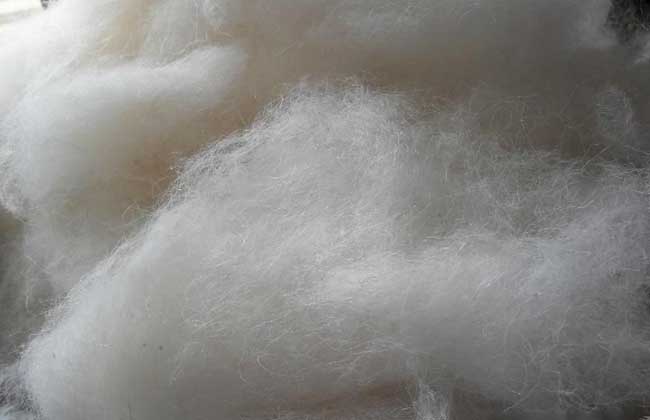
Human use of wool can be traced back to the Neolithic Age, spreading from Central Asia to the Mediterranean and other parts of the world, and it thus became a major textile raw material in Asia and Europe. It is soft and elastic, and can be used to make textiles such as woolen cloth, knitting wool, blankets, and felt. It has characteristics such as a full hand feel, good warmth retention, and comfortable wear. Let us now take a look at whether wool is protein or fiber!
Is wool protein or fiber?
Wool is protein. Wool is mainly composed of protein. Countries with relatively large sheep wool production in the world include Australia, the former Soviet Union, New Zealand, Argentina, and China. According to fineness and length, it is divided into 5 categories: fine wool, semi-fine wool, long wool, crossbred wool, and coarse wool. China's sheep wool varieties include Mongolian wool, Tibetan wool, and Kazakh wool. The main factors for evaluating wool quality are fineness, crimp, color, strength, and grass and impurity content.
How is wool structured?
1. Scale layer: The scale layer is the surface layer of wool, growing in a certain direction, from the wool root toward the wool tip. One end of each scale is connected to the cortex layer at the wool root, and the other end opens outward, covering and connecting one piece after another. The coverage density of scales on wool varies greatly depending on the wool variety. The scale layer also gives wool good luster. The scale structure is tough, giving wool abrasion resistance and pollution resistance.
2. Cortex layer: The cortex layer is the main component of wool fiber, composed of many protein cells, and its constituent substance is called keratin or keratin protein. The cortex layer is the main part that determines the physical, mechanical, and chemical properties of wool fiber, and is divided into two types: orthocortex and paracortex. The cells on the outer side of the crimp wave are called orthocortical cells, and those on the inner side are called paracortical cells. The orthocortex has a lower sulfur content than the paracortex, so its chemical properties are more active and it is easier to dye. The paracortex is the opposite.
3. Medulla layer: The medulla layer is in the central part of the wool fiber and is an opaque, loose substance. Generally, fine wool has no medulla layer, while coarser wool has varying degrees of medulla layer. The more medulla, the straighter, coarser, and harder the wool shape, and the worse the quality. Wool containing a large amount of medulla layer is brittle and easily broken, has little crimp, and when shriveled is called dead hair.
Differences between wool and cashmere
1. Wool's scales are arranged more tightly and thickly than cashmere's, and its felting property is greater than cashmere's. Cashmere fiber has small and smooth scales on the surface, and there is an air layer in the middle of the fiber, so it is light in weight and has a smooth and soft hand feel.
2. Wool's crimp degree is smaller than cashmere's. Cashmere fiber has larger crimp number, crimp rate, and crimp recovery rate, and is suitable for processing into knitwear with a full hand feel, softness, and good elasticity. It is comfortable and natural to wear, and has good recovery characteristics, especially shown in not shrinking after washing and good shape retention.
3. Cashmere's cortex content is higher than wool's, and cashmere fiber's rigidity is better than wool's, meaning cashmere is softer than wool.
4. Cashmere's fineness unevenness rate is smaller than wool's, and the appearance quality of its products is better than wool's.
5. Cashmere fiber has uniform fineness, and its density is smaller than wool's. Its cross-section is mostly a regular circle, and its products are lighter and thinner than wool products.
6. Cashmere's moisture absorbency is better than wool's. It can fully absorb dyes, is not easy to fade, has a high moisture regain rate, and has a relatively large resistance value.
7. Wool's acid resistance and alkali resistance are better than cashmere's, and when encountering oxidizing agents and reducing agents, the damage is also smaller than to cashmere.
8. Usually, wool products have better pilling resistance than cashmere products, but greater felting shrinkage.