What is the difference between white radish and carrot
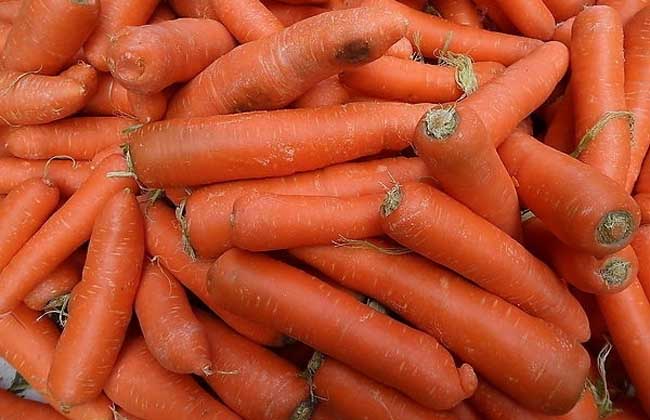
Carrot is also known as red radish, sweet fennel, etc. Its root is eaten as a vegetable and contains various vitamins A, B, and C as well as carotene. It is widely cultivated throughout our country and is distributed in Europe and Southeast Asia. White radish is a common vegetable that can be eaten raw or cooked and has a slightly spicy taste. Let us take a look below at the difference between white radish and carrot!
The difference in family and genus between white radish and carrot
1. White radish: White radish is a plant in the plant kingdom, Angiosperms, Dicotyledons, Dilleniidae, Capparales, Brassicaceae, Raphanus, an annual or biennial herbaceous plant.
2. Carrot: Carrot is a plant in the plant kingdom, Angiosperms, Dicotyledons, Archichlamydeae, Apiales, Apiaceae, Daucinae, Daucus, a biennial herbaceous plant.
The morphological difference between white radish and carrot
1. White radish: The root of white radish is fleshy, oblong, spherical, or conical, and the root skin is green, white, pink, or purple. The stem is erect, stout, cylindrical, hollow, and branched from the base. The basal leaves and lower stem leaves have long petioles and are usually lyrate-pinnatifid. The middle and upper stem leaves are oblong to lanceolate. The raceme is terminal and axillary, and the flowers are pale pink or white. The silique is constricted between the seeds into a bead-like string, with 1 to 6 seeds, red-brown, round, and finely reticulate.
2. Carrot: Carrot is 15 to 120 cm tall, the stem is solitary, and the whole plant has white coarse stiff hairs. The basal leaves are membranous, oblong, the petiole is 3 to 12 cm long, and the stem leaves are nearly sessile. The compound umbel has rough stiff hairs. The involucre has many bracts, leaf-like, pinnately divided. The rays are numerous, and the outer rays curve inward when fruiting. The flowers are usually white, sometimes with a pale red tinge, and the pedicels are unequal in length. The fruit is round-ovate and has white bristles on the ribs. The flowering period is May to July.
The origin difference between white radish and carrot
1. White radish: The original species of radish originated from wild radish on the warm coasts of Europe and Asia, and it is one of the world's ancient cultivated crops. As far back as 4500 years ago, it had become an important food in Egypt. It is commonly cultivated throughout the country, and in areas with suitable climatic conditions, it can be planted in all four seasons. In most areas, autumn cultivation is dominant, making it one of the main vegetables in autumn and winter.
2. Carrot: Carrot was introduced from Iran to the European continent in the 10th century AD, was introduced from Iran to China around the 13th century and developed into the Chinese ecotype, developed into the European ecotype in England in the 15th century, and was introduced to the United States and Japan in the 16th century. It is widely cultivated throughout our country and is distributed in Sichuan, Guizhou, Hubei, Jiangxi, Anhui, Jiangsu, Zhejiang, and other provinces.
The efficacy difference between white radish and carrot
1. White radish: White radish is cool in nature, pungent and sweet in taste, non-toxic, enters the lung and stomach meridians, and has the effects of relieving food stagnation, resolving phlegm-heat, descending qi, soothing the middle, and detoxifying. It treats food accumulation with distention and fullness, phlegm cough with loss of voice, pulmonary tuberculosis with hemoptysis, vomiting and acid regurgitation, and other symptoms. It has a strong qi-moving function and can also relieve cough and resolve phlegm, remove dryness and promote fluid production, clear heat and relieve toxins, and promote bowel movements.
2. Carrot: Carrot has long been called "little ginseng." It is rich in nutrients such as carbohydrates, fat, volatile oil, carotene, vitamin A, vitamin B1, vitamin B2, anthocyanins, calcium, and iron. It has the effects of strengthening the spleen and promoting digestion, moistening the intestines and promoting bowel movements, killing parasites, moving qi and resolving stagnation, tonifying the liver and improving vision, and clearing heat and detoxifying. It can treat poor appetite, abdominal distention, diarrhea, cough and asthma with copious phlegm, blurred vision, malnutrition in children, measles, night blindness, constipation, high blood pressure, gastrointestinal discomfort, and feeling full and bloated.