What Is the Difference Between a Porcupine and a Hedgehog? A Quick Guide to Telling Them Apart
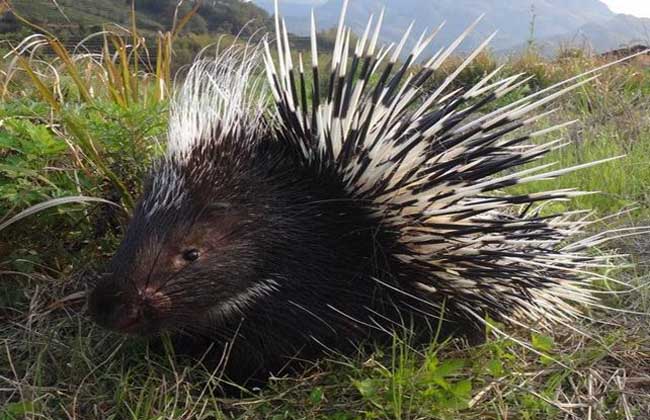
The porcupine is the general name for animals in the family Hystricidae, known for its spines, which serve as protection against enemies and can reach up to 35 cm long. The hedgehog is also known as the prickly ball, hedge mouse, melon-stealing badger, and burr, among other names, and like the porcupine it has spines on its body, so many people are hopelessly confused about what exactly the difference is between a porcupine and a hedgehog. Let's take a look together below at what differences there are between porcupines and hedgehogs!
Differences in Family and Order Between Porcupines and Hedgehogs
1. Porcupine: The porcupine is the general name for animals in the animal kingdom, phylum Chordata, subphylum Vertebrata, class Mammalia, subclass Eutheria, order Rodentia, suborder Hystricomorpha, family Hystricidae.
2. Hedgehog: The hedgehog is a heterothermic animal in the animal kingdom, phylum Chordata, subphylum Vertebrata, class Mammalia, subclass Eutheria, order Erinaceomorpha, family Erinaceidae, subfamily Erinaceinae, genus Erinaceus.
Differences in Appearance Between Porcupines and Hedgehogs
1. Porcupine: The porcupine has a stout, bulky body, with the largest individuals reaching over 70 cm in body length. It has a small head, small eyes, and short, thick limbs. Long, hard spines grow on its back and tail; these are an important organ for defense against natural enemies. Its skull is relatively small and slender, the zygomatic arch does not flare outward, but the nasal cavity is greatly expanded. It has 20 teeth with very shallow roots.
2. Hedgehog: The hedgehog has a plump, short body, sharp claws, small eyes, and short fur, and is covered all over with short, dense spines. Its back and sides are fully covered with spines, while the head, tail, and belly are covered with hair. Its snout is pointed and long, and its tail is short. Both the front and hind feet have 5 toes and are plantigrade; a few species have 4 toes on the front feet. It has 36 to 44 teeth, all with sharp cusps, suitable for eating insects. When startled, it erects all its spines and rolls into a spiny ball, with its head and all 4 feet hidden from view.
Differences in Habits Between Porcupines and Hedgehogs
1. Porcupine: The porcupine lives on hillsides, grasslands, or in dense forests, dwells in burrows, is active at night, and often follows a fixed route. As it walks, its spines rub against each other and make a sound. It is herbivorous. It breeds once a year, with 4 young per litter. It is distributed in the tropical and subtropical forests and grasslands of Africa, the Mediterranean coast of Europe, and southwestern, southern, and southeastern Asia.
2. Hedgehog: The hedgehog family is widely distributed across the "Old World," including Asia, Europe, and Africa, and has been artificially introduced to New Zealand. In New Zealand, as an introduced animal, the hedgehog has no natural enemies, so excessive breeding has gradually turned it into a pest. Because its main food, "bugs," is not enough, it began searching for snails, earthworms, and bird eggs as food.
Differences in Protection Status Between Porcupines and Hedgehogs
1. Porcupine: All porcupines are included in the IUCN Red List of Threatened Species ver3.1 of 2008.
2. Hedgehog: As a protected wild animal in Beijing, the ordinary hedgehog has become one of 136 species of second-class protected animals and is protected by law. This species has been included in the "List of Terrestrial Wild Animals Protected by the State That Are Beneficial or of Important Economic or Scientific Research Value," issued by China's State Forestry Administration on August 1, 2000.