What is the difference between cedar and spruce? A quick guide to telling them apart
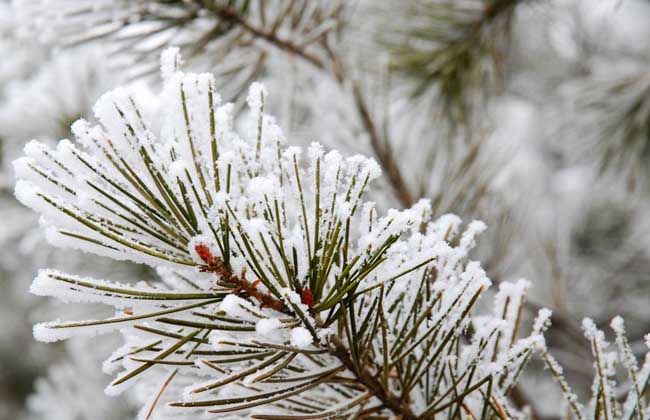
Cedar is also known as incense cedar, pagoda pine, foreign cypress, Himalayan cedar and so on, and is native to western Asia, the western Himalayas, Africa and the Mediterranean coast. Spruce is also known as coarse-branched spruce, large-fruited spruce, rough-barked spruce, variable-scaled spruce, large spruce, white pine and so on, and is a tree species unique to China. Let us take a look below at the difference between cedar and spruce!
The difference in family and genus between cedar and spruce
1. Cedar: Cedar is an evergreen tree in the plant kingdom, Pinophyta, Pinopsida, Pinales, Pinaceae, Abietoideae, genus Cedrus.
2. Spruce: Spruce is a tall tree in the plant kingdom, Pinophyta, Pinopsida, Pinales, Pinaceae, Piceoideae, genus Picea.
The difference in appearance between cedar and spruce
1. Cedar: Cedar grows about 30 m tall, with a diameter at breast height of up to 3 m. The bark is dark gray and splits into irregular scaly plates. The branches spread horizontally, slant slightly upward or droop slightly, and the twigs often hang down. The leaves are needle-shaped and hard. The cones are light green with a slight white bloom before ripening and reddish brown when ripe, ovate or broadly elliptical. The seeds are nearly triangular, and the seed wing is broad and large, longer than the seed.
2. Spruce: Spruce grows up to 45 m tall, with a diameter at breast height of up to 1 m. The bark is light grayish brown or light brownish gray and splits into irregular scales or slightly thick blocks that fall off. The twigs have sparse or dense short pubescence. The winter buds are conical. The leaves on the main branches spread radially. The cones are cylindrical-oblong or cylindrical, green before ripening and light brown or chestnut brown when ripe. The seeds are obovate. The flowering period is April to May, and the cones ripen in September to October.
The difference in origin between cedar and spruce
1. Cedar: Cedar is native to western Asia, the western Himalayas, Africa and the Mediterranean coast. In China there is only one species, the Himalayan cedar, distributed in southern Tibet and in India and Afghanistan. In China it has been widely cultivated as a garden tree in Beijing, Lushun, Dalian, Qingdao, Xuzhou, Shanghai, Nanjing, Hangzhou, Nanping, Lushan, Wuhan, Changsha, Kunming and other places.
2. Spruce: Spruce is a tree species unique to China, widely distributed in the mountains of North China, and also found in the Lesser Khingan Mountains and other places in Northeast China. It is native to southwestern Shaanxi (Feng County), eastern Gansu (Liangdang) and the Bailong River basin, the Tao River basin, the upper reaches of the Min River basin in Sichuan and the Greater and Lesser Jinchuan river basins.
The difference in uses between cedar and spruce
1. Cedar: Cedar wood is an important construction timber in its place of origin. Distillation also yields aromatic oil, and its various benefits make it an excellent choice for treating dandruff and rashes. It has medical effects such as anti-seborrheic, preservative, bactericidal, tonic, astringent, diuretic, emmenagogue, expectorant, insecticidal and sedative properties.
2. Spruce: Spruce wood can be used as timber for construction, aircraft, sleepers, utility poles, boats and vehicles, utensils, furniture and wood fiber industrial raw materials. Resin can be tapped from the trunk. Aromatic oil can be extracted from the roots, wood, branches and leaves. Tannin extract can be obtained from the bark. As a potted plant it can serve as an indoor ornamental tree species.