What is the difference between Danshen (Salvia miltiorrhiza) and Sanqi (Panax notoginseng)? A quick guide to telling these two medicinal herbs apart
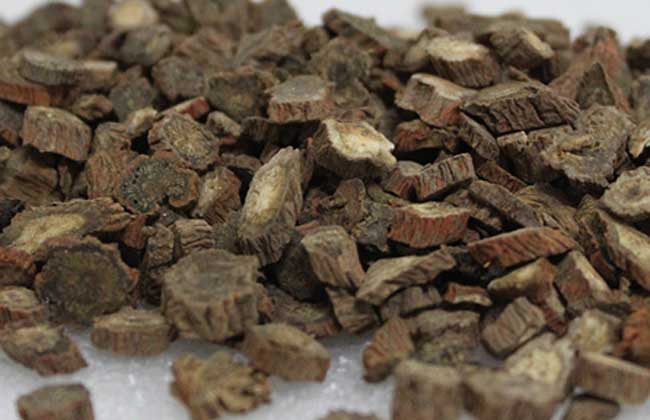
Danshen is also known as Chishen, Zi Danshen, Honggen and so on. Because wild Danshen has been dug up without restraint for years on end, wild resources are now on the verge of extinction. Sanqi is also known as Tianqi, Renshen Sanqi, Shen Sanqi, Wenzhou Sanqi and so on. It is the dried root and rhizome of the plant Panax notoginseng of the Araliaceae family, and it has the effects of dispersing blood stasis and stopping bleeding, reducing swelling and relieving pain. Let us now take a look at the difference between Danshen and Sanqi!
The difference in family and genus between Danshen and Sanqi
1. Danshen: Danshen is a perennial upright herbaceous plant in the plant kingdom, Angiosperms, Dicotyledoneae, Sympetalae, Tubiflorae, Lamiaceae, Salviae, Salvia, and the subgenus Sclarea.
2. Sanqi: Sanqi is a perennial upright herbaceous plant in the plant kingdom, Angiosperms, Tracheophytes, Magnoliopsida, Rosidae, Apiales, Araliaceae, Paniceae, and Panax.
The difference in appearance between Danshen and Sanqi
1. Danshen: The rhizome of Danshen is short and thick, sometimes with the remnants of a stem base at the top. The roots are several in number, long and cylindrical, slightly curved, some branched and with fine fibrous rootlets. The surface is brownish red or dark brownish red, rough, with longitudinal wrinkles. The outer bark of old roots is loose, mostly purplish brown, and often peels off in scales. The texture is hard and brittle; the cross-section is loose, with cracks, or slightly smooth and dense; the bark part is brownish red, the wood part is grayish yellow or purplish brown, and the vessel bundles are yellow-white, arranged in a radial pattern.
2. Sanqi: The main root is subconical or cylindrical, with a grayish brown or grayish yellow surface and intermittent longitudinal wrinkles and lateral root scars. The top has a stem scar, surrounded by nodular protrusions. It is heavy and solid in texture; the cross-section is grayish green, yellow-green or grayish white, and the wood part is slightly arranged in a radial pattern. The rootlets are cylindrical or conical. The cut ends are irregularly shrunken, block-like or strip-like, with several obvious stem scars and ring lines on the surface; the center of the cross-section is grayish green or white, and the edges are dark green or gray.
The difference in producing areas between Danshen and Sanqi
1. Danshen: Danshen likes to grow in a mild climate with plenty of light and moist air, and grows better in fertile sandy loam, but it can grow in neutral, slightly acidic or slightly alkaline soil. It is produced in Hebei, Shanxi, Shaanxi, Shandong, Henan, Jiangsu, Zhejiang, Anhui, Jiangxi and Hunan, among other places, and it is also distributed in Japan.
2. Sanqi: Sanqi is mainly produced in the counties of Wenshan Prefecture in Yunnan, including Wenshan County, Yanshan County, Maguan, Xichou, Guangnan, Malipo, Funing and Qiubei, among others; it is also cultivated in Tianyang, Jingxi, Tiandong and Debao in Guangxi. Wenshan Prefecture in Yunnan has a long history, large output and good quality, and the product is commonly called Wen Sanqi or Tianqi; it is a famous authentic medicinal material.
The difference in effects between Danshen and Sanqi
1. Danshen: Danshen has the effects of activating blood and removing stasis, unblocking meridians and relieving pain, clearing the heart and eliminating vexation, and cooling blood and dispersing abscesses. It is used for chest impediment and heart pain, pain in the epigastrium, abdomen and hypochondrium, abdominal masses and accumulations, painful heat impediment, vexation and insomnia, irregular menstruation, dysmenorrhea and amenorrhea, and sores and ulcers with swelling and pain.
2. Sanqi: Sanqi is sweet and slightly bitter in taste, warm in nature, and enters the liver and stomach meridians. It has the effects of dispersing blood stasis and stopping bleeding, reducing swelling and relieving pain. It is used for hemoptysis, hematemesis, epistaxis, blood in the stool, metrorrhagia, bleeding from trauma, stabbing pain in the chest and abdomen, and swelling and pain from falls and blows.