What are the differences between sugar apple and lychee?
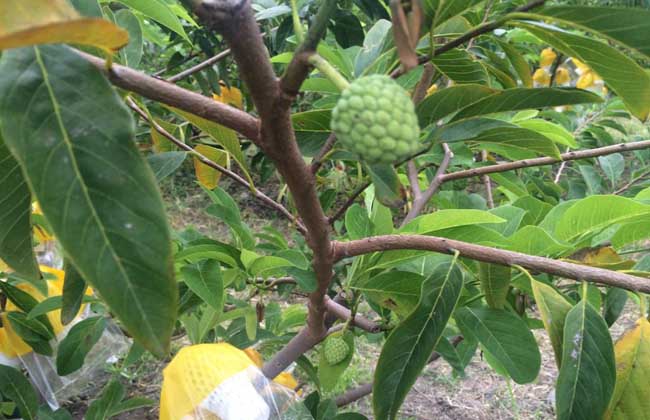
The sugar apple, whose scientific name is Annona squamosa, is also known as custard apple, sweetsop and Buddha's head fruit. Its fruit is similar in size to a pomegranate, and it is ranked among the famous tropical fruits for its unique fragrance. Lychee is famous because Yang Guifei loved to eat it, and together with banana, pineapple and longan it is known as one of the "four great fruits of the South." Let's take a look below at the differences between sugar apple and lychee!
Differences in family and genus between sugar apple and lychee
1. Sugar apple: The sugar apple is a perennial semi-deciduous small tree in the plant kingdom, Angiosperms, Dicotyledons, Ranunculales, Annonaceae, Annoneae, Annona.
2. Lychee: Lychee is a subtropical evergreen tree in the plant kingdom, Angiosperms, Dicotyledons, Sapindales, Sapindaceae, Litchi.
Morphological differences between sugar apple and lychee
1. Sugar apple: The sugar apple is 3-5 m tall, with thin, grayish-white bark and many branches. The leaves are papery-thin, arranged in two rows, elliptic-lanceolate or oblong. The flowers are solitary or in clusters of 2-4 at the branch tips or opposite the leaves, about 2 cm long, greenish-yellow, and drooping. The fruit is an aggregate berry formed from numerous round or oval mature carpels that are slightly connected and easily separated, round or heart-shaped conical, hairless, yellow-green, covered outside with a white waxy bloom. The flowering period is May to June, and the fruiting period is June to November.
2. Lychee: The lychee is usually no more than 10 m tall, sometimes reaching 15 m or more, with grayish-black bark, cylindrical reddish-brown branchlets, and densely covered with white lenticels. The leaves are thinly leathery or leathery, lanceolate or ovate-lanceolate, sometimes long elliptic-lanceolate. The inflorescence is terminal and broad, with the calyx covered in golden-yellow short down. The fruit is ovate to nearly spherical, usually dark red to bright red when ripe, and the seed is entirely enclosed by the fleshy aril. The flowering period is spring, and the fruiting period is summer.
Differences in origin between sugar apple and lychee
1. Sugar apple: The sugar apple is native to tropical America, and is cultivated in Hainan, Fujian, Taiwan, China, Guangdong, Guangxi and Yunnan in China. It likes light and a warm, humid climate, requires an annual average temperature above 22°C, is not cold-tolerant, and is suited to deep, fertile, well-drained sandy loam.
2. Lychee: Lychee is native to southern, southwestern and southeastern China, with the most extensive cultivation in Guangdong, Guangxi and Fujian. It is also cultivated in southeastern Asia, and there are records of its introduction in Africa, the Americas and Oceania. It likes high temperatures and high humidity, and likes light and sun. If the flowering and fruiting periods encounter unfavorable disastrous weather, it will cause flower and fruit drop, or even total crop failure.
Differences in effects between sugar apple and lychee
1. Sugar apple: The sugar apple is rich in vitamin C and has the effect of lowering blood sugar. It is the best antioxidant fruit, can effectively delay skin aging and whiten the skin, and has a relatively high fiber content, which can effectively promote intestinal peristalsis and expel retained stool accumulated in the intestines.
2. Lychee: The rich sugar contained in lychee has the effect of replenishing energy and treating symptoms such as fatigue. Lychee flesh is rich in vitamin C and protein, and its abundant vitamins can promote blood circulation in fine capillaries, prevent the occurrence of freckles, and make the skin smoother.