What is the difference between cherry tomatoes and tomatoes?
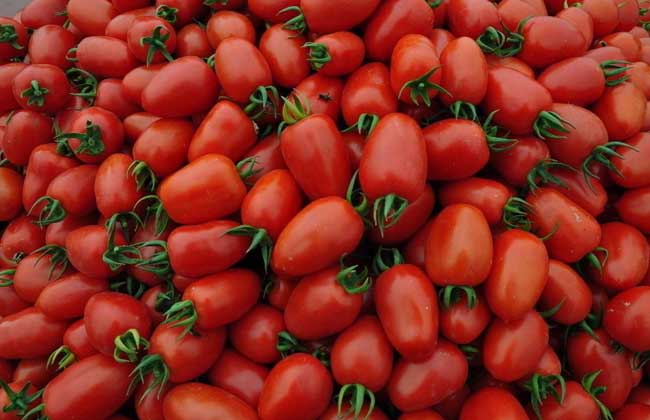
The cherry tomato is an annual herbaceous plant of the genus Solanum in the nightshade family, often called the small tomato. Its fruits come in shapes such as spherical, pear-shaped, and gooseberry-shaped, and in colors including red, pink, yellow, and orange, with red varieties being the most widely cultivated. Because they look like cherries from a distance, they are also called cherry tomatoes. Let us take a look below at what the differences are between cherry tomatoes and tomatoes!
The difference between cherry tomatoes and tomatoes
The cherry tomato is in fact the most primitive tomato variety, while the large tomato was later bred and selected through hybridization in pursuit of larger fruit. The reason some cherry tomatoes taste especially sweet and have a small, cute shape is that they were specially selected during breeding to cater to market demand. Cherry tomatoes and tomatoes differ only slightly in size and color: tomatoes are relatively large, cherry tomatoes are relatively small, and their color is generally a slightly darker red. The nutritional value of cherry tomatoes is basically the same as that of large tomatoes, but some components are superior to those of ordinary tomatoes. In addition to containing all the nutrients of large tomatoes, their vitamin content is 1.7 times that of ordinary tomatoes.
What are the benefits of eating cherry tomatoes?
1. Promoting development: Cherry tomatoes can promote human growth and development, especially in children, so children can eat cherry tomatoes as one of their main fruits, which can support physical development.
2. Beauty and skin care: Cherry tomatoes can increase the body's resistance, delay aging, and reduce the formation of wrinkles, so they are especially suitable for women for beauty purposes and can be called a natural beauty fruit for women.
3. Promoting salivation and quenching thirst: Cherry tomatoes taste sweet and sour. When appetite declines in the hot summer, regularly eating some cherry tomatoes can relieve summer heat, increase appetite, help digestion, and maintain normal secretion of gastric juice.
4. Clearing heat and detoxifying: Cherry tomatoes have a relatively good therapeutic effect on conditions such as thirst from febrile disease, indigestion caused by overeating greasy and rich foods, heatstroke, bitter taste in the mouth due to stomach heat, and flushing caused by deficiency fire.
5. Helping digestion: The content of vitamin PP in cherry tomatoes ranks first among fruits and vegetables. Vitamin PP protects the skin, maintains normal secretion of gastric juice, promotes the production of red blood cells, and also has an auxiliary therapeutic effect on liver disease. The malic acid or citric acid they contain helps gastric juice digest fat and protein.
What are the contraindications for eating cherry tomatoes?
1. People with deficiency-cold of the spleen and stomach and women during menstruation should not eat them raw. Cherry tomatoes contain large amounts of soluble astringent substances and other components, which react with gastric acid and coagulate into insoluble lumps, easily causing uncomfortable symptoms such as abdominal fullness and pain. If cherry tomatoes are eaten only as a fruit to supplement vitamin C, or to clear summer heat in midsummer, then eating them raw is preferable.
2. Unripe green cherry tomatoes should not be eaten, because green cherry tomatoes contain large amounts of toxic tomatine, and after eating them symptoms of poisoning such as nausea, vomiting, and general weakness may appear. After they mature and turn red, the tomatine content greatly decreases and disappears.
3. Cherry tomatoes should not be eaten on an empty stomach. On an empty stomach, gastric acid secretion increases, and because certain chemical substances contained in tomatoes combine with gastric acid to easily form water-insoluble lumps, eating them often causes abdominal pain, stomach discomfort, and bloating pain.
4. Cherry tomatoes should not be heated at high temperature for a long time, because lycopene easily decomposes when exposed to light, heat, and oxygen, losing its health benefits.
5. Cherry tomatoes should not be eaten together with green cucumber or cucumber. Green cucumber contains a vitamin C decomposing enzyme that destroys vitamin C in other vegetables. Cherry tomatoes are rich in vitamin C, and if the two are eaten together, the nutritional supplementation effect cannot be achieved.
6. Cherry tomatoes are slightly cold in nature, and people with qi deficiency, yang deficiency, or yin deficiency constitutions should not eat them.