What is the difference between sardines and tuna? A quick guide to tell them apart
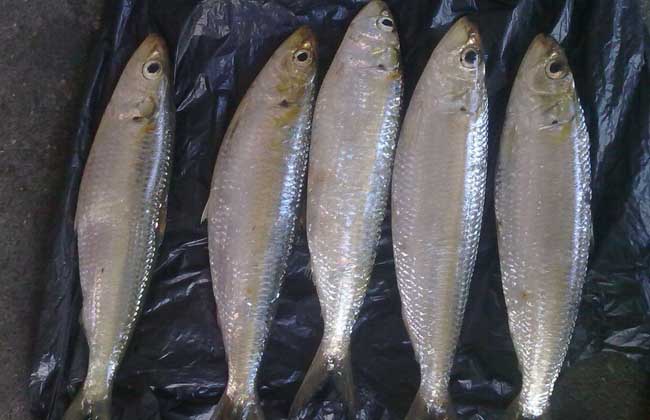
Sardine is the collective name for certain edible fishes in the class Osteichthyes, order Clupeiformes, family Clupeidae, genera Sardina, Sardinella and Sardinops; tuna is a large, important oceanic commercial food fish, called tuna in Hong Kong, China, and rendered in Macao, China from the old Portuguese translation as "ya dong yu". Let us take a look below at what the differences between sardines and tuna are!
The difference in family and genus between sardines and tuna
1. Sardine: The sardine is the collective name for certain edible fishes in the animal kingdom, phylum Chordata, subphylum Vertebrata, class Osteichthyes, subclass Actinopterygii, order Clupeiformes, family Clupeidae, genera Sardina, Sardinella and Sardinops.
2. Tuna: The tuna is a large, important oceanic commercial food fish in the animal kingdom, phylum Chordata, subphylum Vertebrata, class Osteichthyes, order Perciformes, suborder Scombroidei, family Scombridae, genus Thunnus.
The difference in appearance between sardines and tuna
1. Sardine: The sardine is a slender, silver small fish, with a short dorsal fin and only one of them, no lateral line, a scaleless head, a body length of about 15-30 cm, a lower jaw slightly longer than the upper jaw, inconspicuous teeth, a dark back and white belly, and delicious flesh; it is mostly used to make canned food.
2. Tuna: The tuna has a relatively long body, thick and round, streamlined, gradually tapering and pointed toward the rear with a slender caudal base, and a forked or crescent-shaped caudal fin. There are obvious ridges on both sides of the caudal peduncle, and there is a row of small fins behind the dorsal and anal fins. It has a torpedo-shaped body, its cross-section is slightly circular, and its flesh color is red.
The difference in distribution between sardines and tuna
1. Sardine: The Japanese pilchard (Sardinops melanostictus) is distributed in eastern Honshu, southwestern Kyushu, the Sea of Japan and the Korea Strait; the California pilchard (Sardinops caeruleus) is produced along the coast of California in the United States and western Canada; the South American pilchard (Sardinops sagax) is produced along the coasts of Chile and Peru in South America; the Australian pilchard (Sardinops neopilchardus) is produced in Australia and New Zealand; the South African pilchard (Sardinops ocellatus) is distributed along the coasts of southern Africa, Angola and Namibia; the genus Sardinella is distributed in the western Indian Ocean, the Pacific Ocean and the Atlantic Ocean; the genus Sardina is distributed in the northeastern Atlantic and along the Mediterranean coast.
2. Tuna: The tuna is a warm-water migratory fish of the open ocean, mainly distributed in low- and mid-latitude sea areas, and widely distributed in the Pacific Ocean, Atlantic Ocean and Indian Ocean. It is also distributed in the East China Sea and South China Sea of our country. Most inhabit sea areas at a water depth of 100-400 m. Juvenile bigeye tuna, yellowfin tuna and skipjack tuna all inhabit the surface waters of the ocean, while adult bigeye tuna and yellowfin tuna inhabit relatively deeper water layers.
The difference in nutrition between sardines and tuna
1. Sardine: The sardine is amazingly nutritious, rich in phospholipids, namely OMEGA-3 fatty acids, protein and calcium. This special fatty acid can reduce the production of triglycerides (harmful fatty acids that cause blood clots) and has the miraculous effect of gradually lowering blood pressure and slowing the progression of atherosclerosis. At the same time, the phospholipids in sardines have a beneficial effect on promoting fetal brain development.
2. Tuna: The tuna is a rare healthy delicacy for modern people. Its protein content is as high as 20%, but its fat content is very low, so it is commonly known as the "chicken of the sea". Most of the fatty acids in its flesh are unsaturated fatty acids, and it contains a complete range of amino acids; all 8 amino acids required by the human body are present. It also contains vitamins and abundant minerals and trace elements such as iron, potassium, calcium, magnesium and iodine.