Podocarpus is expensive but of high quality; what points should be noted when caring for it as a potted plant?
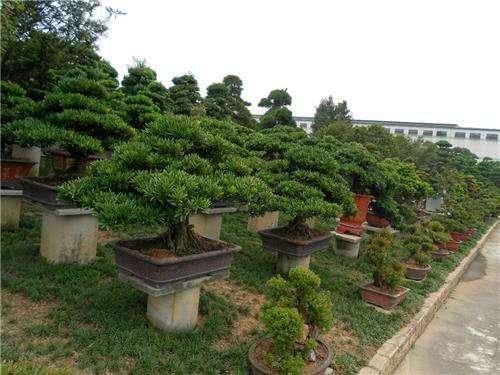
Podocarpus is also known by the alias Luohanshan; it is commonly seen in some flowerbeds or gardens, or is relatively common in some temples in the south, and because its wood quality is relatively good, many well-grown podocarpus are often cut down by people to be used as furniture or utensils. As one of the relatively noble plants, its price is also relatively high, so its cultivation and care can be said to be especially important.
I. Propagation of Podocarpus
The common propagation methods for podocarpus can be divided into seeding and cuttings.
1. Cutting propagation: Usually when plants are propagated by cuttings, softwood cuttings are used, while podocarpus can be propagated both by softwood cuttings and by hardwood cuttings. If the softwood cutting method is used, the raw material must first be prepared, that is, cut semi-lignified branches from a mature podocarpus, and cut the branches into several small sections at a certain spacing, with each small section about 10-15 cm long; when cutting, the branches need to be inserted into the soil to a depth of about 5 cm, and then an appropriate amount of water should be given. The best time for softwood cuttings is May-July or August-September each year. If the hardwood cutting method is used, it is best to do it in February-March each year, and the material of the selected branches is also relatively different; the branches for hardwood cuttings should be fully lignified, robust branches. Because the weather in February-March is still relatively cold, after completing the cutting work, if the outdoor temperature is unsuitable for the growth of podocarpus, it needs to be planted indoors in a mild place.
2. Seed propagation: The most important part of seed propagation is the treatment of the seeds. For the podocarpus seeds prepared in advance, soak them in water at 15-25 degrees for 24 hours before carrying out seed propagation. When sowing, the seeds should not be buried too deep in the potting soil, then a certain amount of water should be given, and afterward an appropriate amount of water should be given every day.
II. Care of Podocarpus
1. Soil conditions: The constitution of podocarpus determines that it is most suitable for growing in slightly acidic soil. Of course, if the potting soil is neutral, there will not be much effect either, and at the same time the soil is required to be highly fertile and to have good drainage. However, it must absolutely not be cultivated in alkaline soil, otherwise the plant is very prone to yellowing and shedding of leaves, and it will also cause its branches and stems to become relatively fragile and unable to withstand much.
2. Light conditions: Podocarpus can grow under relatively strong light and can also grow in semi-shaded places. If the summer temperature is on the high side, at this time podocarpus, making use of a certain advantage of its body size, will not have much impact on its growth, so a series of shading measures can also be omitted, but the leaves need to be sprinkled with water from time to time. Young podocarpus is relatively more suitable for growing under warm light, and too strong light intensity is instead detrimental to its growth.
3. Watering measures: Watering podocarpus is another aspect that needs attention. Its drought tolerance is not strong; on the contrary, podocarpus in the growth period needs rather more water, so in spring it is appropriate to water once every two times, and if it is a hotter summer, then increase it to twice a day, once in the morning and once at night. At the same time, there is also more rain in summer, so water accumulation in the potting soil must also be prevented.
4. Fertilization treatment: From its soil conditions, it can also be seen that podocarpus has a relatively high fertilizer requirement. While maintaining the application of a certain amount of compound fertilizer, in the peak growth season the plant can be given appropriate additional fertilizer, and each time the pot is changed, sufficient base fertilizer must be added, so as to ensure that the soil nutrients remain at a relatively high level.
A well-cared-for finished podocarpus potted plant is not cheap to sell, so if we can grow one ourselves, would that not be even better? Hurry up and learn this method, and let your home also have a podocarpus!