The unassuming dahlia blooms 100 flowers, and once it starts it keeps going for over half a year
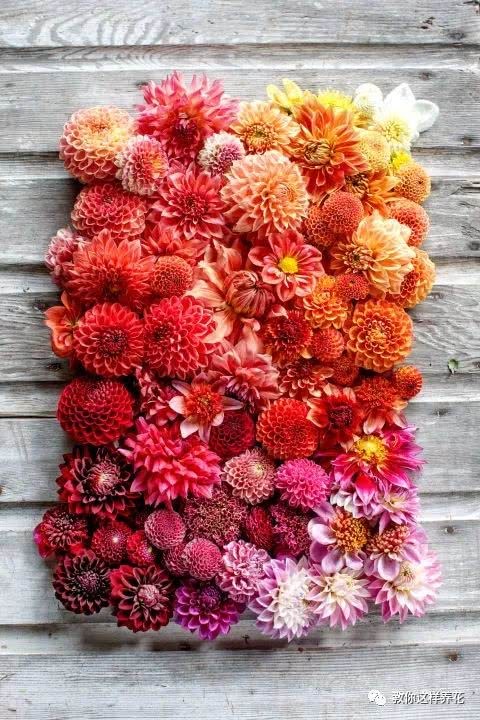
Dahlia is also called Dahlia pinnata; it has huge tuberous roots that look like sweet potatoes, so in many places it is affectionately called the sweet potato flower. Dahlias are elegant and magnificent, with brilliant, colorful blooms in red, yellow, orange, purple, white and more, with as many as 30,000 or more varieties, making them one of the flowers with the most varieties in the world.
“
Dahlia"
-Dahlia Introduction-
The dahlia's flowering period runs from May to mid-November, and under suitable temperature conditions it can bloom continuously year-round. It is fair to say the flowering period is very long, and the flower forms are many too: ball type, chrysanthemum type, peony type, decorative type and so on. Care is also simple, with few pests and diseases, easy management, and it is the easiest to propagate.
Caring for dahlias is very simple. In most places, just plant the dahlia tubers in a pot in March-April each year. The dahlia's tuberous roots look like sweet potatoes; simply bury the dahlia's tuberous roots in the soil.
-Dahlia Soil-
Growing dahlias requires loose, airy, well-draining fertile soil. You can mix 4 parts garden soil, 3 parts leaf mold, 2 parts coarse sand, and 1 part organic fertilizer. Do not use soil that is not airy and tends to compact.
-Dahlia Watering-
Dahlias grow fast during the growing season and need a fair amount of water. They like moisture but must not sit in waterlogged soil, otherwise the fleshy roots rot easily. So watering dahlias is generally best when the soil is slightly moist but not waterlogged; you can follow the principle of watering when dry and letting it dry out between waterings.
-Dahlia Fertilizing-
After planting dahlias, you can apply a dilute liquid fertilizer once every 10-15 days; after buds appear, apply once every 7-10 days, mainly phosphorus and potassium fertilizer, and stop fertilizing once the buds show color. Do not fertilize when temperatures are high either.
-Dahlia Temperature-
The suitable growing temperature for dahlias is between 10-30°C. Above 30°C, dahlias grow slowly, so pay attention to shading and cooling, and do not cut off water. In winter, in northern regions you can wait until the flowers fade and the leaves wither, then dig up the tubers and store them indoors, planting them again the following spring. In southern regions without obvious frost, they can overwinter directly in the ground. Potted dahlias can be stored in a place above 0°C.
-Dahlia Light-
Dahlias like a sunny environment and need plenty of sunlight during the growing season, preferably more than 6 hours a day, so they grow well and produce large, full flowers. However, note that dahlia seedlings and during summer high temperatures need appropriate shading to avoid sunburn.
Such a small string of "sweet potatoes" produces truly beautiful flowers, and one plant grows into a big clump; the blooms are so beautiful!
Do you like this kind of sweet potato flower?
Show it to flower lovers who need it!