What are the symbolic meanings of the olive branch? Explained in one article
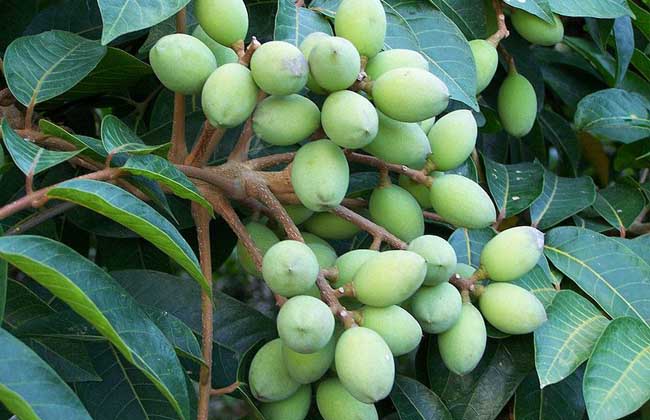
The olive branch is the branch of the olive tree (Olea europaea). The original plant is an evergreen small shrub of the family Sapotaceae, with a handsome tree shape and luxuriant branches and leaves. China introduced it in the 1960s, and it is now cultivated as an ornamental garden plant in many regions. It usually blooms small white flowers in September each year, sets fruit in October, and in November the fruit turns from green to red and ripens. Now let us take a look at the symbolic meaning of the olive branch!
The symbolic meaning of the olive branch
The olive branch symbolizes peace. In the biblical story it was once used as a sign of the earth's revival, and later Western countries used it as a symbol of peace. The emblem of the United Nations uses two olive branches framing the entire globe, meaning the striving for world peace. The emblem of the United Nations peacekeeping forces uses the olive branch to symbolize peace. At the same time, the olive branch, as the spirit of the ancient Olympic Games and as a symbol of the Olympic movement's spirit, carries profound meaning and far-reaching influence.
The origin of the olive branch as a symbol
To trace it to its roots, we must start from the myth of “Noah's Ark” in the Bible. One day in ancient times, God found that humanity's moral sense was getting worse and worse, almost beyond redemption. So he decided to swallow up all of humanity with a flood. But God thought that there must always be living things in the world, so he sent messengers to the human world to carefully investigate the situation in order to determine who would be permitted to survive.
When the messengers reported that a couple named Noah were of good morals, God granted them the right to live and informed Noah and his wife in advance to prepare a large square wooden boat, stock enough dry food and drinking water, and select a pair of every kind of animal to carry on the boat. Then the flood came, and none of the living things in the world could escape this disaster; only Noah's ark drifted safely.
After a very, very long time, the flood receded, and high mountains, islands and open ground appeared in the distance. Noah and his wife were very happy, and first released a pair of doves from the boat into the blue sky, giving them freedom. But not long after, the doves flew back again, carrying a jade-green olive branch in their beaks. This seemed to be a message that the earth had regained its vitality and that everything was at peace! After that, the olive branch became synonymous with “peace,” and the dove was also called by people the “messenger of peace” and known as the “dove of peace.”
The sports origins of the olive branch
In modern sports competitions, crowning winners with a wreath made from a certain kind of tree branch was originally a tradition originating in ancient Greece. According to documentary records, there were at least five series of games in ancient Greece.
The first was the Olympic Games, held at Olympia in honor of Zeus, once every 4 years. In the games of 776 BC, the names of winners were recorded for the first time; winners were awarded a crown of wild olive branches and had olive oil rubbed on their heads.
The second was the Pythian Games, held at Delphi in honor of the sun god Apollo, once every 4 years. In addition to athletic competitions, there were also music contests; winners were awarded a laurel crown.
The third was the Nemean Games, held once every 5 years; winners were awarded a crown of parsley.
The fourth was the Isthmian Games, held at Corinth in honor of the sea god Poseidon, once every two years, featuring athletic and music competitions; winners were also awarded a crown of parsley (some say a crown of pine branches).
The fifth was the Heraean Games, held at Olympia in honor of the queen of the gods Hera, once every four years. Participants had to be young women, and winners were awarded a crown of wild olive branches. It is said that the Heraean Games were very likely older than the Olympic Games.