Which Part of the Cow Is Snowflake Beef? A Clear Explanation in One Article
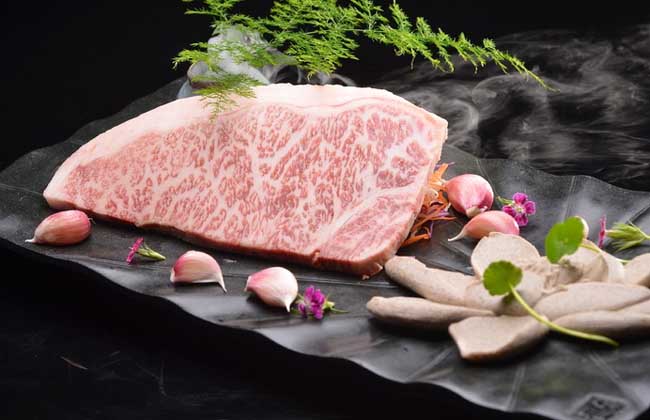
Snowflake beef refers to beef in which fat is deposited between the muscle fibers, forming a distinct red-and-white pattern that resembles marble. It is also called marbled beef in China and abroad. It contains a large amount of fatty acids needed by the human body. As the fat content in the beef increases, the cholesterol content actually decreases, and its nutritional value is considerably higher than that of ordinary beef. Let's take a look below at which part of the cow snowflake beef comes from!
Which part of the cow is snowflake beef?
Snowflake beef can be found in different parts of the cow. Snowflake beef is usually graded by its distribution density, shape and meat quality, but the industry has no clear standard. The common "fatty beef" can also be considered one type, and if ribeye, chuck roll or striploin is chosen, it is even more premium. Snowflake beef is fragrant, fresh and tender, and is a high-grade beef suitable for both Chinese and Western cuisine. The price is relatively high. The composition of the beef fat in ordinary beef itself differs greatly from the components in the fat structure of this snowflake beef.
What conditions are needed to produce snowflake beef?
1. Breed: Producing snowflake beef has specific requirements right from breed selection. Abroad, the snowflake beef produced from Japanese Kobe Wagyu is the most famous. In 2013, in our country, using Qinchuan cattle as the female parent and Red Angus cattle as the male parent also made it possible to breed varieties that can produce snowflake beef. Good conditions for fat deposition are a major requirement in selecting snowflake beef cattle breeds.
2. Feeding: In terms of feeding, cows can be fed normally, but after the calf is born it is different from an ordinary calf. From birth to 10 months is the growth stage for the calf, and the foundation must be laid well. The most important thing to note is to let the calf eat more. An ordinary calf may be allowed to eat only until 80% full, while a snowflake calf must be fed until 100% full, because the most important thing at this stage is to let the snowflake calf grow bone, which requires widening the spacing between the snowflake calf's ribs. To stretch the snowflake calf's bones larger, the stomach must first be stretched larger; once the stomach is stretched larger, the bones will naturally stretch larger too. Then, through bone development, meat development is promoted, and during the meat development process, the fat tissue inside develops further. Snowflake beef is actually the muscle fiber bundles within the muscle, with many capillaries between the muscle fiber bundles, causing fat to be deposited on the outer periphery of the blood vessel walls that run between the muscle fiber bundles. In this way, snowflake beef is formed.
Different ways to eat different cuts of beef
1. Beef neck: little fat, much red meat, with some tendon. Its toughness is second only to beef shank, making it the second toughest meat on the cow. It is suitable for minced meat or for stewing and making soup, and it is also good for beef balls.
2. Beef shoulder: moderate fat distribution, but a bit tough, and the meat has a certain thickness, so it can bring out the unique flavor of beef. It can be used for hot pot beef or cut into small cubes for stewing. It is suitable for stewing, roasting, braising, and curry beef.
3. Front rib and back: little tendon, extremely fine meat texture. It is suitable for sukiyaki, beef rolls, steak, etc. It is one of the most tender cuts, and is a premium steak and barbecue cut.
4. Rear rib and back: tender and fine meat with a good shape, and it can also be cut into large pieces. It can be used for steak, and can also be thinly sliced for hot pot beef.
5. Tenderloin: the most tender part of beef, with almost no fat, meaning low fat and high protein. It is the favorite of people pursuing healthy eating in recent years and is suitable for stir-frying, deep-frying, hot pot and roasting.
6. Beef rump: the red meat on the cow's buttocks. The meat is tender and the taste is also good. It is suitable for all kinds of cooking methods. It tastes great as steak, and for barbecue it is said to be superb. Some people also use it to make beef carpaccio and eat it raw.
7. Brisket front: although the meat is fine, it is both thick and tough, and can be used for barbecue.
9. Brisket rear: the meat is thick and a bit tough, but contains a lot of fat, and it is a place on the cow where marbling easily forms. In its front section, fat and lean meat can appear in layered rows, commonly known in Japanese as "three-layer meat," in Chinese as "streaky meat," and in Taiwanese as "three-layer meat," while the rear section is beef brisket. Pan-frying, stir-frying, barbecuing or stewing are all suitable.
10. Hind leg meat: little fat and coarse meat, but it easily absorbs the flavor of spices, so it is suitable for being cooked with seasoning into cold dishes.
11. Shank: although there is little fat, after slow stewing over low heat it can present a tender and fine texture. It is very suitable for stewing or making soup.