The difference between verbena and lavender: learn to tell them apart at a glance
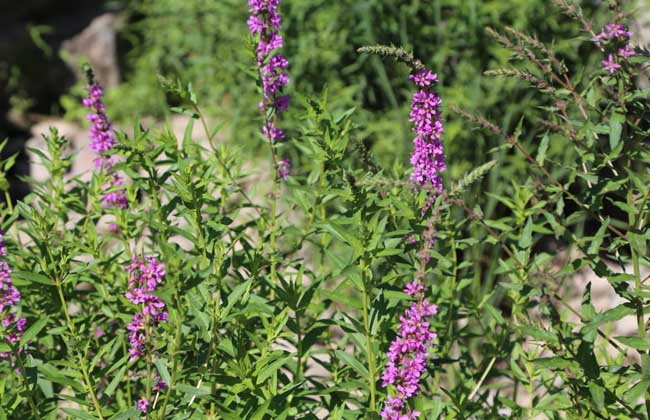
Verbena is also known as purple-topped dragon's tooth grass, wild schizonepeta, dragon's tooth grass, phoenix-neck grass and so on. It is a perennial upright herbaceous plant native to Europe, mostly growing in the wild. Lavender is also known as perfume plant, spirit fragrance grass, fragrant grass, yellow fragrant grass and so on. Its leaf shape and flower color are graceful and elegant, and its blue-purple inflorescence is long and beautiful. It is a new perennial cold-hardy flower for gardens. Let's take a look below at the differences between verbena and lavender!
Differences in family and genus between verbena and lavender
1. Verbena: Verbena is a perennial upright herbaceous plant in the plant kingdom, Angiosperms, Dicotyledons, Sympetalae, Tubiflorae, Verbenaceae, Verbenoideae, Verbeneae, Verbena.
2. Lavender: Lavender is a subshrub or dwarf shrub in the plant kingdom, Angiosperms, Dicotyledons, Asteridae, Lamiales, Lamiaceae, Lavanduloideae, Lavandula.
Morphological differences between verbena and lavender
1. Verbena: Verbena can reach 120 cm in height, with a woody base, opposite simple leaves, ovate to long ovate, covered with stiff hairs on both sides, with the hairs on the veins beneath especially dense. Terminal or axillary spikes, flowers blue-purple, sessile, calyx membranous, tubular, corolla slightly two-lipped, filaments very short. Ovary hairless, fruit enclosed in the calyx, nutlets, flowering and fruiting period from June to October.
2. Lavender: Lavender has upright stems covered with stellate tomentum; old branches gray-brown, with strip-like peeling bark. Leaves linear or lanceolate-linear, covered with sparse or dense gray stellate tomentum, gray-white or olive-green when dry, entire and revolute. Verticillasters gathered at the branch tips into interrupted or nearly continuous spikes, bracts rhombic-ovate, bracteoles inconspicuous, calyx ovate-tubular or nearly tubular, corolla about twice as long as the calyx, tube straight, glandular-haired inside at the throat, nutlets elliptic, smooth.
Differences in origin between verbena and lavender
1. Verbena: Verbena is native to Europe and often grows by roadsides, on hillsides, by streams or beside forests from low to high altitude. It is now distributed in temperate to tropical regions worldwide. In China it is distributed in Shanxi, Shaanxi, Gansu, Jiangsu, Anhui, Zhejiang, Fujian, Jiangxi, Hubei, Hunan, Guangdong, Guangxi, Sichuan, Guizhou, Yunnan, ** and Tibet, among other places.
2. Lavender: Lavender originally grew wild in the area of the southern foothills of the Alps along the Mediterranean coast of France and southern Italy, as well as in Spain, North Africa and other places. Later it was introduced and cultivated successively in countries such as Britain, Australia, the United States, Hungary, Bulgaria, Russia and Japan, and it is now found throughout the countries along the Mediterranean and Black Sea coasts. In China it is mainly produced in **.
Differences in efficacy between verbena and lavender
1. Verbena: The whole plant of verbena is used as medicine. It is bitter in taste and cool in nature, entering the liver and spleen meridians. It has the effects of clearing heat and detoxifying, invigorating blood and dispersing blood stasis, and promoting diuresis and reducing swelling. It treats externally contracted fever, damp-heat jaundice, edema, dysentery, malaria, diphtheria, throat obstruction, gonorrhea, amenorrhea, abdominal masses, carbuncle swelling and sores, and gum malnutrition, among other conditions.
2. Lavender: Lavender has been widely used in medicine since ancient times. Both stems and leaves can be used as medicine. It has the effects of strengthening the stomach, inducing sweating and relieving pain, and has remarkable effects on treating colds, abdominal pain and eczema. It is called the “king of herbs”. Its fragrance is fresh and elegant, and its nature is mild. It is the plant with the strongest calming, soothing and hypnotic effects, soothing tension, calming the mind, settling the breath, healing wounds and removing scars.