What Is the Difference Between Vervain and Sage? A Quick Guide to Telling Them Apart
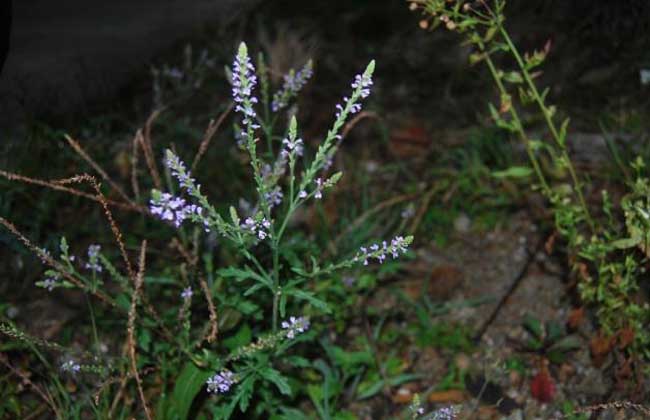
Vervain is also known as purple-topped dragon's tooth grass, wild catnip, dragon's tooth grass, and phoenix-neck grass. It is a perennial upright herbaceous plant native to Europe, mostly growing in open fields. Sage is also known as garden sage, Japanese purple-flowered sage, common sage, southern red-rooted salvia, and stone-see-through. It is an evergreen small aromatic plant. Let's take a look below at the differences between vervain and sage!
Differences in Family and Genus Between Vervain and Sage
1. Vervain: Vervain is a perennial upright herbaceous plant in the plant kingdom, phylum Angiosperms, class Dicotyledons, subclass Sympetalae, order Tubiflorae, family Verbenaceae, subfamily Verbenoideae, tribe Verbeneae, genus Verbena.
2. Sage: Sage is an annual herbaceous plant in the plant kingdom, phylum Angiosperms, subphylum Angiospermae, class Dicotyledons, subclass Sympetalae, order Tubiflorae, suborder Tubiflorinae, family Lamiaceae, subfamily Lamioideae, tribe Salvieae, genus Salvia.
Differences in Morphology Between Vervain and Sage
1. Vervain: Vervain can reach 120 cm in height, with a woody base, opposite simple leaves, ovate to long-ovate, with stiff hairs on both sides, especially dense on the veins beneath. Terminal or axillary spike inflorescences, flowers blue-purple, sessile, calyx membranous, tubular, corolla slightly two-lipped, filaments very short. Ovary hairless, fruit enclosed within the calyx, small nutlets, flowering and fruiting period from June to October.
2. Sage: The stem of sage is upright, 40-60 cm tall, bluntly four-angled, grooved, with sparse long soft hairs or nearly hairless along the angles. The lower stem leaves are bipinnately compound, concave above and convex below, with sparse long soft hairs or hairless; the upper stem leaves are once-pinnately compound. Verticillasters with 2-6 flowers, forming elongated racemes or branched into racemose panicles, inflorescences terminal. Corolla pale red, pale purple, pale blue to white, densely covered with long soft hairs on the outside, corolla tube straight, tubular. Nutlets elliptical, brown, smooth, flowering period from June to September.
Differences in Origin Between Vervain and Sage
1. Vervain: Vervain is native to Europe, often growing by roadsides, hillsides, streamsides or forest edges from low to high altitude. It is now distributed throughout temperate to tropical regions worldwide. In China, it is found in Shanxi, Shaanxi, Gansu, Jiangsu, Anhui, Zhejiang, Fujian, Jiangxi, Hubei, Hunan, Guangdong, Guangxi, Sichuan, Guizhou, Yunnan, **, Tibet and other places.
2. Sage: Sage is native to southern Europe and the Mediterranean coastal areas, growing on hillsides, roadsides, shaded grassy areas, watersides and under forest shade. In China, it mainly grows in Zhejiang, southern Anhui, Jiangsu, Jiangxi, Hubei, Fujian, Taiwan, China, Guangdong, Guangxi and other places.
Differences in Effects Between Vervain and Sage
1. Vervain: The whole plant of vervain is used as medicine. It tastes bitter, is cool in nature, and enters the liver and spleen meridians. It has the effects of clearing heat and detoxifying, promoting blood circulation and dispersing blood stasis, and promoting diuresis and reducing swelling. It treats exogenous fever, damp-heat jaundice, edema, dysentery, malaria, diphtheria, throat obstruction, gonorrhea, amenorrhea, abdominal masses, carbuncles and sores, and gum disease.
2. Sage: Sage tastes bitter and pungent, is neutral in nature. Traditional European hospitals used sage essential oil to disinfect wards. Because it also has the effect of promoting hormone function, women use sage after childbirth to reduce breast milk secretion. It also has the effects of anti-aging, enhancing memory, calming the nerves, improving eyesight, and relieving headaches and neuralgia.