What Is the Difference Between Longjing Tea and Biluochun? A Complete Guide
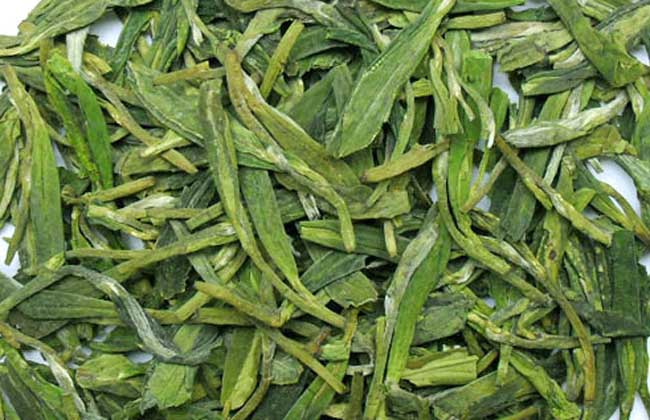
Longjing tea is a traditional famous tea of the Han Chinese and one of the well-known green teas, with an emerald green color, a rich aroma, a sweet and refreshing taste, and a shape like a sparrow's tongue. It is named after Longjing (Dragon Well) and has a history of more than 1,200 years. Biluochun is a traditional famous Chinese tea and one of China's top ten famous teas. It also belongs to the green tea category and has a history of more than 1,000 years. Now let us take a look at the differences between Longjing tea and Biluochun!
Differences in the Producing Areas of Longjing Tea and Biluochun
1. Longjing tea: Longjing tea is produced in the area around Longjing Village by West Lake in Hangzhou, Zhejiang. Based on the producing area, it is further divided into Shi, Long, Yun, and Hu. After the Republic of China period, the output of Meijiawu increased greatly. In the past, people ranked the quality of Longjing tea according to the different quality of the five producing areas, namely Shi, Long, Yun, Hu, and Mei. After Liberation, Longjing tea was widely planted within Zhejiang Province, and the quality became uneven. At present, it is uniformly divided into West Lake Longjing, Dafo Longjing, Qiantang Longjing, and Yuezhou Longjing, with West Lake Longjing having the best quality.
2. Biluochun: Biluochun is produced in the area of East Dongting Mountain and West Dongting Mountain on Lake Tai in Wu County, Suzhou City, Jiangsu Province (now Wuzhong District, Suzhou), so it is also called “Dongting Biluochun.” In 2002, it was approved by the General Administration of Quality Supervision, Inspection and Quarantine of the People's Republic of China and obtained protection as a product of origin. All twelve administrative villages in the entire area of Xishan Town (now Jinting Town) grow tea.
Differences in the Appearance of Longjing Tea and Biluochun
1. Longjing tea: Longjing tea is flat and smooth in appearance, with sharp tips, buds longer than leaves, a tender green color, and no downy hair on the surface. Longjing tea picked and made before Qingming Festival is abbreviated as Mingqian Longjing, and is also called by the elegant name Nü'er Hong.
2. Biluochun: Biluochun has tightly rolled strips, curled like a snail, with a layer of even fine white down along the edges. “Biluochun flies with emerald green, Lake Tai is beautiful; new rain hums fragrance, clouds and waters are at leisure.” Drinking a cup of Biluochun is like appreciating the legendary beauties of Jiangnan.
Differences in the Tea Liquor of Longjing Tea and Biluochun
1. Longjing tea: The tea liquor of Longjing tea has an orchid and broad bean fragrance, the liquor color is emerald green and clear, and the brewed leaves are soft, even, tender green, and bright.
2. Biluochun: The aroma of Biluochun tea liquor is broadly divided into two types: floral-fruity fragrance and chestnut fragrance. The color is emerald green with a yellow glow, and the brewed leaves are tender and form buds.
Differences in the Origins of Longjing Tea and Biluochun
1. Longjing tea: Longjing tea ranks among China's top ten famous teas and has a history of more than 1,200 years. In the Ming Dynasty it was listed as a top-grade tea, and in the Shunzhi period of the Qing Dynasty it was listed as a tribute tea. When Emperor Qianlong of the Qing Dynasty toured West Lake in Hangzhou, he greatly praised Longjing tea and bestowed the title “Imperial Tea” on the eighteen tea trees in front of Hugong Temple at the foot of Shifeng Mountain.
2. Biluochun: According to the Qing Dynasty work Liunan Suibi by Wang Yingkui, in the spring of the 38th year of the Kangxi reign (1699), Emperor Shengzu of the Qing Dynasty, Kangxi, made his third southern tour and arrived at Lake Tai. The provincial governor Song Luo purchased finely made “Xiaosha Renxiang” from the local tea-making expert Zhu Zhengyuan and presented it as tribute. The emperor, finding its name inelegant, titled it “Biluochun.” This is the emerald green with a yellow glow, and the brewed leaves are tender and form buds.