What is the difference between malachite and turquoise? A quick guide to telling them apart
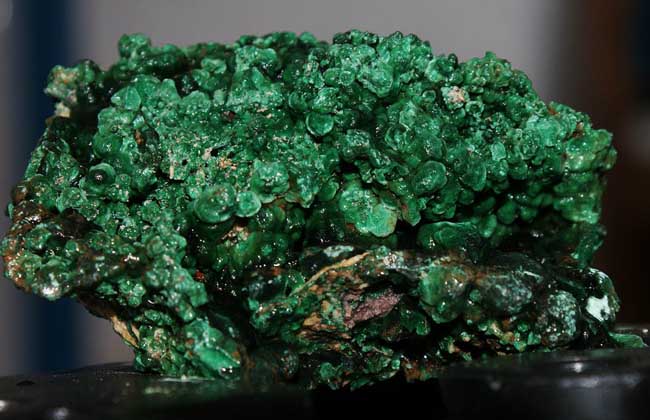
Malachite is an ancient jade material, and it got this beautiful name because its color closely resembles the green of the spots on peacock feathers. Turquoise is also called songshi; it is named for resembling a pine cone and having a color close to pine green. It is one of the ancient gemstones, with a splendid history of several thousand years, and is deeply loved by people both in China and abroad, past and present. Now let us take a look at the differences between malachite and turquoise!
Differences in the origins of malachite and turquoise
1. Malachite: The world's famous sources of malachite include Zambia, Australia, Namibia, Russia, the Democratic Republic of the Congo, the United States and other regions. In China, it is mainly produced in Yangchun, Guangdong, Huangshi, Hubei, and northwestern Jiangxi, among other places. Malachite is the green basic copper carbonate formed on the surface of copper after it is oxidized by moisture in the air, or it may be a processed product made by mixing kangqing (that is, basic copper carbonate) and calcined gypsum with water and pressing them into flat blocks, as well as natural malachite; for medicinal use it is mostly the processed product.
2. Turquoise: China is one of the main producing countries of turquoise. Turquoise is produced in Zhushan County and Yunxi County in Hubei, Ma'anshan in Anhui, Baihe in Shaanxi, Xichuan in Henan, Hami in Xinjiang, China, Ulan in Qinghai and other places, among which the high-quality turquoise from the Yunxian, Yunxi and Zhushan area of Hubei is a world-famous source. In Iran, a famous foreign source of turquoise, the finest porcelain turquoise and spiderweb turquoise are produced, known as Persian turquoise. In addition, Egypt, the United States, Mexico, Afghanistan, India and the former Soviet Union and other countries all produce turquoise.
Differences in the composition of malachite and turquoise
1. Malachite: Malachite is a copper-bearing carbonate mineral, with the chemical composition Cu2(OH)2CO3, CuO 71.9%, CO2 19.9%, H2O 8.15%, etc. It occurs in green, malachite green, dark green and other colors, and is semi-transparent to opaque.
2. Turquoise: Turquoise is an aggregate of copper and aluminum phosphate minerals, most characteristically opaque azure blue, and it also occurs in pale blue, blue-green, green, light green, yellow-green, gray-green, pale white and other colors.
Differences in the hardness of malachite and turquoise
1. Malachite: Malachite belongs to the monoclinic crystal system. Its crystal form is columnar or acicular, and it usually occurs as cryptocrystalline stalactitic, massive, crusty, nodular and fibrous aggregates, with concentric layered and fibrous radiating structures. Its hardness is 3.5 to 4.5, its density is 3.54 to 4.1, it is brittle, with a conchoidal to uneven fracture, and it reacts with hydrochloric acid and dissolves easily.
2. Turquoise: Turquoise has a rather uneven texture, with colors ranging from dark to light, and it may even contain light-colored streaks, spots and brown-black iron lines. Its density also varies considerably: when there are many pores it is loose, and when there are few it is dense and hard. Its general hardness is 5 to 6, its density is 2.6 to 2.9, its refractive index is about 1.62, and under long-wave ultraviolet light it can show pale green to blue fluorescence.
The difference between malachite and turquoise
1. Malachite: Malachite also contains the natural element copper, which can activate the natural antioxidant enzymes in the skin, thereby enabling the antioxidant enzymes in the skin to play their greatest role and achieving an antioxidant effect. The ancient Egyptians once ground malachite into powder and applied it to festering wounds, thereby achieving a healing effect. French scientists once extracted a natural active substance from malachite; this substance is extremely safe and can raise the skin cells' natural resistance and clear residual impurities within cells, thereby enhancing cell activity.
2. Turquoise: Turquoise contains a variety of trace elements needed by the human body. Wearing turquoise for a long time can promote cell regeneration, enhance immunity and strengthen the body, and it has marvelous effects such as dispelling illness and warding off evil, stabilizing emotions and increasing the brain's responsiveness. Long-term wearing of turquoise has the special effects of clearing heat, reducing inflammation, calming and lowering blood pressure, and is especially effective for maintaining the gallbladder.