What is the difference between Jinqiancao and Tongqiancao? A quick guide to telling them apart
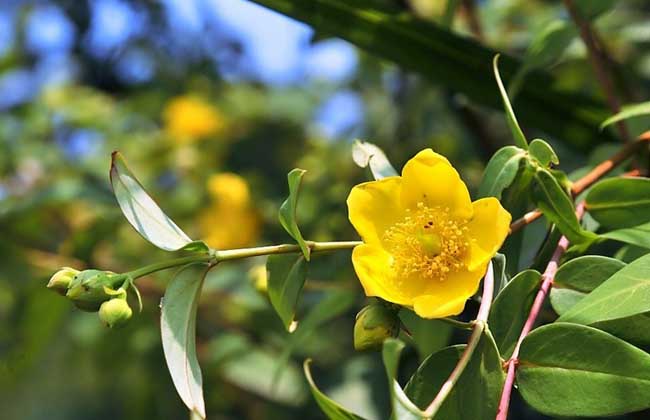
Jinqiancao is a plant in the Primulaceae family, found in all provinces south of the Yangtze River in China as well as Taiwan, China, and widely distributed across the tropical and subtropical regions of both hemispheres. Tongqiancao is a herbaceous plant in the Apiaceae family, native to Europe, now widely distributed in tropical and subtropical regions of the world, and in China mainly found in the provinces south of the Yangtze River. Let us take a look below at what differences exist between Jinqiancao and Tongqiancao!
The difference in family and genus between Jinqiancao and Tongqiancao
1. Jinqiancao: Jinqiancao is a perennial creeping herbaceous plant in the plant kingdom, Angiosperms, Dicotyledons, Sympetalae, Tubiflorae, Primulaceae.
2. Tongqiancao: Tongqiancao is a perennial herbaceous plant in the plant kingdom, Angiosperms, Dicotyledons, Archichlamydeae, Apiales, Apiaceae.
The morphological difference between Jinqiancao and Tongqiancao
1. Jinqiancao: The creeping stems of Jinqiancao are slender, covered with gray short soft hairs, and root at the nodes. The leaves are kidney-shaped to round, the flowers are solitary in the leaf axils, the flower stalk is shorter than the leaf stalk, thread-like, with green leaves, bearing small yellow flowers, and the capsule is spherical, 3 to 5 mm in diameter, hairless, with sparse black glandular lines, valvate dehiscence, flowering from May to July, fruiting from July to October.
2. Tongqiancao: The Tongqiancao plant has a trailing habit, with a height of 5 to 15 cm, often rooting at the nodes, the stem tip is brown, the leaves are alternate, with long stalks, round-shield-shaped, 2 to 4 cm in diameter, with wavy margins, grass-green, with 15 to 20 radiating leaf veins, the flowers are bisexual, in umbels, the small flowers are white, the fruit is a schizocarp, flowering from June to August.
The difference in alternative names between Jinqiancao and Tongqiancao
1. Jinqiancao: Jinqiancao is also known as Guoluhuang, Jingmiancao, Cuipingcao, Hebaocao, Rouhuntuncao, Jinsuochi, Lianqiancao, Duizuocao, Ye Jinqiancao, Qianye Cao, Qianqianjin, and others.
2. Tongqiancao: Tongqiancao is also known as Duizuocao, Qianbi Cao, and others. In Hunan it is called Jinhua Cai and Pudi Lian, in Hubei it is called Lubian Huang, in Sichuan it is called Yichuan Qian, in Beijing and Guangzhou it is also called Sichuan Da Jinqiancao, in Yunnan it is called Zhenjin Cao, in Guizhou it is called Zouyou Cao, in Zhejiang and Jiangxi it is also called Linshijiu, and in Shaanxi it has the alternative name Cungu Qi.
The difference in effects between Jinqiancao and Tongqiancao
1. Jinqiancao: Jinqiancao tastes sweet and slightly bitter, is cool in nature, and enters the liver, gallbladder, kidney, and bladder meridians. It has the effects of promoting water and treating strangury, clearing heat and detoxifying, dissipating blood stasis and reducing swelling, clearing and disinhibiting damp-heat, and is used for sandy strangury, painful and rough urination, jaundice with red urine, and carbuncles and boils. It mainly treats liver and gallbladder and urinary tract stones, heat strangury, nephritic edema, damp-heat jaundice, sores and toxic swellings, venomous snake bites, and bruises and injuries.
2. Tongqiancao: Tongqiancao tastes bitter and pungent, is cold in nature, and enters the liver, spleen, and kidney meridians. It has the effects of clearing heat and disinhibiting dampness, and detoxifying and reducing swelling. It is often used for damp-heat jaundice, heatstroke and diarrhea, stone strangury and blood strangury, carbuncles and sores, and falls and injuries.