Where is coffee originally from? Exploring coffee's homeland
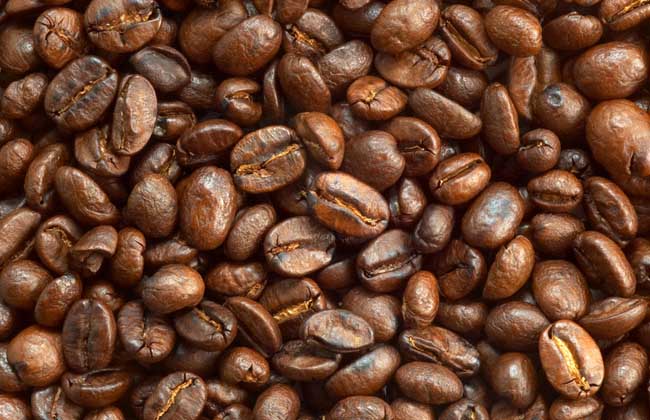
Coffee is a beverage made from roasted coffee beans. Along with cocoa and tea, it is one of the main beverages popular around the world. Coffee for daily drinking is made from coffee beans using various brewing devices, and coffee beans are the kernels inside the fruit of the coffee tree, which are then roasted by an appropriate method. Now let us take a look together at where coffee's homeland is!
Where is coffee's homeland?
Coffee's homeland is the highland region of southwestern Ethiopia in Africa. It is said that more than a thousand years ago a shepherd discovered that after his sheep ate a certain plant, they became very excited and lively, and thus coffee was discovered. There is also a saying that a wildfire accidentally burned a patch of coffee forest, and the aroma of the roasting coffee attracted the attention of nearby residents. The local indigenous people often ground the fruit of the coffee tree, mixed it with animal fat, and kneaded it into many ball-shaped pellets. The people of these indigenous tribes regarded these coffee pellets as precious food, reserved exclusively for warriors about to go into battle.
The growth habits of the coffee tree
The coffee tree likes mild daytime temperatures that are not scorching hot, as well as less than two hours of direct sunlight. Therefore, if there is a lack of the daily afternoon showers or thick fog, local farmers must interplant many taller trees in the coffee plantation to provide shade. At night it needs an environment of around 10 degrees Celsius, but the temperature must not be too low, because being too warm will cause the coffee berries to develop too quickly and fail to produce small, flavorful, hard, high-quality coffee beans. If it gets cold enough to frost, the plant will freeze to death. Based on these characteristics, the ideal lands suitable for coffee growing are mostly located in countries with high mountain terrain between the Tropic of Cancer and the Tropic of Capricorn. This belt is what is called the coffee belt.
The distribution of coffee bean producing areas
1. Brazil: Brazil is the largest coffee producer. Coffee of various grades and types accounts for one third of global consumption, and it holds a place in the global coffee trading market. Although Brazil faces natural disasters several times more than other regions, its cultivable area is already enough to make up for it. Although there are not many top-grade coffees, it is a good choice for blending with other coffees.
2. Cuba: In Cuba, coffee cultivation is managed by the state. The best coffee-growing area is located in the Sierra Maestra region, because in addition to growing coffee, this area also produces precious minerals such as quartz and crystal, so it is also called the Crystal Mountain. It is adjacent to the geographical location of Jamaica's Blue Mountain range, with similar climatic conditions, and its taste is similar to Blue Mountain coffee. It can compare with Jamaica Blue Mountain, so Cuba's Crystal Mountain has become an object of comparison with Jamaica Blue Mountain.
3. Colombia: Colombia's coffee output makes it the second-largest coffee industry country after Brazil, and it is also the leader in the Colombia Milds group. Its more famous producing areas include Medellin, Manizales, Bogota, and Armenia. The coffee beans cultivated are all of the Arabica variety, with a rather rich flavor, and the quality and price are also very stable. After roasting, the coffee beans look even larger and more beautiful. It can produce everything from low-grade to high-grade products, some of which are rare good goods in the world, with a mellow flavor so delightful that one cannot put them down.
4. Mexico: Mexico is a major coffee producer in Central America, with a comfortable mouthfeel and a captivating aroma. The selected Mexican coffees include Coatepec, Huatusco, and Orizaba, among which Coatepec is considered one of the best coffees in the world.
5. Hawaii: When sightseeing in Hawaii, besides the beautiful beaches, do not forget Hawaii coffee beans. The taste is sweet with a pleasant wine-like acidity, very distinctive. It is Hawaii's most traditional and famous coffee. However, because production here is not high and the cost is surprisingly expensive, and because demand for single-origin coffee in the United States and elsewhere is increasing day by day, its unit price is not only getting higher and higher, but it is also not easy to buy.
6. Indonesia: When speaking of Indonesian coffee, one cannot omit Sumatra's high-grade Mandheling, with its unique rich aroma and slightly acidic taste; its quality can be said to be first in the world. In addition, the Arabica coffee produced in Java is the favorite of Europeans; that bitterness with sweetness, and within the sweetness an acidic lingering fragrance, does not fade for a long time.
7. Costa Rica: The coffee beans produced in Costa Rica's high-latitude areas are world-famous, rich, with a mild taste but extremely acidic. The coffee beans here are all carefully processed, and precisely because of this there is high-quality coffee. The most famous coffee is produced in the Central Plateau, where the soil consists of several consecutive thick layers of volcanic ash and volcanic dust.
8. Angola: Angola is the world's fourth-largest coffee industry country, but it produces only a small amount of Arabica coffee. Its high quality goes without saying. Unfortunately, due to political turmoil, its annual output is extremely unstable.
9. Ethiopia: Ethiopia is the homeland of Arabica coffee. It grows in high-latitude places and requires a lot of careful manual care. The famous Ethiopian Mocha here has an acidity similar to wine, is rich and aromatic, and its output is quite abundant. Unfortunately, some farmers still do not understand the benefits of picking the fruit and let it fall, then pick it up from the ground. However, in recent years, due to the continuous expansion of the market, coffee operators have been committed to improving harvesting and processing methods, hoping to increase output.
10. Jamaica: Jamaica's national treasure Blue Mountain coffee can be called flawless in every respect. Just like wine, it is already very difficult to buy on the market. It is said that in the United Kingdom it has already been unavailable for 4 years.
11. Kenya: Kenya grows high-quality Arabica coffee beans, with a slightly acidic, thick aroma. It is very popular among Europeans, especially in the United Kingdom, where Kenya coffee has even surpassed Costa Rica's coffee and become one of the most popular coffees.
12. Yemen: Yemen's Mocha coffee was once all the rage, setting off a Mocha whirlwind around the world. It is a pity that good times do not last. Under political turmoil and unplanned cultivation, Mocha's output is very unstable. Even so, Mocha is still the soul used to pair with other coffee beans or blended coffee beans.
13. Peru: Peru coffee, a rising star, is gradually building its reputation and entering the world. It is mostly grown in high-altitude areas. Planned cultivation has greatly increased output. Its taste is mellow, with just the right acidity, and more and more people are coming to like it.
14. Guatemala: Guatemala's central region grows world-renowned, excellent-flavored fine coffee. The coffee beans here mostly carry a charcoal-roasted note and cocoa aroma, only their acidity is slightly stronger.