What Do Blue Whales Eat? A Detailed Explanation of the Blue Whale's Main Food Sources
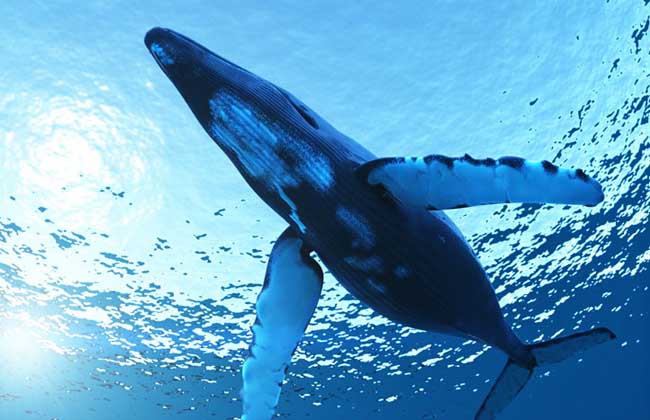
The blue whale is a species of whale, a marine mammal in the family Balaenopteridae and the genus Balaenoptera, with a total of four subspecies. It is considered the largest animal known to have ever lived on Earth, reaching up to 33 m in length and 200 tons in weight. It is found in all four oceans, with the largest numbers in the Antarctic waters, mainly in temperate and cold-temperate cold-water regions with water temperatures of 5-20°C. Let us take a look below at what food blue whales eat!
What food do blue whales eat?
Like other baleen whales, the blue whale feeds mainly on small crustaceans (such as krill) and small fish, and sometimes also includes squid. Krill is the most abundant animal in the world, widely distributed in the polar sea regions of the North and South. It is precisely because of such abundant food, and because living in water removes the limitation of supporting body weight, that the blue whale can grow so enormous. The blue whale's stomach is divided into four chambers; the first stomach is formed by the expansion of the esophageal section, so its appetite is enormous. It can swallow about 2 million krill at a time, and must eat 4000-8000 kg per day. If the food in its belly is less than 2000 kg, it will feel hungry.
Just how big is the blue whale?
The blue whale is not only the largest whale but also the largest living animal, and the largest mammal to date. A single tongue weighs 2000 kg, the skull weighs 3000 kg, the liver weighs 1000 kg, the heart weighs 500 kg, the blood volume reaches 8000 kg, and the testes of a male can weigh 45 kg. If its intestines were straightened out, they would be fully 200-300 m long; its blood vessels are thick enough to hold a small child, and the wall of the organ is more than 60 cm thick. The penis of a male reaches 3 m in length, and its strength is astonishingly great, producing about 1500-1700 horsepower, making it truly the giant overlord and strongman of the animal world.
Activity patterns of the blue whale
Although some people have seen 50-60 blue whales moving in groups, they generally rarely form groups; most are solitary, or only 2-3 move together. A pair of blue whales living together are very harmonious with each other, swimming, diving, foraging and breathing together, like mandarin ducks, inseparable, often leaving a wide wake behind them. Among 3 blue whales together, most are a female and a calf pressed close together, with the male following behind at a distance of about 3 m. Despite its enormous size and its usually slow movement, often remaining motionless, it can rise and sink freely in the water, its tail swinging nimbly, serving both as the driving force for forward movement and as a rudder, with a forward speed of up to 28 km per hour.
Reproductive habits of the blue whale
The blue whale breeds in winter. The female generally gives birth once every 2 years, with a gestation period of 10-12 months, and only 1 calf per birth. The calf weighs about 2.5 tons and is about 7 m long. To prevent it from suffocating to death, the female must lift the calf out of the water to breathe its first breath of air; after that it can breathe on its own. The female's pair of nipples are located on either side of the genital opening. When nursing, she swims in the upper layer of the sea, and the calf follows closely below and behind her. Because the calf does not have movable lips and cannot hold the nipple to suck milk by itself, the female, by muscular contraction, sprays the milk directly into the calf's mouth, which is also a very good adaptation to life in water. The blue whale reaches sexual maturity at about 8-10 years of age, and generally lives more than 50 years, at most up to 90-100 years.