How Big Is the Blue Whale Really? A Look at the Blue Whale's True Size
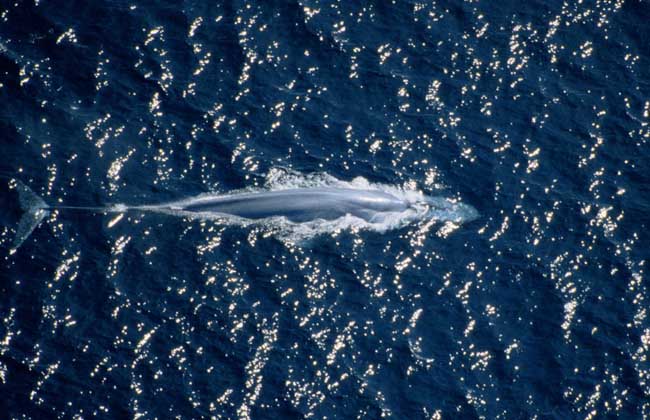
The blue whale is a type of whale, a marine mammal belonging to the suborder Mysticeti, family Balaenopteridae, genus Balaenoptera. It is considered the largest animal known to have ever lived on Earth. It is distributed worldwide, with the largest numbers in the Antarctic waters, mainly in temperate and cold-temperate cold-water regions with water temperatures of 5-20°C. Let's take a look below at just how big the blue whale really is!
How big is the blue whale really?
The blue whale is not only the largest whale but also the largest living animal and the largest mammal to date. Some dinosaurs of the Mesozoic may have exceeded the blue whale in body length, but their weight still cannot compare with it. It can reach 33 m in length and 200 tons in weight. A single tongue weighs 2000 kg, the skull 3000 kg, the liver 1000 kg, the heart 500 kg, and its blood volume reaches 8000 kg. The testes of a male also weigh 45 kg. If its intestines were straightened out, they would be fully 200-300 m long. Its blood vessels are thick enough to hold a small child, and the walls of its organs are more than 60 cm thick. The penis of a male is up to 3 m long. A single adult blue whale can grow to about 30 times the weight of an African elephant.
What do blue whales eat?
Like other baleen whales, the blue whale feeds mainly on small crustaceans (such as krill) and small fish, and sometimes also squid. Krill is the most abundant animal in the world, widely distributed in the Arctic and Antarctic seas. It is precisely because of such abundant food and because living in water removes the limit of supporting body weight that the blue whale can grow so enormous. Other foods of the blue whale include other shrimp, small fish, jellyfish, diatoms, and various plankton. By comparison, blue whales living in northern seas are smaller in size than those living in the waters near the Antarctic, which is generally believed to be closely related to the type and quantity of their food.
How much does a blue whale eat?
The blue whale's head is very large; 50 people could stand on its tongue. Its heart is as big as a car, and a baby could crawl through its arteries. A newborn blue whale calf is heavier than an adult elephant. During the first seven months of its life, the calf drinks 400 liters of mother's milk every day. The calf grows very fast, gaining 90 kg in weight every 24 hours. The blue whale's stomach is divided into four parts. The first stomach is formed by the enlargement of the esophageal section, so its appetite is enormous. It can swallow about 2 million krill at a time and eats 4000-8000 kg every day. If the food in its stomach is less than 2000 kg, it will feel hungry.
How long do blue whales live?
Blue whales generally live to be over 50 years old, and at most can live to 90-100 years. The age of sexual maturity is about 8-10 years. They breed in winter. The female generally gives birth once every 2 years, with a gestation period of 10-12 months, and gives birth to only 1 calf per pregnancy. The calf weighs about 2.5 tons and is about 7 m long. To prevent it from suffocating to death, the female must lift the calf out of the water to breathe its first breath of air; after that it can breathe on its own. The female's pair of nipples are located on either side of the genital opening. When nursing, she swims in the upper layers of the seawater, and the calf follows closely below and behind the female. Because the calf has no movable lips and cannot hold the nipple to suckle on its own, the female relies on muscle contractions to spray the milk directly into the calf's mouth. The nutrition in blue whale milk is very rich, and its fat content is 10 times that of cow's milk. The calf suckles more than 1000 kg of milk every day, so it develops very quickly. After 8 months it can increase to 15 m and grow to 23000 kg in weight, and can open its mouth on its own to eat various plankton. By the age of 2.5 to 3 years, its body length can exceed 20 m.