What animal is the ancestor of whales? Learn about the evolutionary history of whales in one article
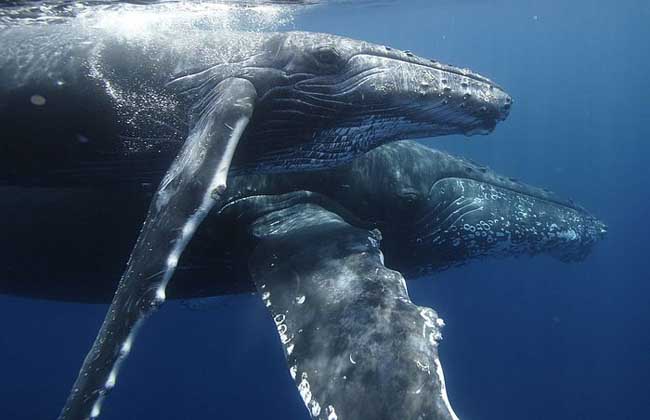
Whales are the collective name for about eighty species of placental mammals living in oceans and rivers under the class Mammalia and subclass Eutheria. From the perspective of biochemistry and genetics, cetaceans are relatively closely related to ungulates, and the fossil record (about 50 million years ago) also supports that cetaceans evolved from ungulates. Let us take a look below at what animal the ancestor of whales is!
What animal is the ancestor of whales?
The ancestor of whales was most likely a terrestrial ungulate animal from North America, Europe and Asia——the Mesonychidae. Some members of Mesonychidae were as small as domestic dogs, while others were as large as bears, but many animals evolve from small to large, so cetaceans may have evolved from small mesonychids. It is speculated that these mesonychids, which had few teeth and caught fish in shallow water, gradually shifted to an amphibious lifestyle and then, through a long evolutionary process, became today's various whales and dolphins.
What were the earliest whales?
The earliest cetaceans were the Archaeoceti family Pakicetidae. Pakicetidae animals all appeared 50 million years ago, and fossils are distributed in Asia, Africa and North America. Scientists have a relatively good understanding of Pakicetus, found in what is now Pakistan. This fossil organism, which lived 50 to 53 million years ago, was an animal whose blowhole (nostril) had already moved backward, had a long narrow braincase, and still had hind limbs. Fossil evidence found in rock layers of the same period in India also shows that among early cetaceans there was already an unimaginably high degree of ecological diversity.
What is the current population status of whales?
Due to environmental degradation and extensive hunting by humans, members of the whale group, especially some large members, have been widely hunted because of their high economic value, and many cetaceans are already on the brink of extinction. The International Whaling Commission (IWC) is an international organization responsible for managing whaling and cetacean conservation. After commercial whaling caused a sharp decline in whale numbers, the IWC decided to take action to protect cetaceans, including a temporary ban on commercial whaling beginning in 1986, and in 1979 and 1994 respectively established the Indian Ocean Whale Sanctuary and the Southern Ocean Whale Sanctuary. However, from 1986 to the present, because Japan, Norway and some other countries took advantage of loopholes in IWC resolutions and, under the banner of “scientific whaling”, have killed more than 25,000 whales. Countries currently engaged in whaling still include Norway, Iceland and Japan, as well as some indigenous tribes in Siberia, Alaska and northern Canada.