How big was Basilosaurus really? Uncovering the true size of this ancient giant whale
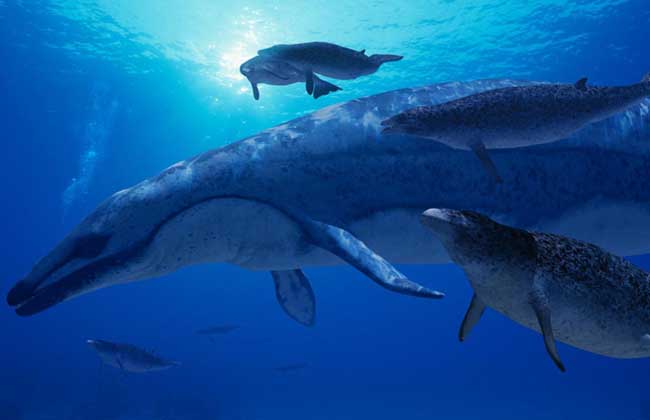
Basilosaurus is a type of whale, meaning "king lizard," also known as Zeuglodon, an extinct ancient marine mammal and a close relative of modern whales. It lived from 39 million to 34 million years ago in the late Eocene. It was initially mistaken for the fossil of a giant marine reptile, which is why it was named "king lizard." Let's take a look below at just how big Basilosaurus really was!
How big was Basilosaurus really?
The average body length of Basilosaurus was 18 m, and it had a more slender body than modern whales. Paleontologists are very interested in its vestigial, short hind limbs, because they can prove that modern whales originally evolved from terrestrial mammals. When it was first discovered, it was even mistaken for some kind of sea serpent. Current scientific research suggests that its natural enemy may have been sharks.
What did Basilosaurus eat?
Basilosaurus was a giant whale that lived from 40 to 34 million years ago and fed on other whales. Its huge size meant it needed a large amount of food to sustain its body. Its short, sharp teeth were used to capture sharks and other prey. Fish, sharks, squid, sea turtles and other marine mammals were all on its menu, and it used keen eyesight and hearing to find and catch prey.
Physical characteristics of Basilosaurus
1. Body shape: The most striking feature of Basilosaurus was its very elongated body, with females about 15 m long and males about 18 m long. It also had a more slender body than modern whales, as well as vestigial, short hind limbs. When it was first discovered, it was even mistaken for some kind of sea serpent.
2. Tail fluke: The bones in the tail of Basilosaurus indicate that it most likely had a small tail fluke, though it may have only helped with vertical movement. Most reconstructions show Basilosaurus with a small dorsal fin presumed to be similar to that of baleen whales, while other reconstructions show Basilosaurus with only a dorsal hump.
3. Hind limbs: Perhaps the most famous part of Basilosaurus's body structure was its 0.6-meter-long hind limbs. There is no doubt that they could not help with movement. These vestigial hind limbs may have been used only to hold two Basilosaurus individuals in different positions together. The hind limbs are similar to the vestigial hind limbs that snakes use to guide mating, so Basilosaurus may have done the same.
4. Spine: Basilosaurus had slender, hollow vertebrae that also seemed to be filled with fluid. Compared with other marine mammals, it had an unusual mode of locomotion. Having thoracic, lumbar, sacral and caudal vertebrae of the same size suggests that it could basically move only horizontally at the ocean surface, while most other marine mammals can move in three dimensions. Judging from its weak axial muscle tissue and thick limb bones, it is believed to have been unable to swim and dive continuously for long periods, and it is also believed to have had no ability to move on land.
5. Head: The head of Basilosaurus did not have a melon like that of modern toothed whales, and its brain was relatively small, lacking the social abilities of modern whales. It was once thought to have some kind of soft shell, but this seems to have been the result of mistaking a sea turtle shell. Some cryptozoologists believe that Basilosaurus or a more evolved relative is still alive, and that they are the giant sea serpents people have sighted. However, Basilosaurus fossils show that they became extinct 37 million years ago, and there is no evidence to support this claim.