How Big Was Livyatan melvillei? A Full Analysis of Body Length and Weight Data
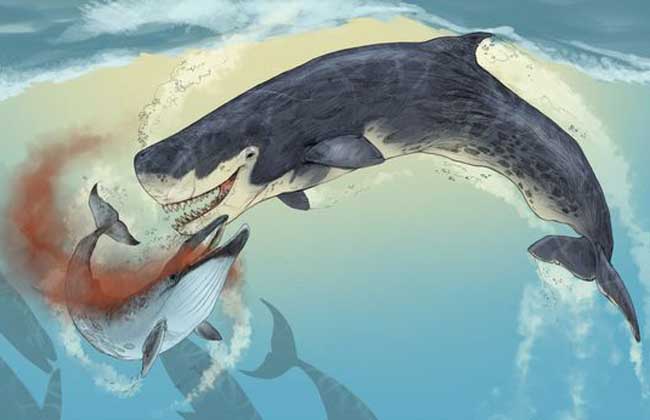
Livyatan melvillei is a species of whale, the largest species in the genus Livyatan, an extinct toothed whale from the Miocene epoch discovered in South America, living 13 million years ago; its species name is named after Herman Melville, the author of "Moby-Dick" and a famous American writer. Let's take a look below at just how big Livyatan melvillei was!
How big was Livyatan melvillei?
Currently only one skull sample of Livyatan melvillei exists. Scientists estimate that Livyatan melvillei was 17 to 18 m long, and the largest tooth found so far is 35 cm, but in 2013 a banana-shaped whale tooth 40 cm long was discovered, so this Livyatan melvillei may have been up to 20 m long. However, because fossil samples are currently scarce, scientists can only conclude that it was a top predator on par with the megalodon, with strength evenly matched. If the sperm whale is used as a reference, the body length of Livyatan melvillei was 13.5 m; if the pygmy sperm whale is used as a reference, the body length comes out to 16.2 to 17.5 m, and the body size could reach up to 20 m.
What did Livyatan melvillei eat?
At present, scientists can only conclude that Livyatan melvillei and the megalodon were both top predators. Its only skull fossil is 3 m long, its teeth are 36 cm long, and its whole body is estimated at 13.5 to 17.5 m. Its body shape and appearance were similar to those of the modern sperm whale, but while the modern sperm whale has functional teeth only in the lower jaw, Livyatan melvillei had teeth in both jaws, and they were much larger than those of the modern sperm whale. It is inferred that Livyatan melvillei may have fed on baleen whales. However, in 2013 a banana-shaped carnivorous whale tooth up to 40 cm long was discovered, so there may have existed carnivorous sperm whales larger than Livyatan melvillei, or Livyatan melvillei could grow even larger.
The Discovery of Livyatan melvillei
Livyatan melvillei was discovered by Klaas Post of the Natural History Museum Rotterdam in the Netherlands, who accidentally stepped on it on the last day of a field expedition in November 2008. The team was led by Dr. Christian de Muizon, director of the French National Museum of Natural History, and included paleontologists from Utrecht University and the natural history museums of Rotterdam, Pisa, Lima and Brussels. Its genus name comes from Leviathan in the Bible, and its species name commemorates Herman Melville, the author of the novel "Moby-Dick". The authors of the paper were all fans of the novel and all hoped to pay tribute to Melville with the discovery. The fossil was prepared in Lima, the capital of Peru, and the discovery was published in the journal Nature on June 30, 2010. Nature also released a seven-minute video reporting on the fossil excavation and interviewing the researchers involved. The fossil is now kept in the Natural History Museum of Lima.