Why Do Whales Strand Themselves? An Analysis of the Common Causes of Whale Strandings
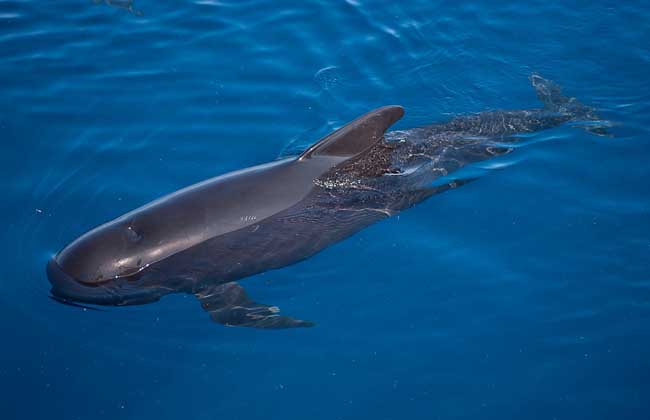
Whales are the largest creatures in the ocean world, weighing anywhere from a few tons to several dozen tons, so a whale stranding is a very tricky matter. Of course, not all stranded whales end up dying; when the next tide comes in, it will wash the still-living whales back out, and the dead ones that remain will be dealt with. Let us take a look below at why whales strand themselves!
Discovery of the Whale Stranding Phenomenon
According to records, as far back as 1783, 18 sperm whales rushed toward the mouth of the Elbe in Europe, where they waited to die. The following year, another 32 sperm whales stranded in the Bay of Audierne in France. In the 18th century, some navigators discovered a terrifying whale graveyard in Tasmania, with piles of rotting carcasses and white bones scattered across the beach, presenting a scene of utter desolation. The first person in the world to record the whale stranding phenomenon was the great Greek philosopher Aristotle, who frankly told people: "Why on earth do whales strand themselves? I cannot answer this difficult question." The famous ancient scholar Plutarch, however, explained the whale stranding phenomenon as "collective suicide," which is clearly unscientific, because whales cannot possibly have the rich emotions of humans; moreover, once a whale is stranded, it often appears terrified and even lets out pitiful cries for help.
Why do whales strand themselves?
1. System malfunction: Scientists still cannot explain to this day why these whales "strand," but most explanations are related to their internal echolocation system. In fact, whales do not rely on their eyes to navigate, detect objects, and hunt; instead, they possess a highly sensitive echolocation ability. Internal discomfort, parasites, or problems with the system itself can all cause the echolocation system to malfunction, causing whales to lose their sense of direction and dart about in all directions.
2. Topographic causes: Regarding why whales strand themselves, some scientists also believe that when whales enter gently sloping waters while chasing prey along with the water currents, a receding tide can cause them to strand. And when they swim into bays in pursuit of schools of fish and emit ultrasound toward beaches with relatively steep slopes, the echoes often have large errors, or no echo is received at all, which also causes them to lose their sense of direction. Whales are social animals; if one whale rushes onto a beach and strands, the rest will follow without regard for their own safety, resulting in a tragedy of mass death and injury.
3. Environmental pollution: Environmental pollution is also considered by environmentalists and scientists to be a cause of whale strandings. Scientists believe that the chemical substances polluting seawater may disrupt whales' senses. In addition, Dr. Collet, deputy director of the Marine Mammal Research Center in La Rochelle, France, believes that the sound waves emitted by warship sonar and echo-sounding detectors, as well as the noise of underwater explosions, can disrupt whales' echolocation systems.
What whale stranding events have there been?
In 1754, on the beach of Audierne Bay in France, more than 30 sperm whales stranded and died.
In 1970, on the beach of Fort Pierce, Florida, USA, more than 150 killer whales rushed ashore recklessly.
On July 17, 1979, in the Bay of Fundy, Canada, more than 130 whales died.
On March 10, 2005, a national first-class marine protected animal, a large whale measuring more than 8 m in length and weighing about 4 tons, was found stranded and dead on the coast near Liangmei Village, Dashanjiang Street, Wuchuan City, on the afternoon of March 10, 2005.
On March 11, 2008, a whale weighing more than 2 tons stranded and died in Hainan.
On March 11, 2008, a whale weighing more than 2 tons was found stranded and dead at Chaotan Port, Jinshan Town, Wenchang City, Hainan Province. The relevant authorities have buried the whale and will extract its skeleton to make a specimen for research use.
On August 30, 2008, an adult Japanese beaked whale weighing 3000 jin stranded in the waters of Golden Beach in Qingdao Development Zone.
On March 16, 2012, 4 sperm whales stranded on the tidal flats near Xintan Salt Field in Yancheng (34 degrees 22 minutes north latitude, 120 degrees 10 minutes east longitude). The largest weighed thirty to forty tons, and the smallest nearly twenty tons. Later, on March 19, 2012, after researchers from Nanjing Normal University arrived on site to dissect and sample them, they were buried deep on site that same late night and in the early hours of the 20th.
On October 26, 2012, Indian officials confirmed that about 40 giant whales had stranded and died on the west coast of North Andaman Island in the Bay of Bengal. The cause is still unclear. Ajai Saxena, an official in Port Blair, the capital of the North Andaman Islands, said that these stranded dead short-finned pilot whales were discovered by local fishermen, and that no mass whale stranding event had ever occurred in the Andaman Islands before.