What is the difference between yellow dragon jade and yellow jade? Mainly these few points
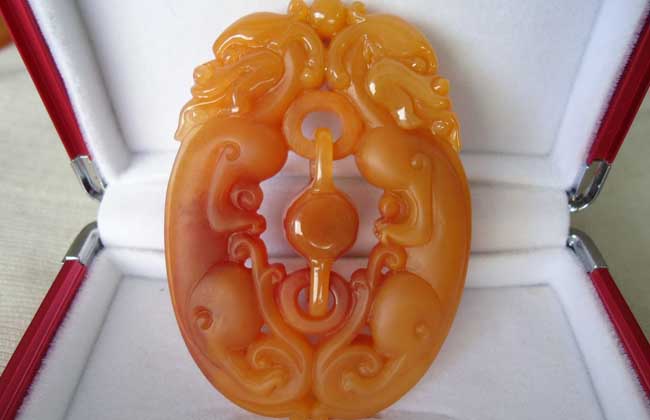
Yellow dragon jade, also known as dragon yellow stone, is a new type of jade discovered in Longling, Yunnan in 2004. Yellow jade is a fluorine-containing aluminosilicate mineral, also called yellow crystal, formed from vapor released by igneous rock during the crystallization process, generally found in the cavities of rhyolite and granite. Let us take a look below at what differences exist between yellow dragon jade and yellow jade!
The difference in composition between yellow dragon jade and yellow jade
1. Yellow dragon jade: The main components of yellow dragon jade are silicon dioxide, muscovite, etc., and it also contains metal elements such as iron, aluminum and manganese as well as more than 40 kinds of trace elements. However, unlike crystal, it is not a single crystal but a polycrystalline composite similar to jadeite and Hetian jade. Its hardness is comparable to that of jadeite, with a Mohs hardness of 6.5 to 7, and its toughness is better than jadeite but slightly lower than Hetian jade.
2. Yellow jade: Yellow jade is an ordinary gemstone, and its composition is fluorine-containing silicate with a hardness of 8. Common colors include colorless, pink, yellow and blue, etc. Common gemstones that are easily confused with yellow jade mainly include crystal, aquamarine, tourmaline and glass imitations, among which the most easily confused is yellow crystal.
The difference in origin between yellow dragon jade and yellow jade
1. Yellow dragon jade: Yellow dragon jade is a new type of jade discovered in Longling, Yunnan in 2004. Gem-grade yellow dragon jade of excellent quality is mainly produced in the Xiaoheishan Nature Reserve in Longling County, Baoshan City, Yunnan Province and the surrounding Supa River basin. It is very close to the jadeite-producing area of Myanmar, and both belong to the Yunnan-Myanmar gemstone and jade metallogenic belt formed by the mutual compression of the Eurasian Plate and the Indian Ocean Plate. Here the primitive forest coverage rate is very high, the terrain is complex, the climate is diverse, and the rainfall is very abundant. It is known as the rainy screen of western Yunnan, providing very unique and unreplicable natural conditions for the formation of excellent jade.
2. Yellow jade: Yellow jade is a typical pneumatolytic hydrothermal mineral, produced in granite pegmatite, crystal cavities of acidic volcanic rock, greisen and high-temperature hydrothermal tungsten-tin quartz veins. Yellow jade is produced all over the world, and in China it is mainly produced in Inner Mongolia, Jiangxi, **, Guangdong, Yunnan, etc.
The difference in color between yellow dragon jade and yellow jade
1. Yellow dragon jade: The colors of yellow dragon jade are divided into pale yellow, golden yellow, orange red, tangerine red, pigeon-blood red, pale red, golden orange red, etc. These tones are all the most active, most prosperous, most noble and most vital and infectious auspicious colors among warm tones. This is the first factor why yellow dragon jade is highly favored and valuable.
2. Yellow jade: Yellow jade generally appears columnar or irregularly granular or massive, with a variety of colors, generally light colors such as yellow, blue, green, red and brown, with a vitreous luster, and some are colorless and transparent. The color will fade when exposed to sunlight for a long time.
The difference in value between yellow dragon jade and yellow jade
1. Yellow dragon jade: Yellow dragon jade has the warmth and smoothness of Hetian jade, the color of Tianhuang, the hardness of jadeite and the flexibility of Shoushan stone. It has both the fibrous structure visible in jadeite and the radish pattern similar to Tianhuang. It has both the satisfactory "water head" of jadeite and a better "oil head" than Hetian jade. Its vitreous luster is even more captivating. In addition, the main colors of yellow dragon jade are yellow and red. Yellow implies "wealth and honor", and red implies "auspiciousness". It can be played with as rough stone and is also suitable for carving into various ornaments and jewelry. It is deeply favored by consumers and has become a new favorite in today's jade collection.
2. Yellow jade: Before being developed as jade, yellow jade was only collected and traded by people as an ornamental stone, and was called "yellow wax stone". Because its stone quality is fine and smooth, its color is golden yellow, its blocks are large and its variations are rich, it has high ornamental value and has reached several thousand to even ten thousand yuan per kilogram. Its speed of price increase has set a miracle in the history of jade. In fact, not all yellow wax stone can be regarded as yellow jade. Only yellow wax stone that reaches the jade grade is called "yellow jade".