Are Elephants Mammals? A Guide to Animal Classification
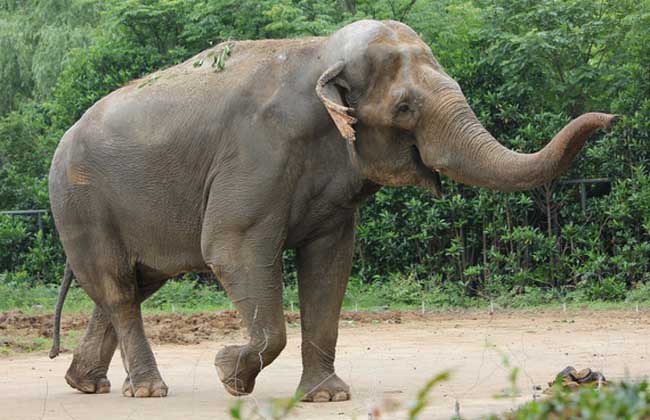
The ancestors of elephants appeared on Earth tens of millions of years ago and were once one of the most dominant animal groups on the planet. However, due to climate and human factors, the number of species in this group has dwindled. Today only 3 species of elephants remain on Earth: the Asian elephant, the African bush elephant, and the African forest elephant, and they too are under serious threat. Let's take a look below at whether elephants are mammals!
Are Elephants Mammals?
Yes, elephants are mammals. Elephants are terrestrial, social mammals of the class Mammalia, subclass Eutheria, order Proboscidea, family Elephantidae, and they are also the largest mammals on land. They usually live in family units, and sometimes several elephant herds gather together to form a group of over a hundred elephants. Among African elephants, a female leads the herd, and the daily activity times, travel routes, foraging sites, and resting places are all directed by the female. Asian elephants are the opposite, with adult males taking on the responsibility of guarding the family's safety.
Where Are Elephants Distributed?
The order Proboscidea once had 6 families, of which 5 are extinct, leaving only 1 family, Elephantidae, with 2 genera and 3 species in total (the genus Elephas and the genus Loxodonta). The three species are the Asian elephant, the African bush elephant, and the African forest elephant. Historically, the Asian elephant was widely distributed south of the Yangtze River in China as well as in south-central Henan, South Asia, and Southeast Asia; its current range has shrunk, and it is mainly found in India, Thailand, Cambodia, Vietnam, and other countries. There is also a small wild population in the Xishuangbanna region of Yunnan Province, China. The African bush elephant is widely distributed across the entire African continent (except the Sahara Desert), while the African forest elephant lives in the forests of central and western Africa.
What Are the Living Habits of Elephants?
1. Social living: Elephants are social animals that live in family units led by a female. The daily activity times, travel routes, foraging sites, and resting places are all directed by the female, while adult males only take on the responsibility of guarding the family's safety. Sometimes several elephant herds gather together to form a large group of over a hundred.
2. Food: Elephants are the largest mammals on land and feed on plants such as tender leaves, wild fruits, wild grasses, wild vegetables, and tender bamboo. Although they are purely herbivores, because of their large size they are truly the strongmen and giants of the terrestrial animal world, and with their long trunks and tusks as weapons, they have no natural enemies in nature apart from humans. They cannot see at night, so they are vulnerable to attacks by lion prides at night.
3. Reproduction: The African bush elephant is the largest surviving terrestrial mammal and is listed in the Convention on International Trade in Endangered Species of Wild Fauna and Flora. Its breeding period is not fixed, the gestation period is about 22 months, and it gives birth to 1 calf per pregnancy. It reaches sexual maturity at 13 to 14 years old and has a lifespan of over 60 years. The Asian elephant is a Class I protected animal in China and is listed in the Convention on International Trade in Endangered Species of Wild Fauna and Flora. Its breeding period is not fixed, the gestation period is 20 to 22 months, and it gives birth to 1 calf per pregnancy. It reaches sexual maturity at 9 to 12 years old and has a lifespan of 70 to 80 years.