What is the difference between plantain and dandelion? Learn to tell them apart quickly
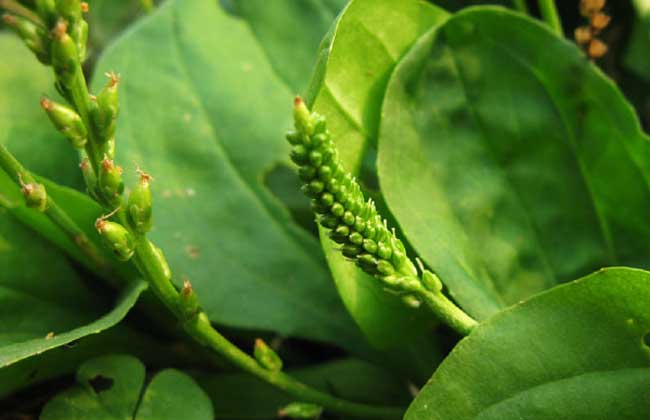
Plantain is an annual or biennial herbaceous plant of the genus Plantago in the family Plantaginaceae, also known as Plantago depressa, plantain tea herb, etc. Dandelion is a perennial herbaceous plant of the genus Taraxacum in the family Asteraceae, also known as yellow-flowered dandelion, po po ding, hua hua lang, etc. It grows widely in hillside grasslands, roadsides, fields and riverbanks at low and medium altitudes. Let us take a look below at what differences there are between plantain and dandelion!
The family and genus differences between plantain and dandelion
1. Plantain: Plantain is an annual or biennial herbaceous plant in the plant kingdom, phylum Angiospermae, class Dicotyledoneae, subclass Sympetalae, order Plantaginales, family Plantaginaceae, genus Plantago.
2. Dandelion: Dandelion is a perennial herbaceous plant in the plant kingdom, phylum Angiospermae, class Dicotyledoneae, subclass Sympetalae, order Campanulales, family Asteraceae, subfamily Liguliflorae, tribe Cichorieae, genus Taraxacum.
The morphological differences between plantain and dandelion
1. Plantain: Plantain has a long taproot with many lateral roots, more or less fleshy, and a short rhizome. The leaves are basal and arranged in a rosette, lying flat, slanting outward or upright; the leaf blades are papery, elliptical, elliptically lanceolate or ovate-lanceolate, and the base of the petiole expands into a sheath. The peduncle has longitudinal stripes and is sparsely covered with short white hairs, and the spike is slender and cylindrical. The capsule is ovate-elliptical to conical-ovate, with 4 to 5 seeds, elliptical, flat on the ventral side, yellow-brown to black, and the cotyledons are arranged dorsiventrally. The flowering period is from May to July, and the fruiting period is from July to September.
2. Dandelion: Dandelion has a conical root, brown on the surface, wrinkled; the leaf margins sometimes have wavy teeth or pinnate deep lobes, and the base gradually narrows into a petiole; the petiole and main vein often carry a reddish-purple color; the upper part of the scape is purplish-red and densely covered with cobweb-like long white hairs; the flower head is capitulate, the involucre is bell-shaped, the achene is dark brown, and the long pappus is white. The flowering and fruiting period is from April to October.
The origin differences between plantain and dandelion
1. Plantain: The main production areas of plantain in China are Heilongjiang, Jilin, Liaoning, Inner Mongolia, Hebei, Shanxi, Shaanxi, Ningxia, Gansu, Qinghai, **, Shandong, Jiangsu, Henan, Anhui, Jiangxi, Hubei, Sichuan, Yunnan, Tibet and other places. It is also distributed in Korea, Russia, Kazakhstan, Afghanistan, Mongolia, Pakistan, Kashmir and India.
2. Dandelion: Dandelion grows widely in hillside grasslands, roadsides, fields and riverbanks at low and medium altitudes. It is distributed in China in Jiangsu, Hubei, Henan, Anhui, Zhejiang, Heilongjiang, Jilin, Liaoning, Inner Mongolia, Hebei, Shanxi, Shaanxi, Gansu, Qinghai, Shandong, Zhejiang, northern Fujian, Taiwan, China, Hunan, northern Guangdong, Sichuan, Guizhou, Yunnan and other areas, and is also distributed in Korea, Mongolia and Russia.
The efficacy differences between plantain and dandelion
1. Plantain: Plantain is sweet in taste and cold in nature, entering the liver, kidney and bladder meridians. It has the effects of clearing heat, promoting urination, resolving phlegm, cooling blood and detoxifying, and is used for edema with scanty urine, painful strangury with heat, summer-damp diarrhea and dysentery, cough due to phlegm-heat, vomiting blood and nosebleeds, carbuncle swelling and sores, etc., but it is contraindicated for those with kidney deficiency and insecurity with spermatorrhea.
2. Dandelion: Dandelion is bitter and sweet in taste and cold in nature, entering the liver and stomach meridians. It has the effects of clearing heat and detoxifying, reducing swelling and dissipating nodules, and promoting urination to treat strangury, and mainly treats boils and toxic swellings, breast abscess, scrofula, red eyes, sore throat, lung abscess, intestinal abscess, damp-heat jaundice, painful strangury with heat, etc., but when using it, caution is required: it is contraindicated for those with yang deficiency and external cold, and those with weak spleen and stomach.