How long do giant pandas live? A detailed guide for you
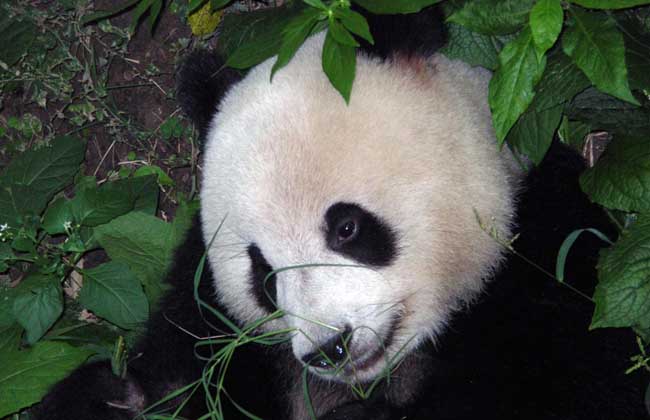
The giant panda is a species endemic to China, and its remaining main habitat is the mountainous areas of Sichuan, Shaanxi and Gansu in China. There are fewer than 1,600 wild giant pandas in the world. It is a Class I nationally protected animal in China and is known as a “living fossil” and “China's national treasure”, as well as the image ambassador of the World Wide Fund for Nature. Now let us take a look together at how long giant pandas live!
How long do giant pandas live?
An adult giant panda weighs about 80 to 150 kg, and its average lifespan is about twenty-five years. Under captive conditions, the longest recorded lifespan of a giant panda exceeds 30 years. “Meimei”, with the international studbook number 217, has already reached the advanced age of thirty-six, equivalent to a hundred years in human terms. Previously, a captive-bred giant panda named “Dudu” at Wuhan Zoo lived for thirty-seven years, setting a world record.
What do giant pandas eat?
Giant pandas mainly eat bamboo. 99% of the giant panda's diet is bamboo, and there are more than 60 species in 12 genera of bamboo plants that giant pandas can eat. In addition, wild giant pandas occasionally eat some animal carcasses or other plants. Giant pandas like to eat a relatively wide variety of bamboo, and Fargesia is only one of the more common types. These bamboos grow for a long time under the canopy of subalpine dark coniferous forests, montane dark coniferous forests, montane mixed coniferous and broad-leaved forests, and montane evergreen broad-leaved forests, distributed at elevations ranging from 700 to 3,500 m. Giant pandas in different mountain systems have different staple bamboos. The giant panda's diet varies with mountain system and season, and in different seasons they feed on different types of bamboo or different parts of the same bamboo. In spring and summer, they most love to eat different types of bamboo shoots; in autumn, they mainly feed on bamboo leaves; in winter, they mainly feed on bamboo culms.
Do giant pandas have strong reproductive ability?
Under normal circumstances, a giant panda goes into estrus only once a year. Under captive conditions, however, 80% of female giant pandas cannot go into normal estrus and release mature eggs. The reason for this is that the reduced content of certain trace elements in their food, such as zinc, affects ovarian development and normal ovulation function. In addition, under wild conditions, giant pandas can learn mating behavior by observing the activities of others of their kind. But in zoos, they are far from the population and have no opportunity to learn the concept of reproducing the species.
In the wild, if twins are born (under captive conditions, the proportion of giant pandas giving birth to twins is nearly 50%), the mother giant panda usually ignores or rejects the weaker one, which can ensure that at least one survives. Under captive conditions, artificial rearing is carried out, and the cub-swapping technique is used to try to ensure that all giant panda cubs can survive.
A newborn giant panda is quite immature at birth, weighing only 0.1% of its mother's weight. The newborn cub is very light in weight, with an average birth weight of about 145 grams, roughly one-thousandth of an adult giant panda's weight, the lightest being 51 grams and the heaviest being 225 grams. Caring for a cub is a very difficult task for a female giant panda, usually lasting 18 months and sometimes even as long as two years, until her next cub is born.