Do giant pandas eat meat? Uncovering their true diet
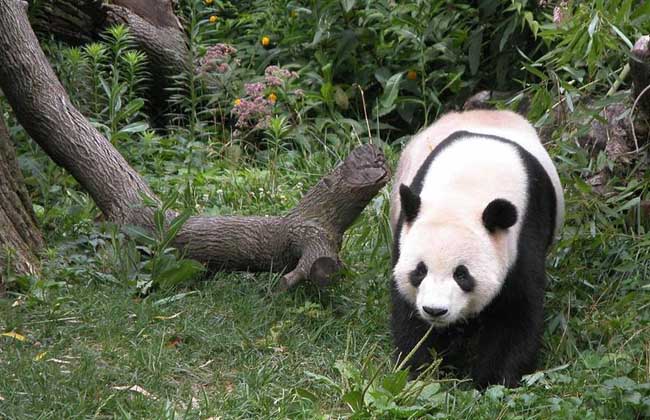
The giant panda is a mammal belonging to the order Carnivora, family Ailuropodidae, with a coat of black and white, round cheeks, large black eye patches, a chubby body, an iconic pigeon-toed way of walking, and claws as sharp as a scalpel. It is one of the cutest animals in the world. Let us take a look below at whether giant pandas eat meat!
Do giant pandas eat meat?
Giant pandas do eat meat. The giant panda originally ate meat and also has the potential of a carnivore to eat meat, but it rarely preys on animals or animal carcasses. This is not because it dislikes eating meat, but because it lacks the opportunity. In the giant panda's distribution range there are few large carnivores, so there are not many leftover carcasses for it to feed on. If it frequently hunted small animals such as rodents itself, the nutrients obtained would often not be enough to offset the energy expended. Therefore, the giant panda can only eat a little meat occasionally, and for most of the time it relies in a routine way on bamboo to sustain life, becoming an animal that follows the rules its whole life and lives on bamboo.
What food do giant pandas eat?
Giant pandas eat bamboo. 99% of the giant panda's food is bamboo, and there are more than 60 species in 12 genera of bamboo plants that giant pandas can eat. In addition, wild giant pandas occasionally eat some animal carcasses or other plants. There are quite a few kinds of bamboo that giant pandas like to eat; Fargesia is just one relatively common kind. These bamboos grow over the long term under the canopy of subalpine dark coniferous forests, montane dark coniferous forests, montane mixed coniferous and broad-leaved forests, and montane evergreen broad-leaved forests, with a distribution altitude ranging from 700 to 3500 m. Giant pandas in different mountain systems have different staple bamboos. The giant panda's diet varies with the mountain system and the season, and in different seasons it feeds on different kinds of bamboo or different parts of the same kind of bamboo. In spring and summer it most loves to eat different kinds of bamboo shoots, in autumn it mainly feeds on bamboo leaves, and in winter it mainly feeds on bamboo culms.
Why do giant pandas eat bamboo?
Why giant pandas eat bamboo is in fact related to changes in their living environment. After the glaciation, the giant pandas remaining in the area of Sichuan and Gansu could only survive by gradually changing their diet. In the long process of adapting to the environment, the giant panda changed from eating meat to eating bamboo, and its molars also became especially broad and large, suitable for grinding bamboo fibers. Giant pandas love to eat Fargesia, black bamboo, and water bamboo, and especially love to eat bamboo shoots; every year they go on time to a certain place to eat bamboo shoots. They eat a great deal, eating about 20 kg of tender bamboo each day and absorbing nutrients from the large amount of fiber. Because they must digest a large amount of fiber and lignin every day, they are especially fond of drinking water. Of course, giant pandas occasionally eat other small animals as well; if they see a bamboo rat, they kill it with a single paw swipe and then enjoy a fine meal. In their daily life, apart from eating, giant pandas sleep, and once awake they start eating again. Because bamboo has its cycles of flourishing and decline, flowering and dying about once every 50 to 60 years, at such times the giant panda's food becomes scarce and its life is threatened. Now China has established giant panda reserves, and at the same time has organized large-scale activities to rescue giant pandas and carry out artificial breeding, so that this "national treasure" will endure forever.