What is the difference between the giant panda and the red panda? The main differences explained all at once
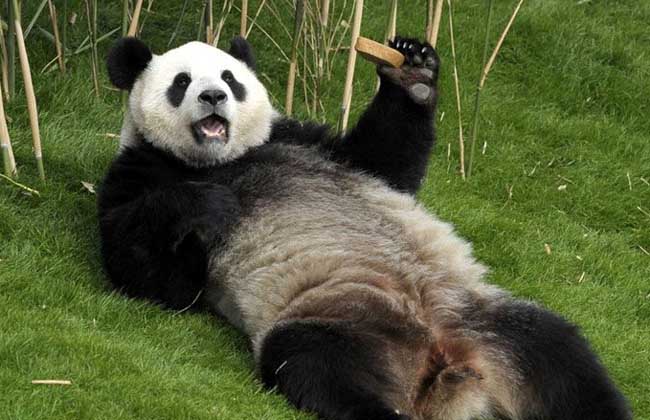
Many people cannot tell the difference between the red panda and the giant panda, thinking that the red panda is a young giant panda. Although the red panda and the giant panda share the name "panda" and both belong to the class Mammalia, order Carnivora, they are in fact two entirely different animals, though they are somewhat related. Let's take a look below at exactly what the differences between the giant panda and the red panda are!
The difference in family and genus between the giant panda and the red panda
1. Giant panda: The giant panda is a large mammal in the kingdom Animalia, phylum Chordata, subphylum Vertebrata, class Mammalia, subclass Eutheria, order Carnivora, suborder Caniformia, family Ailuropodidae, genus Ailuropoda.
2. Red panda: The red panda is a small mammal in the kingdom Animalia, phylum Chordata, subphylum Vertebrata, class Mammalia, subclass Eutheria, order Carnivora, suborder Caniformia, family Ailuridae, genus Ailurus.
The difference in appearance between the giant panda and the red panda
1. Giant panda: The giant panda is stout and bear-like in build, plump and portly, with a round head and a short tail. The head and body length is 1200-1800 mm, and the tail length is 100-12 mm. Body weight is 80-120 kg, with the heaviest reaching 180 kg. Captive pandas are slightly heavier, and males are generally somewhat larger than females. The fur on the head and body is distinctly black and white, but the black is not pure black, nor is the white pure white; rather, the black has a brownish tinge and the white has a yellowish tinge.
2. Red panda: The red panda looks like a cat, but is larger and stouter than a cat, with a whole-body reddish-brown coat, a round face, a relatively short muzzle, and white markings on the cheeks. The ears are large and stand erect facing forward. The limbs are thick and short, and dark brown. The tail is long, relatively thick and bushy, with 12 alternating red and dark rings, and the tail tip is dark brown. The skull is high and round.
The difference in distribution between the giant panda and the red panda
1. Giant panda: The giant panda is a species endemic to China, distributed in Gansu, Shaanxi, Sichuan and other places in China, including the Qinling, Minshan, Qionglai Mountains, Daxiangling, Xiaoxiangling and Daliangshan and Xiaoliangshan mountain ranges.
2. Red panda: The native range of the red panda covers Bhutan, China, India, Myanmar, Nepal and other places. In the eastern part of its native range, especially along the border between Yunnan and Myanmar, it is more common, but it is not a frequently seen species. In China it is mainly distributed in Tibet (the southern slopes of the Himalayas), Yunnan, Sichuan and other places.
The difference in diet between the giant panda and the red panda
1. Giant panda: 99% of the giant panda's food is bamboo, and there are more than 60 species in 12 genera of bamboo plants that the giant panda can eat. In addition, wild giant pandas occasionally eat some animal carcasses or other plants. Giant pandas like to eat a fairly wide variety of bamboo, and their diet varies with mountain range and season; in different seasons they feed on different species of bamboo or different parts of the same bamboo species. In spring and summer they most love to eat different kinds of bamboo shoots, in autumn they mainly feed on bamboo leaves, and in winter they mainly feed on bamboo culms.
2. Red panda: The red panda likes to eat the bamboo shoots, tender branches and bamboo leaves of Fargesia, various wild fruits, tree leaves, mosses, as well as preying on small birds or bird eggs and other small animals, insects, etc. It is especially fond of foods with a sweet taste. In places where it is active, many grass-green droppings are commonly seen. Like the raccoon, it is quite fond of cleanliness and defecates at fixed locations. After feeding, it has the habit of rubbing its mouth and face with its paws or licking its mouth clean with its tongue.