Why is the giant panda a national treasure? The reasons are mainly these
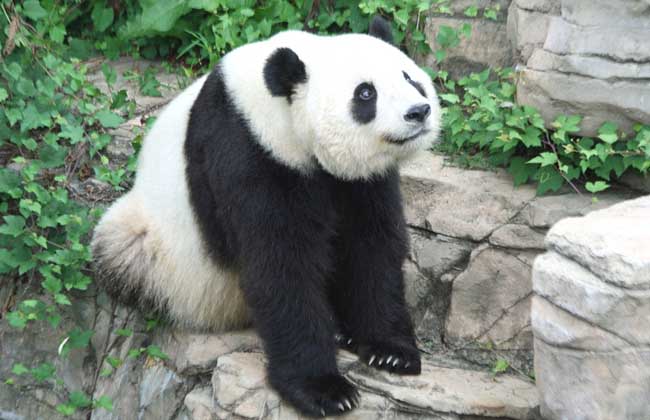
The giant panda is a mammal belonging to the order Carnivora, family Ailuropodidae, and one of the cutest animals in the world. It has survived on Earth for at least 8 million years, is the ambassador of the World Wildlife Fund, and is the flagship species of global biodiversity conservation. It is known as a “living fossil” and “China's national treasure.” Let's take a look below at why the giant panda is a national treasure!
Unique to China
The giant panda is a species endemic to China, and the surviving population is mainly distributed in Gansu, Shaanxi, and Sichuan in China (regionally extinct in Hubei and Hunan), including the Qinling, Minshan, Qionglai Mountains, Daxiangling, Xiaoxiangling, and the Greater and Lesser Liangshan mountain ranges.
Rare in number
According to the third national survey of wild giant panda populations, there are fewer than 1,600 wild giant pandas in the world, and it is a Class I nationally protected animal in China. As of October 2011, the number of captive giant pandas nationwide was 333.
On the brink of extinction
The history of the giant panda can be described as long and deep. The fossils of the oldest giant panda member discovered so far——Ailuropoda microta——were unearthed in Lufeng and Yuanmou in Yunnan, China, dating to about 8 million years ago in the late Miocene. In the long, harsh struggle for survival and natural selection, many animals of the same era have become extinct, but the giant panda was strong and held an advantage, surviving to this day as a “living fossil.” However, because the giant panda's reproductive method is extremely primitive and highly degenerate, it is still on the brink of extinction.
Ancient animal
The ancestors of the giant panda appeared 2 to 3 million years ago in the early Diluvial period. Tens of thousands of years ago was the peak period of the giant panda, belonging to the Stegodon fauna. Its habitat once covered most of eastern and southern China, reaching as far north as Beijing and as far south as southern Myanmar and northern Vietnam. Fossils are usually found in temperate or subtropical forests at altitudes of 500 to 700 m. Later, animals of the same period became extinct one after another, but the giant panda survived as a relict species to this day, retaining its original ancient characteristics. For millions of years it has undergone almost no evolution, and has even degenerated. Studying it can provide some information about ancient organisms, and through research it can also provide information about climate and geological changes over the past few million years.
Gentle and cute
The giant panda is always very gentle in temperament. When meeting people for the first time, it often covers its face with its front paws, or lowers its head, not revealing its true appearance. They rarely actively attack other animals or people, and when they meet by chance in the wild, they always avoid confrontation. But once it becomes a mother, its little baby is sacred and inviolable. Even a caring visit can anger the mother into a rage, with bared teeth and claws, lashing out.