What are the characteristics of the giant panda's living habits?
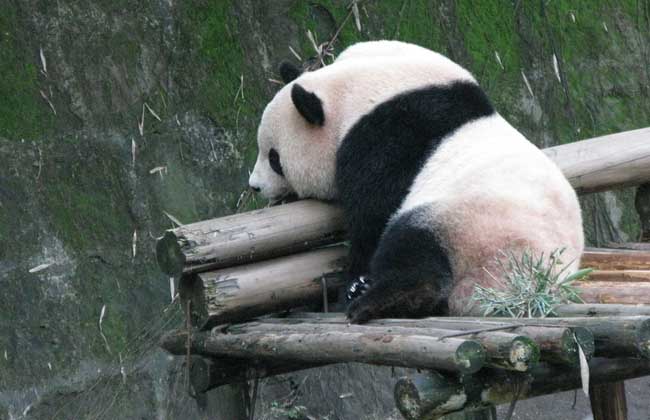
The giant panda is a mammal of the order Carnivora and the family Ailuropodidae. It has survived on Earth for at least 8 million years and is known as a “living fossil” and “China's national treasure,” as well as the ambassador of the World Wide Fund for Nature. There are fewer than 1,600 wild giant pandas in the world, and it is a Class I nationally protected animal in China. Let us take a look below at the living habits of the giant panda!
Feeding habits
Omnivorous. The giant panda originally ate meat and also has the potential of a carnivore to eat meat, but it rarely preys on animals or animal carcasses. This is not because it dislikes eating meat, but because it lacks the opportunity. In the giant panda's distribution area, there are few large carnivorous beasts, so there are not many leftover carcasses for it to eat. If it often went out to catch rodents and other small animals, the nutrients obtained would often not be enough to offset the energy consumed. Therefore, the giant panda can only occasionally eat a little meat, and most of the time it relies routinely on bamboo to sustain life, becoming an animal that follows the rules all its life and lives on bamboo.
Habitat environment
The giant panda lives in the high mountains and deep valleys of the upper reaches of the Yangtze River in China, on the windward side of the southeast monsoon, where the climate is cool and humid, with humidity often above 80%, making it a moisture-loving animal. The six narrow strips of land where giant pandas live include several major mountain systems such as the Minshan Mountains, Qionglai Mountains, Liangshan Mountains, Daxiangling Mountains, Xiaoxiangling Mountains and Qinling Mountains, spanning 45 counties (cities) in the 3 provinces of Sichuan, Shaanxi and Gansu, with a habitat area of more than 20,000 square kilometers and a population of about 1,600, of which more than 80% are distributed within Sichuan. Their activity areas are mostly in depressions, mountain belly hollows, river valley terraces and so on, generally on gentle slopes below 20°, where the forests are dense, bamboo grows well, the temperature is relatively stable, hiding conditions are good, and food resources and water sources are abundant.
Behavioral characteristics
Apart from spending half of the day eating, the giant panda spends most of the remaining half sleeping. In the wild, giant pandas sleep for 2 to 4 hours between every two meals. Lying flat on the back, lying on the side, lying prone, stretching out or curling into a ball are all their favorite sleeping positions. In zoos, keepers feed them at fixed times twice a day, so giant pandas use the rest of their time to rest. Even when sleeping, giant pandas look very cute. They are very flexible and can arrange their heavy bodies into all kinds of postures. Their favorite posture is to rest their legs on a tree and cover their eyes with their hands.
Reproductive habits
Giant pandas live in dense forests, and after growing to a certain stage they must mate and reproduce, namely estrus, courtship, mating, pregnancy and rearing young. Female giant pandas go into estrus once a year, each time for only a brief 2 to 3 days, usually from March to May each year. Adult male and female giant pandas gradually gather in one place mainly through olfactory communication by smell, getting to know each other and attracting each other. At the peak of estrus, they express love and achieve pairing and mating through continuous bleating and bird-like calls as well as mating postures and other auditory and visual communication methods. The gestation period of the giant panda is 83 to 200 days, and the young are usually born around August. When a giant panda becomes a mother, for the safety of the next generation's life, she changes her formerly gentle temper and becomes highly vigilant, not allowing any animal (including humans) to approach her sacred and inviolable little treasure.
Rearing habits
Newborn giant pandas are quite immature at birth, weighing only 0.1% of the mother's body weight. The newborn cub is very light, with an average birth weight of about 145 grams, roughly one-thousandth of an adult giant panda's body weight. The lightest is 51 grams, and the heaviest is 225 grams. Caring for a child is a very arduous task for a female giant panda, usually lasting 18 months, sometimes even as long as two years, until her next child is born. In the wild, if twins are born, the mother giant panda usually ignores or rejects the weaker one, which ensures that at least one survives. Under captive conditions, artificial rearing is carried out, and cub-swapping techniques are used to try to ensure that all giant panda cubs survive.