What types of whole grains and miscellaneous grains are there? A list of common miscellaneous grain varieties
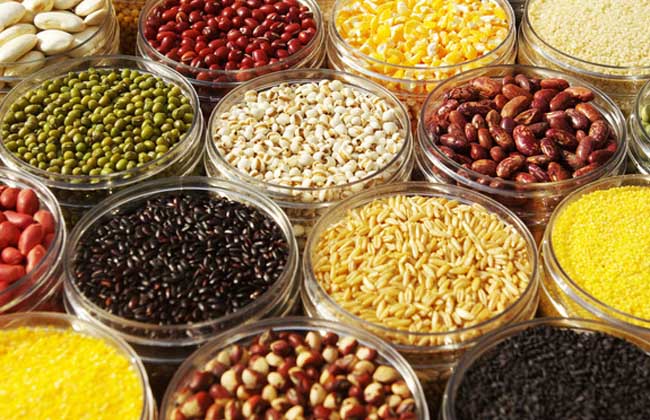
In modern commonly used Chinese, the so-called five grains usually refer to rice, wheat, soybeans, corn, and tubers. At the same time, grains other than rice and flour are also customarily called miscellaneous grains, and the five grains and miscellaneous grains also broadly refer to food crops, so the five grains are also a general term for food crops and can be extended to include foods and drinks made from grains or from soil-grown crops as raw materials. Now let us take a look at what the five grains and miscellaneous grains are!
Rice
Rice is one of the important food crops of humankind, with a very long history of both cultivation and consumption. At present, half of the world's population eats rice, mainly in Asia, southern Europe, tropical America, and parts of Africa. Rice ranks third in total output among the world's food crops, lower than corn and wheat, but it can support the lives of a relatively large population, so the United Nations designated 2004 as “International Year of Rice”.
Millet
Millet was originally named su, and is also called liang, foxtail grass, yellow millet, and su mi. It is an annual herbaceous plant of the genus Setaria in the grass family, native to the Yellow River basin in northern China, Inner Mongolia, and the Northeast region, mainly concentrated in the Chifeng and Tongliao areas. It was a major food crop in ancient China, so the Xia and Shang dynasties belong to “millet culture”. It is drought-tolerant in growth and has many varieties, commonly known as “millet has five colors”. There are white, red, yellow, black, orange, and purple millets, as well as glutinous millet.
Wheat
Wheat belongs to the genus Triticum in the grass family. It is one of the earliest crops cultivated in the world. After long-term development, it has become one of the food crops with the widest distribution, the largest area, the highest total output, the largest trade volume, and the highest nutritional value in the world. There are 43 countries worldwide, and 35-40% of the population uses wheat as a staple food. Wheat grains are rich in starch, contain more protein, a small amount of fat, and also various mineral elements and vitamin B. It is a commodity grain with rich nutrition and relatively high economic value.
Soybean
Soybean is an annual herbaceous plant and is the most important legume in the world. Soybean originated in China. Most Chinese scholars believe that its place of origin is the Yunnan-Guizhou Plateau area. Many botanists also believe that it was derived from the Ussuri soybean native to China. The cultivated soybean now planted was formed from wild soybean through long-term directional selection, improvement, and domestication.
Corn
Corn is an annual herbaceous plant of the genus Zea in the grass family, also known by aliases such as maize, bangzi, baogu, baomi, baosu, yujiao, baomi, zhenzhumi, baolu, and dalu su. Its cultivation history in China is about 470 years. At present, China's sown area is about 300 million mu, second only to rice and wheat, ranking third among food crops, and second only to the United States in the world. It is widely planted in tropical and temperate regions around the world and is an important cereal.
Sweet potato
Sweet potato is also called fan shu, shan yu, hong shu, di gua, and so on. It originated in Mexico and the tropical Americas from Colombia and Ecuador to Peru. At the end of the 16th century, sweet potato was introduced into China from the South Seas. China's sweet potato planting area and total output both rank first in the world. The roots of sweet potato are divided into fibrous roots, woody roots, and tuberous roots. Among them, the tuberous root is the organ for storing nutrients and is the part used for food. It has many shapes, such as spindle-shaped, cylindrical, spherical, and block-shaped. The tuberous root also has the characteristic of sprouting from the root and is an important organ for seedling propagation. Some countries in Africa and Asia use sweet potato as a staple food.
Potato
Potato is also called tudou, yang yu, shan yao dan, and so on. Its tubers can be eaten and it is an important dual-purpose crop for both grain and vegetables. It is a delicious food that people of all kinds love to eat. Potato has high yield, rich nutrition, and strong adaptability to the environment. It is now found all over the world. The main producing countries are Russia, Poland, China, and the United States. China's largest potato planting base is Heilongjiang Province. Fresh potatoes can be boiled and used as grain or vegetables. Countries around the world pay great attention to producing processed potato foods, such as French frozen fries, chips, instant whole powder, starch, and a wide variety of pastries, egg rolls, and so on, as many as more than 100 kinds.
Buckwheat
Buckwheat is also called sweet buckwheat, wu mai, triangular wheat, and so on. It first originated in China, has a very long cultivation history, and also has rich planting experience. The earliest physical buckwheat was unearthed from Han Tomb No. 4 at Yangjiawan in Xianyang, Shaanxi, more than 2,000 years ago. It is widely distributed in China, from Hainan Province in the south to Heilongjiang in the north, from the Qinghai-Tibet Plateau in the west to Taiwan Province in the east. The main producing areas are in the high-cold mountainous areas of the Northwest, Northeast, North China, and Southwest, especially in the north. The distribution is scattered, and the sown area varies with the annual climate, changing greatly.
Oats
Oats belong to small miscellaneous grains. There are mainly two types: one is hulled oats, and the other is naked oats. Naked oats do not carry hulls after maturity and are commonly known as oil oats, namely you mai. Most domestically produced oats are of this type. Hulled oats carry hulls after maturity, such as imported Australian oats. In China, oats are one of the main high-cold crops and are a superior miscellaneous grain. They are mostly cultivated in the Northeast, North China, Northwest, Southwest, Guangdong, Guangxi, and Central China and other provinces and regions.
Sorghum
Sorghum is an annual herbaceous plant of the genus Sorghum in the grass family. According to traits and uses, it can be divided into edible sorghum, sugar sorghum, broom sorghum, and other types. It is relatively widely cultivated in China, with the most in various parts of the Northeast. The grains of edible sorghum are used for food and brewing. The stalks of sugar sorghum can be made into syrup or eaten raw. The panicles of broom sorghum can be made into brooms or pot brushes.
Peanut
Peanut was originally named luo hua sheng. It is a nut with abundant production and wide consumption in China. It belongs to the annual herbaceous plant of the Fabaceae family in the order Rosales. It is one of the “ten longevity foods” and is rich in vitamins, protein, fat, riboflavin, unsaturated fatty acids, and calcium, phosphorus, and so on. It has good therapeutic effects on spleen-stomach disorders, cough and asthma, anemia, constipation, intestinal dryness, and so on. It is a food suitable for all ages.
Mung bean
Mung bean belongs to the annual erect herbaceous plant of the Fabaceae family. It is also called green small bean, lu dou, zhi dou, and so on. It has a cultivation history of more than 2,000 years in China. Its place of origin is India and Myanmar. It is now commonly planted in East Asian countries, and there is also a small amount of planting in Africa, Europe, and the United States. China, Myanmar, and other countries are major exporters of mung beans.
Sesame
Sesame is also called zhi ma, hu ma, and so on. It is the seed of hu ma, an annual erect herbaceous plant. It is an outstanding one among China's four major edible oil crops and is one of China's main oil crops. Since ancient times, China has had many kinds of foods and delicious dishes made with sesame and sesame oil, which have long been famous throughout the world. The oil extracted from sesame seeds has a fragrant smell and is also called sesame oil. It can be used as edible oil and can also be used for medicinal purposes.
Barley
Barley is also called mou mai, fan mai, chi bo mai, and so on. Its nutritional composition is similar to wheat, but its cellulose content is slightly higher. It is an annual herbaceous plant of the genus Hordeum in the grass family. It is cultivated in all parts of China and is among the most widely distributed cultivated crops, but the main producing areas are relatively concentrated, mainly in the Yangtze River basin, the Yellow River basin, and the Qinghai-Tibet Plateau. With the development of the beer industry and the demand for barley raw materials, beer barley has developed relatively quickly in the Northwest, Heilongjiang, and other places.
Coix seed
Coix seed is both a medicinal crop and a food crop, and is rich in nutrition. Coix seeds contain 62% starch, 17% protein, 5% fat, and also vitamin B1 and various amino acids. It is a nutritious medicinal plant and has functions such as moistening the lungs, clearing heat, dispelling wind-dampness, reducing edema, and promoting urination and stopping diarrhea.