What exactly is tourmaline? One article explains it clearly for you
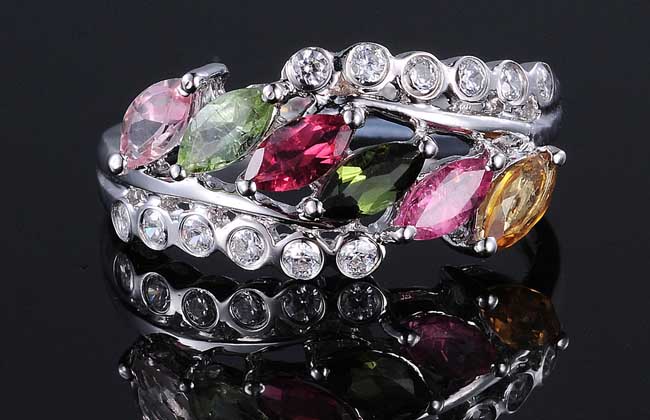
Tourmaline is a jewelry-grade variety within the tourmaline mineral group. The artisan trade name for tourmaline is "tourmaline"; tourmaline is a borosilicate crystalline substance that can contain elements such as aluminum, iron, magnesium, sodium, lithium and potassium. It is precisely these chemical elements that allow tourmaline to display a wide variety of colors. The English name is derived from ancient Sinhala (Ceylon) language, meaning “mixed gemstone.”
Legend has it that whoever can find where the rainbow lands will find eternal happiness and wealth. Although rainbows often appear, their starting point can never be found. Not all stones are so lucky. This gemstone hidden where the rainbow lands was later called tourmaline, and is also praised as the “rainbow fallen to earth.” At present, together with ruby, sapphire, aquamarine, tanzanite, emerald and other naturally colored gemstones, it is classified within the category of colored gemstones. It is deeply loved by the public and has enormous market appreciation potential.
Tourmaline has a complex composition, and its colors are also complex and changeable. The international jewelry industry basically divides tourmaline into commercial varieties according to color. The more intense and vivid the color, the higher the value. Rose red, purplish red, green and pure blue, as well as the parti-colored watermelon color, are considered the best; pink and yellow are next; colorless and black are the lowest. Within the same color, according to differences in color intensity, it is further divided into 4 grades: intense, medium, light and dark.
In China, the term “tourmaline” first appeared in the Qing Dynasty. Related records appeared in Qing Dynasty classics: “As for the name Biyamo, Chinese records do not explain where it comes from. The Qing Hui Dian Tu says: imperial concubines' headdresses use Biyamo. Dian Hai Yu Heng Zhi states: Bixiaxi is also called Bixiapi, and also Bixi; Yu Ji again calls it Bixiaxi. People today only call it Biya, or write it as Bixi, Xilingshi, but no one asks where the name comes from; it is undoubtedly a foreign dialect term.”
Tourmaline was one of the materials used for the top buttons and peacock feathers in the hats of first-rank and second-rank officials, and it was also used to make the court beads they wore. At the same time, tourmaline was also Empress Dowager Cixi's favorite. Therefore, during the era of Empress Dowager Cixi, tourmaline received unprecedented attention in China. Empress Dowager Cixi, who monopolized court politics, not only had a special fondness for jadeite, but also doted on tourmaline with its rich, varied and ever-changing colors. She was a complete tourmaline enthusiast. Among the burial items of Empress Dowager Cixi of the Qing Dynasty, there was a lotus flower carved from tourmaline, weighing 36 liang 8 qian, as well as a pillow made of tourmaline, which at the time was worth 750,000 liang of silver.