What is the difference between tourmaline and crystal? Learn to quickly tell the two gems apart
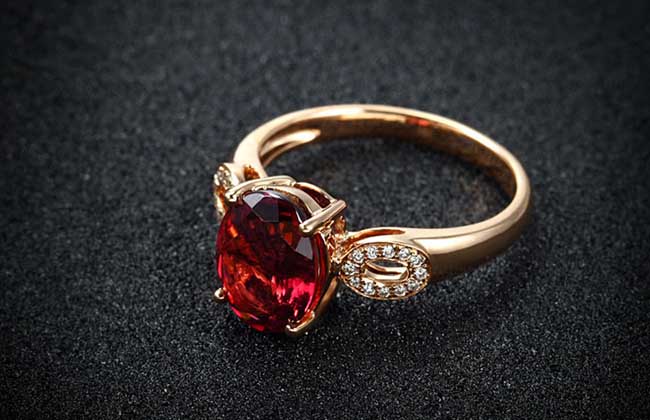
To tell the difference between tourmaline and crystal, mainly observe their colors. Generally speaking, purple is relatively rare in crystal, while the purple of tourmaline is generally lighter, with pink-purple and light purple. In contrast, crystal does not have the red and green colors that tourmaline has (except for hair crystal), so the difference in color between the two can be used to roughly identify authenticity. Let's take a look at the difference between tourmaline and crystal!
Different composition
Tourmaline and crystal have different chemical compositions. Tourmaline is a silicate, and its specific composition is quite complex, so synthetic tourmaline has not yet appeared. Crystal is a large quartz crystal mineral, mainly composed of silicon dioxide, so synthetic crystal is very easy to make. In addition, there are quite a few crystal derivatives: when silicon dioxide crystallizes perfectly it forms crystal, when silicon dioxide gels and dehydrates it becomes agate, when the hydrous colloidal silicon dioxide solidifies it becomes opal, and when the silicon dioxide grains are smaller than a few microns, they form chalcedony, flint, and secondary quartzite.
Different electrical properties
When heated, tourmaline has piezoelectricity and pyroelectricity. When tourmaline is heated, its surface releases electric charges, and these charges can attract dust and paper scraps in the air. This was discovered in 1768 by the famous Swedish scientist Linnaeus, and therefore its mineralogical name is “tourmaline”, while crystal does not have this effect.
Different colors
The colors of tourmaline can be subdivided into as many as 15 composite colors, because tourmaline contains elements such as aluminum, iron, magnesium, sodium, lithium, and potassium, and it is precisely these chemical elements that allow tourmaline to display a wide variety of colors. The main chemical component of crystal is silicon dioxide; when pure, it forms a colorless and transparent crystal, and when it contains trace elements such as Al and Fe, it appears purple, yellow, tea-colored, and so on. After irradiation, trace elements form different types of color centers, producing different colors, such as purple, yellow, tea-colored, pink, and so on.
Different hardness
Tourmaline is harder than crystal. Tourmaline is characterized by no cleavage and high hardness, with a hardness of 7-8, a fracture showing a spherical triangle, and a density of 3.06 (+0.20, -0.60) g/cm3. Crystal has a hardness of 7, a conchoidal fracture, and often appears as hexagonal prisms; it is a combination of hexagonal prisms and rhombohedra, with a density of 2.65 g/cm3.
In addition, the magnetic field of tourmaline is dozens to hundreds of times that of crystal of the same color. In the jewelry world, it belongs to the mid-to-high-end gems, and high-quality tourmaline is even rarer than diamond, while crystal is only an ordinary gem.