What is the difference between tourmaline and agate? A quick guide to telling the two apart
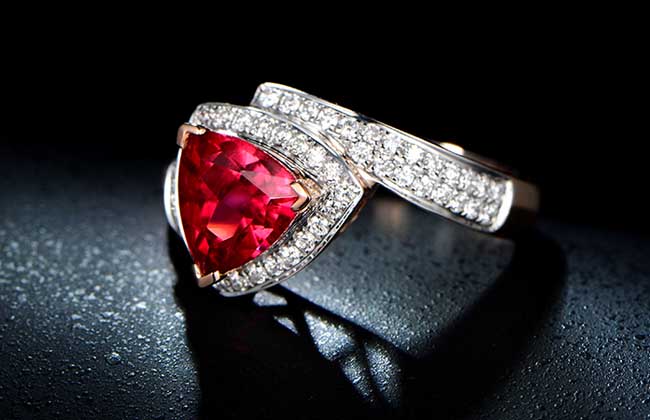
Tourmaline is also known as schorl, and compared with agate, tourmaline is more transparent and sparkling and can display a wide variety of colors, while agate has a bright, vivid luster, and natural red agate has distinct colors and very obvious bands; on close observation, densely arranged tiny red spots can be seen in the red bands. Let's take a look below at what differences exist between tourmaline and agate!
Differences in the types of tourmaline and agate
1. Tourmaline: Tourmaline has a complex composition and complex, changeable colors. In the international jewelry trade, tourmaline is basically divided into commercial varieties by color, and the more intense and vivid the color, the higher the value. Rose red, purplish red, green and pure blue, as well as the parti-colored watermelon color, are the best; pink and yellow are next; colorless and black are the lowest. Within the same color, it is further divided into 4 grades according to the degree of color intensity, namely intense, medium, light and dark.
2. Agate: There are many kinds of agate, including pictographic pattern agate, South Red agate, Warring States Red agate, rock sugar agate, Xunke North Red agate, green agate, silk-banded agate, fire agate, Gobi agate, grape agate, wolf blood agate, **Hetian agate seed material, and so on.
Differences in the shape of tourmaline and agate
1. Tourmaline: Tourmaline is relatively brittle and prone to cracks, and at the same time its interior contains a large number of inclusions. The presence of large numbers of cracks and inclusions affects tourmaline's transparency, color and fire, and tourmaline with a very clean interior is also relatively rare and belongs to the top grade.
2. Agate: Agate often occurs in dense massive form and forms various structures, such as mammillary, botryoidal and nodular, with the common one being a concentric circular structure. Its color varies and depends on the type and amount of impurities it contains. It is usually distributed in banded, concentric ring, cloud-like or dendritic forms. White, gray, brown and reddish brown are the most common, while black, blue and other colors also occur. The streak is white or nearly white, the luster is waxy, it is translucent to transparent, and the fracture is conchoidal.
Differences in the origins of tourmaline and agate
1. Tourmaline: Brazil has the best-quality tourmaline in the world, mainly concentrated in Minas Gerais. The color varieties mined there so far have reached more than twenty kinds, almost including all tourmaline colors. California in the United States is also one of the main producing areas of tourmaline. Tourmaline is also found in the Siberia region of Russia, Madagascar, Sri Lanka and Myanmar, but its quality is not as good as Brazil's tourmaline. In China, it is mainly produced in **Aletai, Yunnan, Inner Mongolia and other places.
2. Agate: Famous agate producing areas in the world include China, India, Brazil, Madagascar, the United States, Egypt, Australia and Mexico. Mexico, the United States and Namibia also produce agate with lace-like banded patterns, called “lace agate”. Yellowstone National Park, Wyoming and Montana in the United States also produce “landscape agate”. China also has a very wide distribution of agate producing areas, with almost every province having some. Famous producing areas include Yunnan, Xunke in Heilongjiang, Liaoning, Hebei, **, Ningxia, Inner Mongolia and so on.
Differences in the effects of tourmaline and agate
1. Tourmaline: Tourmaline is a natural energy gemstone with the property of permanently emitting far-infrared rays. It is a natural guardian of the heart and cerebrovascular system. Applied to the human body, it can unblock the body's meridians, dilate microvessels, promote qi and blood circulation throughout the body, decompose harmful substances in blood vessels, clear vascular obstacles, effectively unblock blood vessels, regenerate tissue around blood vessels, activate tissue cells and delay vascular aging.
2. Agate: It is said that agate can bring happiness and confidence to the wearer, is endowed with God's mercy, and can also ensure their victory and strength. When red agate is held to the light, obvious natural lines can be seen, and after wearing it the skin becomes fairer and more delicate. True red red agate can improve the endocrine system, strengthen blood circulation and make the complexion better. For people who are currently negative, without goals and drive, it has the effect of stimulating their curiosity and motivation, helping them recognize their goals clearly. It can also eliminate the malice and jealousy of enemies, bring peaceful new relationships, strengthen creativity and productive power, and make inspiration flow abundantly during the creative process.
Differences in the craftsmanship of tourmaline and agate
1. Tourmaline: The weight of good tourmaline is calculated in carats. When other conditions are similar, as the weight of tourmaline increases, its value grows geometrically. Tourmaline of the same weight can differ greatly in value because of differences in color, clarity and cut. Apart from the gemstone itself needing good quality and sufficiently clean inclusions, the cut is also very important for a gemstone's brilliance and beauty. In recent years, in addition to the traditional round brilliant cut, oval mixed cut, emerald step cut, heart-shaped cut, pear cut, marquise cut and so on, fancy cuts have become increasingly popular.
2. Agate: Natural agate stone is hard, smooth and dignified, so carving it takes more effort than carving jade. Generally speaking, agate that has been finely carved by skilled craftsmen has relatively high collectible value, and the thinner the agate, the more difficult it is to carve. If you see Ming and Qing antique agate with especially good carving on the market, be careful, as it may be a modern imitation, because with the carving techniques of that time, the thread holes drilled in the middle could not possibly have been very smooth; they were generally crooked and in an inverted trumpet shape. If you see a thread hole that goes straight through and is very smooth, it can basically be judged to be an imitation or a fake.